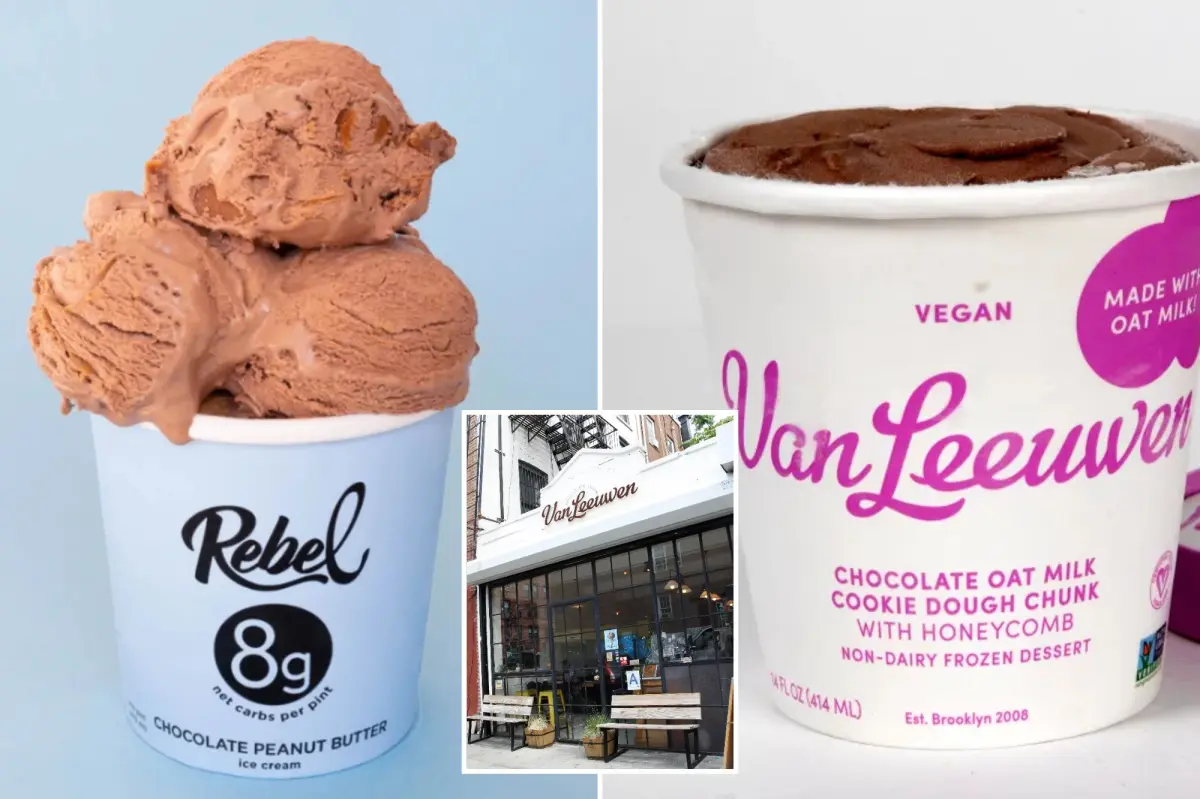
Rebel Creamery, the keto-friendly ice cream brand known for its full-fat, sugar-free pints, has filed for Chapter 11 bankruptcy protection after losing a $23.8 million packaging lawsuit to rival Van Leeuwen Ice Cream. The Utah-based company, whose low-carb flavors line freezer aisles at Walmart, Kroger, Safeway and Target, reported roughly $13.78 million in assets against $23.85 million in liabilities when it filed on Aug. 14, 2026 — a shortfall driven almost entirely by a trade-dress judgment it is now appealing. For the thousands of keto and low-carb eaters who lean on Rebel's zero-sugar pints as a dessert that still fits their macros, the headline raises an urgent question: is this the end of a favorite better-for-you treat, or just a costly legal detour? Here is what the lawsuit was actually about, what the judge found, and what it means for shoppers.
Inside the $23.8 Million Packaging Fight That Shook Rebel Creamery
The dispute had nothing to do with Rebel's recipe, ingredients or nutritional claims. Brooklyn-based Van Leeuwen Ice Cream sued Rebel Creamery back in 2021, alleging that Rebel's pint containers copied the distinctive look of its own packaging — a design the court described as monochromatic cardboard pints with matching lids, a primarily pastel color palette, black script lettering and an overall minimalist aesthetic.
On July 16, 2026, U.S. District Judge Eric Komitee of the Eastern District of New York sided with Van Leeuwen. The court found Rebel liable for trade-dress infringement under the Lanham Act and for related New York state claims, and found that founders Austin and Courtney Archibald had copied the design intentionally. The judge was blunt in his assessment, writing that "the evidence at that trial left no doubt that Rebel infringed and diluted Van Leeuwen's trade dress and did so intentionally."
Van Leeuwen had sought $36.4 million in Rebel's profits, but Judge Komitee reduced the award by 33 percent after finding that a meaningful share of Rebel's sales was driven by demand for keto and better-for-you ice cream — not by the look of the packaging. That reduction left Van Leeuwen entitled to $23.785 million, and the court ordered Rebel to stop selling pints bearing the confusing trade dress and to redesign its packaging.

Timeline: From a 2021 Lawsuit to a Chapter 11 Filing
The road from freezer aisle to bankruptcy court unfolded over several years:
- 2021: Van Leeuwen files its trade-dress lawsuit against Rebel Creamery, claiming the keto brand copied the distinctive appearance of its ice cream pints.
- July 16, 2026: Judge Eric Komitee rules that Rebel intentionally infringed and diluted Van Leeuwen's trade dress and awards $23.785 million in Rebel's profits.
- Aug. 12, 2026: Rebel files an appeal of the judgment, two days before its bankruptcy filing.
- Aug. 14, 2026: Rebel Creamery LLC files for Chapter 11 protection in the U.S. Bankruptcy Court for the District of Utah, listing about $13.78 million in assets and $23.85 million in liabilities.
According to court records, Rebel reported about $5.22 million in cash, $2.59 million in accounts receivable and $5.65 million in inventory. Van Leeuwen appears among Rebel's unsecured creditors with a $23.785 million claim that the company has listed as disputed and under appeal.
Why This Matters for Keto and Low-Carb Eaters
To understand why the news has rippled through the keto community, it helps to know what Rebel Creamery actually is. Founded in Utah, Rebel built its identity around full-fat, low-carbohydrate ice cream aimed squarely at keto and low-carb consumers. Rather than stripping out fat and calories the way many diet desserts do, Rebel emphasized the creamy, traditional mouthfeel of full-fat dairy while dramatically cutting sugar.
The brand's recipes commonly lean on ingredients such as cream, erythritol, monk fruit and chicory root fiber to bring net carbohydrate counts down to just a few grams per pint. Rebel lists its Vanilla at about 3.9 grams of net carbs per pint and Mint Chip at roughly 3.6 grams per pint. That positioning helped Rebel ride the rapid expansion of the keto food market — the company reportedly generated about $97 million in sales in 2020 and reached roughly 50 percent distribution after starting with crowdfunding. Its flavor lineup spans familiar options like Vanilla, Chocolate, Strawberry, Mint Chip, Butter Pecan, Cookie Dough and Cookies & Cream, alongside richer picks such as Triple Chocolate, Peanut Butter Cup and Salted Caramel.
Notably, the lawsuit's own math underscores Rebel's value to low-carb shoppers. When Judge Komitee cut Van Leeuwen's award by 33 percent, he did so partly because he concluded that many customers were buying Rebel for its keto and better-for-you credentials rather than its packaging. In other words, the court itself recognized the brand's nutritional appeal as a real driver of its sales.
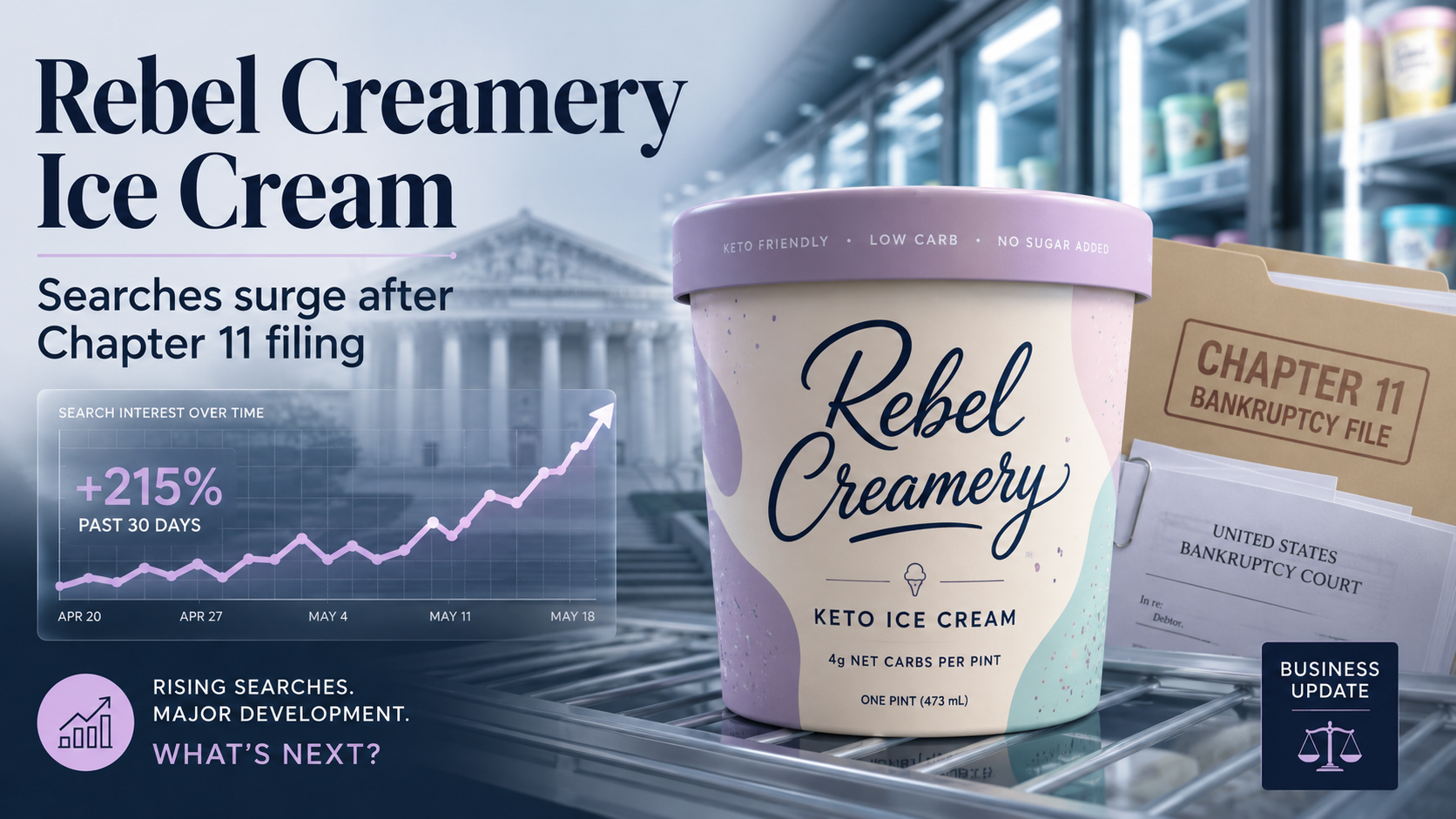
Where Rebel Creamery Stands Right Now
Despite the alarming headlines, a Chapter 11 filing does not mean Rebel ice cream is vanishing from store shelves. Chapter 11 is a restructuring process designed to let a company keep operating while it reorganizes its debts. Rebel's products remain sold at major retailers, and the company's voluntary petition estimated that funds would be available for distribution to unsecured creditors.
Rebel is also not accepting the verdict quietly. The company has appealed the $23.785 million judgment, and its bankruptcy paperwork lists the Van Leeuwen claim as disputed. Austin Archibald is listed as the company's manager and member, with Michael Johnson of Ray Quinney & Nebeker serving as bankruptcy counsel.
What Happens Next for the Keto Ice Cream Brand
The biggest open questions are whether Rebel can successfully restructure, how the $23.785 million judgment fares through the appeal and bankruptcy process, and how drastically the company must change the pint design that made it recognizable in grocery freezers. For now, the dispute is a reminder that in the crowded ice cream market, visual branding can be as consequential as the recipe inside the carton.
For keto and low-carb shoppers, the immediate takeaway is less dramatic than the bankruptcy headlines suggest: Rebel has entered Chapter 11 after a major legal judgment, but that alone does not spell the end of the brand. Its future will be written through bankruptcy proceedings and its challenge to the Van Leeuwen ruling — and given its national retail footprint and loyal following, both consumers and competitors will be watching closely.
The Bottom Line: What Keto Shoppers Should Know
- Rebel Creamery filed Chapter 11 on Aug. 14, 2026, after losing a $23.785 million trade-dress lawsuit to Van Leeuwen Ice Cream.
- The case was about packaging design — pastel pints with black script lettering — not about Rebel's recipe, ingredients or nutritional claims.
- The judge still credited keto demand: he cut Van Leeuwen's award by 33 percent, from $36.4 million, partly because Rebel's sales were driven by better-for-you appeal.
- Chapter 11 is restructuring, not liquidation — Rebel ice cream is expected to remain available while the company reorganizes and appeals.
- Rebel's zero-sugar, low-net-carb pints remain a staple for keto dieters, with flavors like Vanilla and Mint Chip at roughly 3 to 4 grams of net carbs per pint.