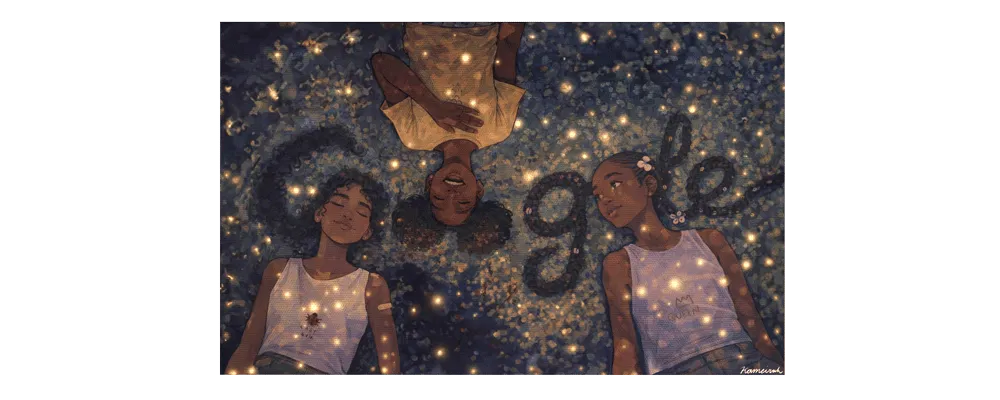
The Doodle for Google contest has become one of the most prestigious art competitions for young students in the United States. Now in its 17th year, the annual competition invites students from kindergarten through 12th grade to redesign the iconic Google logo based on a creative theme — with the winning artwork appearing on the Google.com homepage for millions to see. The 2025-2026 cycle has just crowned its national winner, and the competition shows no signs of slowing down.
What Is Doodle for Google and How Did It Start?
Launched in 2008, Doodle for Google is an annual art contest hosted by Google Inc. where K-12 students across the United States create their own version of the Google logo. The goal is simple: celebrate young artists and give them a national platform to showcase their creativity. Each year, Google sets a new theme that serves as the creative prompt, and students are free to use any artistic medium — from pencil and paint to digital art, clay, stop-motion video, and even virtual reality.
The 2025-2026 contest theme was "My superpower is…" — a broad and inspiring prompt that encouraged students to reflect on their unique strengths, values, and abilities. Over the years, past themes have included "I am grateful for…" (2023), "I care for myself by…" (2022), "I am strong because…" (2021), "I show kindness by…" (2020), and "When I grow up I hope…" (2019).
How the Competition Works: A Step-by-Step Breakdown
The Doodle for Google contest follows a structured, multi-stage process designed to give every student a fair shot. Here's how it works:
Step 1: Create Your Doodle. Students begin by designing their artwork based on the year's theme. Any medium is accepted — paint, pencils, markers, crayons, chalk, pastels, clay, found objects, digital art, and even video or audio submissions (though audio/video entries require students to be 13 or older). The key rule: the artwork must incorporate the letters G-O-O-G-L-E somewhere in the design.
Step 2: Write Your Artist's Statement. Alongside the artwork, students submit a written description of 50 words or less explaining what their doodle represents and how it connects to the theme.
Step 3: Submit Online or by Mail. Entries are submitted through the official Doodle for Google website (doodle4google.com) during the contest period. For the 2025-2026 cycle, submissions were accepted until December 10-17, 2025 (depending on the source). A parent or guardian must sign the entry form for students under 18.
Step 4: Judging and Selection. Doodles are first grouped into five grade categories: K-3, Grades 4-5, Grades 6-7, Grades 8-9, and Grades 10-12. A guest panel of judges — typically including artists, authors, illustrators, and celebrities (Selena Gomez was a judge in 2021) — evaluates entries based on three criteria: artistic merit (composition, technique, and visual appeal), creativity (originality and integration of the Google logo), and theme communication (how effectively the artwork and statement convey the theme).
Step 5: Public Voting. After the judges select 55 State and Territory Winners (one from each state plus territories), the public is invited to vote online for their favorites. This public vote helps narrow the field down to 5 National Finalists.
Step 6: Final Selection. A panel of Google employees makes the final decision, choosing 1 National Winner from the 5 National Finalists. The winner is typically announced in June.
Timeline: Key Dates for the 2025-2026 Contest
The Doodle for Google timeline follows a predictable annual pattern:
- November 2025: Contest opens for submissions with the theme announcement
- December 2025: Submission deadline (early to mid-December)
- April-May 2026: Public voting period opens for one week
- May 31, 2026: National Finalists announced
- June 4, 2026: National Winner announced and doodle appears on Google.com
Who Can Enter? Eligibility Rules Explained
The contest is open to all students in kindergarten through 12th grade who are enrolled in a U.S.-based school (including homeschool) or a school in Puerto Rico, U.S. territories, The District of Columbia, and U.S. military bases abroad. Students must be U.S. citizens or permanent legal residents. Each student may submit only one entry per year, and the artwork must be original — no logos, copyrighted characters, or previously published work is allowed.
The competition is completely free to enter, making it accessible to students from all backgrounds.
The Prizes: What Winners Receive
The prize structure for 2025-2026 has been significantly boosted compared to previous years:
National Winner (1): $55,000 college scholarship, a $50,000 technology package for their school or nonprofit organization, and their artwork displayed on Google.com for 24 hours. The 2025-2026 winner, Kameirah, received these prizes for her artwork titled "Hair Power: The Crown that Grows From Us."
National Finalists (5): Each receives a $5,000-$10,000 college scholarship, Google hardware products, and fun Google swag. Their doodles are also featured on the Google homepage.
State and Territory Winners (55): Their artwork is featured in the official Doodle for Google gallery, along with Google hardware and a congratulatory message from Google.
Meet the 2025-2026 National Winner: Kameirah's "Hair Power"
Kameirah, an 18-year-old 12th grader from Washington state, was announced as the 2025-2026 Doodle for Google National Winner on June 4, 2026. Her artwork, "Hair Power: The Crown that Grows From Us," depicts a powerful scene of a figure lying in grass with beautifully textured hair that flows into the Google logo letters.
In her artist's statement, Kameirah explained: "My superpower is my hair, and the family it carries. Each texture and style holds culture, care, and survival passed down without words. Lying in the grass, our crowns rest without weakening. This kinky hair refuses conformity. It makes us different. Shaped by our lineage, our hair is undeniably beautiful."
After receiving tens of thousands of public votes and being selected during final deliberations by Google's panel of judges, Kameirah earned the top spot — winning a $55,000 college scholarship and a $50,000 technology package for her school.
Tips to Create a Winning Doodle
Based on insights from past winners and competition experts, here are key strategies for students looking to create a standout entry:
1. Align closely with the theme. Your artwork and written statement should work together to convey a clear, meaningful connection to the prompt. Judges evaluate how effectively the theme is communicated through both the visual and written components.
2. Integrate the Google logo creatively. The letters G-O-O-G-L-E must be part of the design, but they don't have to dominate. The most successful entries weave the logo naturally into the artwork's story.
3. Tell a story. The best doodles do more than look pretty — they convey a narrative or emotion that resonates with viewers. Whether it's a personal experience, a cultural tradition, or a vision for the future, storytelling makes your entry memorable.
4. Pay attention to craftsmanship. Judges look for artistic merit — careful composition, thoughtful color choices, and clean execution. Take your time and refine your work.
5. Be authentic. Look at past winners for inspiration, but ultimately, your doodle should reflect your unique perspective and voice. Authenticity stands out more than technical perfection.
What Makes Doodle for Google So Competitive?
With only one national winner selected from tens of thousands of entries each year, the competition is intense. In 2022, the Indian edition of Doodle for Google received 115,000 entries from over 100 cities. The U.S. contest likely receives similar volumes. However, even students who don't win gain valuable experience and a portfolio piece that can strengthen college applications and art school submissions.
Looking Ahead: The Future of Doodle for Google
With each passing year, Doodle for Google continues to grow in scope and creativity. The contest has expanded to include digital art, video, and audio submissions, reflecting how young artists are embracing new technologies. Google has also increased prize amounts over time — the national winner's scholarship rose from $30,000 in earlier years to $55,000 by 2025-2026 — demonstrating the company's ongoing commitment to supporting arts education.
For K-12 students with artistic ambitions, Doodle for Google remains one of the most accessible and rewarding platforms to share their work with the world. The next contest cycle will likely open in November 2026, so aspiring artists should start brainstorming and sketching now.
The Bottom Line: Key Takeaways About Doodle for Google
- Doodle for Google is an annual, free-to-enter art contest for K-12 U.S. students, running since 2008
- The 2025-2026 winner Kameirah won a $55,000 scholarship and $50,000 school tech grant
- Entries are judged across 5 grade groups on artistic merit, creativity, and theme communication
- The competition selects 55 State Winners, then 5 National Finalists, then 1 National Winner
- Students can use any medium — traditional art, digital, video, or even virtual reality
- Each year's theme encourages personal reflection, with recent themes focusing on gratitude, kindness, and personal strengths