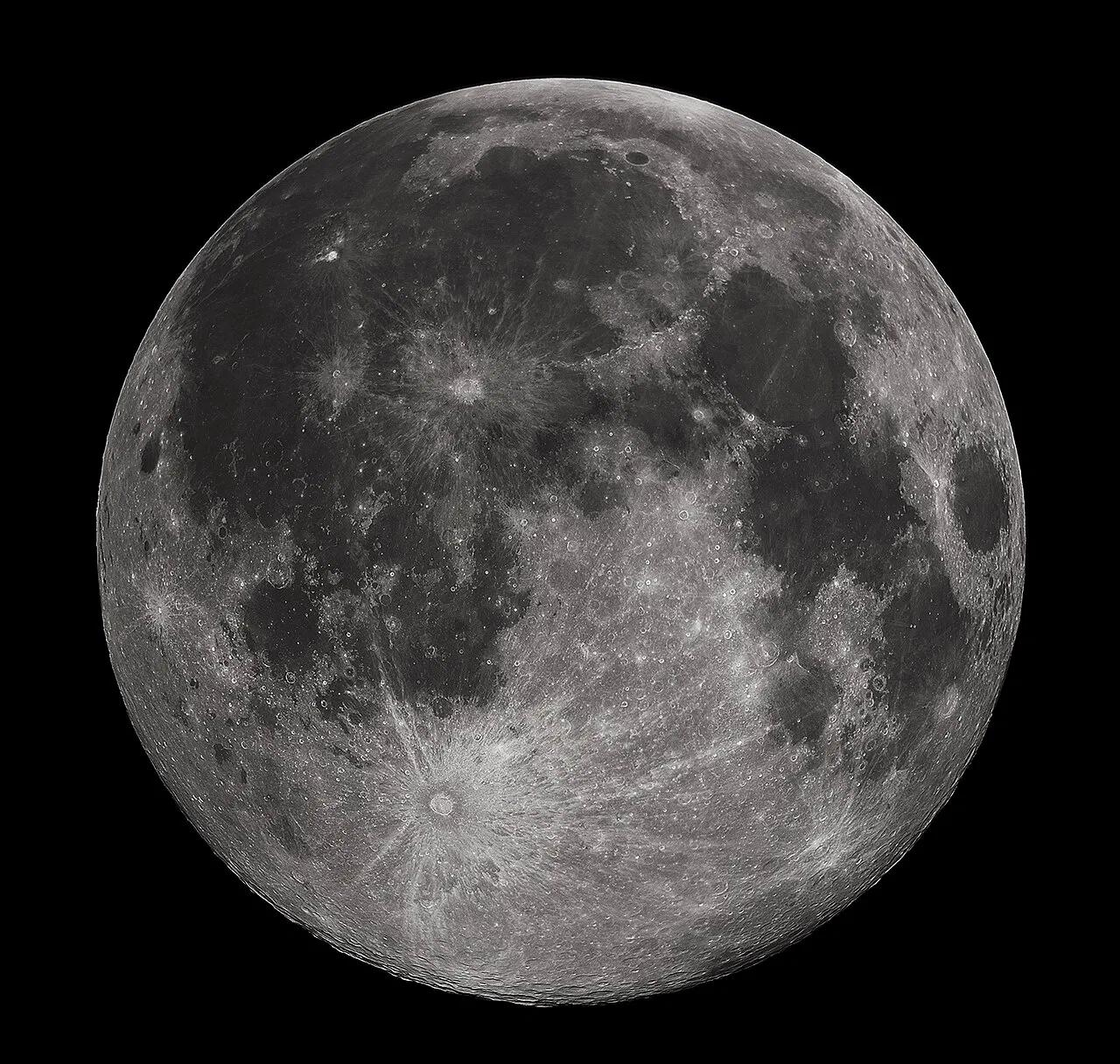
The full moon in October 2026 arrives on Monday, October 26, when the Hunter's Moon reaches peak illumination at 12:12 a.m. EDT (4:12 a.m. UTC). For most skywatchers, the real show begins a little earlier — the moon will look full and bright from the evening of Saturday, October 24, through Tuesday, October 27, rising near sunset and glowing low and orange in the eastern sky. October's full moon is the 11th of 13 full moons in 2026, and it follows September's Harvest Moon as the second of autumn's two celebrated moons.
This year's Hunter's Moon is worth stepping outside for. As it climbs the horizon, it will appear unusually large and tinted a deep amber, and it will pass near the planet Saturn in the evening sky. Here is everything to know about what a full moon is, why October's full moon is called the Hunter's Moon, and when and how to see it.
When Is the October 2026 Full Moon? Dates and Times
The Hunter's Moon turns precisely full at 12:12 a.m. Eastern Daylight Time (4:12 a.m. UTC/GMT) on Monday, October 26, 2026, according to the Royal Museums Greenwich full moon calendar. That moment marks the instant the moon sits directly opposite the sun in Earth's sky, with its entire Earth-facing side illuminated.
Because the moon appears full to the naked eye for roughly three days around that instant, casual observers can plan around a much wider window. In the Northern Hemisphere, the moon rises around sunset on the evenings of October 24 through 26, looking full each night. By the time Halloween arrives on October 31, the moon will have slipped into its waning gibbous phase — still bright, but no longer perfectly round, as the Farmers' Almanac notes.
The moon's October 2026 cycle also includes a new moon earlier in the month, on Saturday, October 10, which opened the current lunar month. The next full moon after the Hunter's Moon will be the Beaver Moon on November 24, 2026.
What Is a Full Moon, and How Does It Work?
A full moon is a phase, not a physical change in the moon itself. The moon generates no light of its own; it simply reflects sunlight. As the moon travels around Earth, the angle among the sun, Earth, and moon shifts, changing how much of the moon's sunlit half we can see from the ground.
A full moon occurs when Earth lies between the sun and the moon. From our viewpoint, the moon is directly opposite the sun, so the entire near side — the hemisphere that always faces Earth — is lit at once. That geometry is also why a full moon rises around sunset and sets around sunrise: it occupies the opposite side of the sky from the sun, as NASA explains.
The moon is tidally locked to Earth, meaning it rotates once on its axis in the same time it takes to orbit us once. That is why we always see the same face — the near side — and why the moon's far side is never visible from Earth.
The moon completes one orbit of Earth in about 27.3 days. But because Earth is simultaneously moving around the sun, the moon needs roughly 29.5 days to return to the same phase — a period known as the synodic month. That is why full moons land about once a month and why their exact timing drifts across the calendar.
Over each 29.5-day cycle, the moon passes through eight phases in order: new moon, waxing crescent, first quarter, waxing gibbous, full moon, waning gibbous, third quarter, and waning crescent. Waxing means the illuminated portion is growing night by night, while waning means it is shrinking back toward the next new moon.
Why Is October's Full Moon Called the Hunter's Moon?
The Hunter's Moon is the traditional name for the first full moon after the Harvest Moon, which is the full moon nearest the autumnal equinox. In 2026, the equinox falls on September 22 and the Harvest Moon peaked on September 26, so October's full moon takes the Hunter's title. Because the name follows the equinox rather than a fixed calendar date, the Hunter's Moon occasionally lands in November, but it most often falls in October.
Like most traditional full-moon names, the term traces back to Native American and early European folklore. The names now standard in North America were popularized in the 1930s by the Farmers' Almanac, which drew on names used by Algonquin-speaking peoples from New England to the Great Lakes. Each full moon marked a season of work — planting, fishing, harvesting or, in October, hunting.
By late autumn, the year's crops had been gathered and the fields cleared, making deer and other game easier to spot in the open landscape. With winter approaching, communities hunted to lay in meat for the cold months ahead. The Hunter's Moon offered a practical advantage: for several consecutive nights, it rises only a short time after sunset and shines brightly through the early evening, effectively stretching the day's usable light.
October's full moon also goes by other names in different traditions — including the Blood Moon or Sanguine Moon, a nod to the hunting season and to the moon's reddish autumn color as it rises through a thicker layer of atmosphere near the horizon. Astrologers note that the October 2026 full moon falls in the zodiac sign of Taurus.
How to See the Hunter's Moon: Timing and Viewing Tips
You need no equipment to enjoy October's full moon — just a clear sky and a view of the eastern horizon. The best moments to look are around moonrise, when the moon hangs low in the sky. Low-hanging moons appear larger and more colorful than they do overhead, an optical effect known as the moon illusion. Near the horizon, moonlight travels through more of Earth's atmosphere, which scatters shorter blue wavelengths and leaves the moon glowing amber or orange.
In the United States, the moon rises in the east around sunset on Sunday, October 25, and it will still look full and nearly full on the nights before and after. To catch it, check a local moonrise time and head outside just after sunset, facing east. The moon will climb higher and appear whiter and smaller as the evening progresses.
There is a bonus this year. According to CNN, the Hunter's Moon will share the evening sky with Saturn, offering a pairing worth viewing with binoculars or a small telescope. Sky observers have also noted the moon sweeping past the Pleiades star cluster — the Seven Sisters — in the nights around the full moon. At a distance of about 368,859 km, this full moon is also a touch closer than average, making it roughly 4% larger and 8.6% brighter than a typical full moon.
What Comes Next: The Beaver Moon and a 13-Moon Year
After the Hunter's Moon, the lunar calendar keeps rolling. The next full moon — the Beaver Moon — arrives on November 24, 2026, followed by December's Cold Moon. One quirk of 2026 is that the year holds 13 full moons instead of the usual 12, which is why October's full moon is only the 11th of the year. In years with 13 full moons, that extra moon can earn the blue moon label — the source of the phrase once in a blue moon.
For now, the Hunter's Moon is a reminder that full moons are predictable — the product of simple geometry among the sun, Earth, and moon — yet still capable of stopping people in their tracks. Step outside on the evenings around October 26, look east at sunset, and you will see why this moon has guided hunters and storytellers for centuries.
The Bottom Line: Hunter's Moon 2026 at a Glance
- Peak illumination: Monday, October 26, 2026, at 12:12 a.m. EDT (4:12 a.m. UTC).
- Best viewing: Around sunset and moonrise on October 24 through 26, looking east.
- What it is: The first full moon after the Harvest Moon, which peaked on September 26, 2026.
- Why it's called the Hunter's Moon: A traditional name for the autumn hunting season, when cleared fields made game easier to spot and the moon's early rise extended evening light.
- What's nearby: The planet Saturn and, on surrounding nights, the Pleiades star cluster.
- Next full moon: The Beaver Moon on November 24, 2026.