Butter is back in the headlines. In late October 2026, Miyoko's Creamery recalled more than 1,300 cases of its European Style Salted Plant Milk Butter from ten states after the U.S. Food and Drug Administration flagged possible yeast, mold, and E. coli contamination. Yet beyond that recall, butter is also one of the oldest and most misunderstood staples in the kitchen—a food that has been churned by hand for thousands of years and still confuses home cooks today. How does liquid cream become a solid block? What actually separates European-style butter from a standard stick? And how can a “butter” be made with no milk at all?
This guide answers those questions, walking through how butter is made, the main types on store shelves, its nutrition, and what the Miyoko's recall means for shoppers right now.
From Cream to Churn: The Simple Science of Making Butter
Butter is concentrated milk fat. It is made by agitating cream until the fat separates from the liquid—a process people have used since at least 2000 BC, when early cultures churned animal milk in animal-skin bags. The chemistry has not changed much since. Cow's milk naturally contains only about 3.5% to 4% butterfat, so the first job is concentrating that fat. In a modern dairy, fresh milk is pumped through a high-speed centrifugal separator—spinning at roughly 30,000 revolutions per minute—that spins the lighter cream away from the heavier skim milk.
Next, the cream is pasteurized to destroy harmful microbes and, for cultured butters, inoculated with lactic-acid bacteria and allowed to ripen for added flavor. Then comes the step that gives butter its name: churning. Whether done in a hand-cranked barrel churn or a continuous industrial churn, churning vigorously agitates the cream, rupturing the thin membranes that surround each microscopic fat globule. Freed from those membranes, the fat globules collide and cling together, first forming pea-sized grains and then a single solid mass. The watery liquid left behind—genuine buttermilk—is drained off.
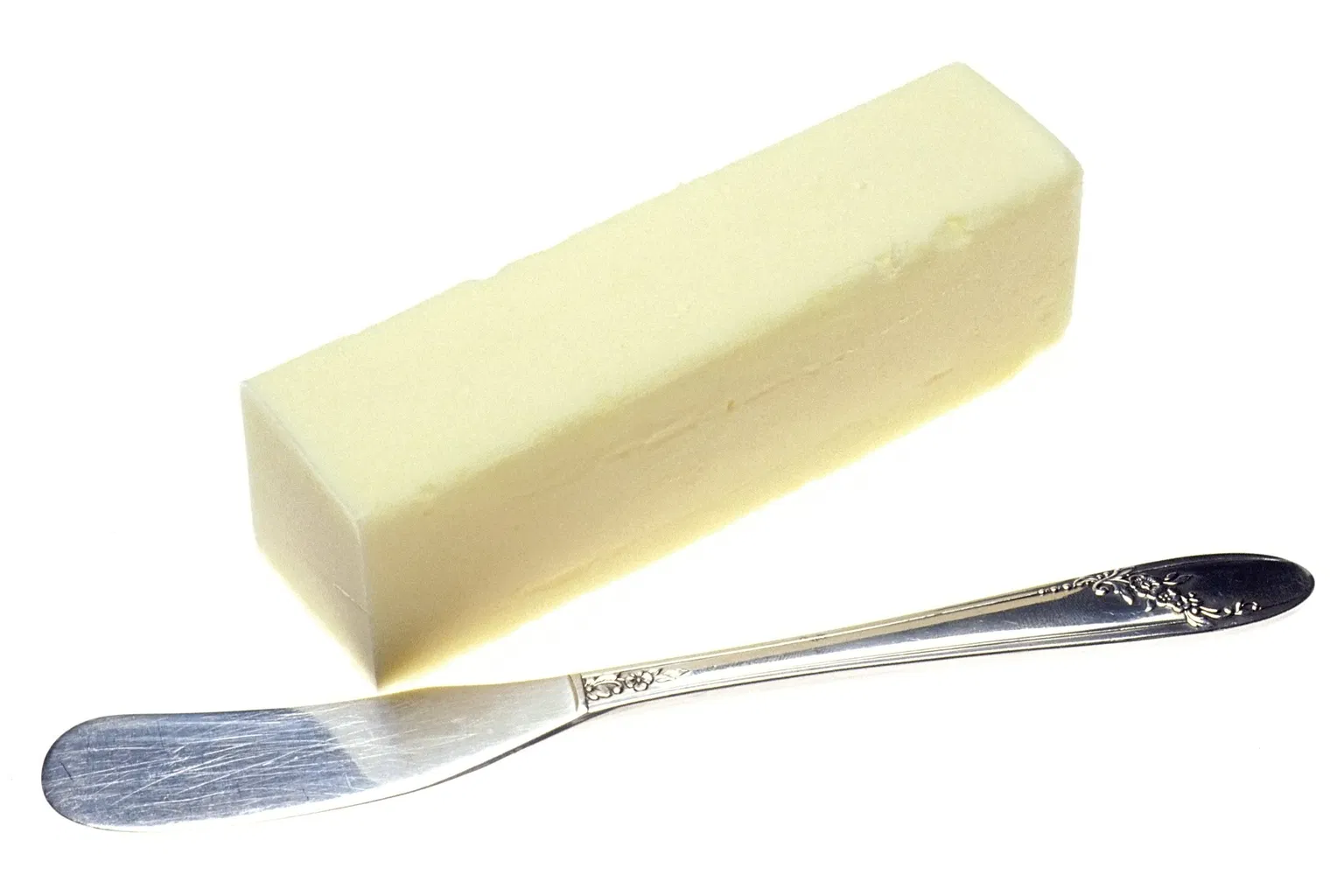
The final steps are working and shaping. The butter is kneaded to press out remaining moisture and distribute it evenly, salt is added for salted varieties, and the butter is molded into blocks or quarter-pound sticks. The finished product is typically about 80% milk fat, with most of the remainder being water plus trace milk proteins. That precise fat-to-water balance is why butter is firm in the fridge, soft at room temperature, and quick to brown in a hot pan.
Salted, Cultured, European-Style: The Main Types of Butter
Most of the differences between butters come down to four variables: salt, butterfat content, culturing, and how much water and milk solids remain.
Salted versus unsalted is the first split. Salted butter usually contains about 1.25% to 1.75% salt by weight—enough to season food and, more importantly, to act as a preservative, which is why humans have salted butter since antiquity. Unsalted butter, sometimes labeled sweet cream butter, is just churned cream. Bakers overwhelmingly prefer it because it lets them control the exact amount of salt in a recipe, and because unsalted butter is often fresher, since salt can mask the taste of butter that has been stored longer.
European-style butter is a step up in richness. While standard American butter hovers around 80% butterfat, European-style butter typically runs 82% to 85%, which means less water and more fat. That extra fat yields flakier pastries, a silkier mouthfeel, and better browning. Cultured butter goes a different route: the cream is fermented with live cultures before churning, producing a subtle, tangy, almost nutty flavor associated with classic French butter.
At the far end of the spectrum sit clarified butter and ghee. Both are made by gently heating butter until the water evaporates and the milk solids separate out, leaving nearly pure butterfat. Removing those milk solids makes ghee more shelf-stable and dramatically raises its smoke point—from about 350°F for whole butter to roughly 465°F—which is why ghee is a workhorse for high-heat frying, searing, and South Asian cooking.
What's in a Pat? Butter's Nutrition, Explained
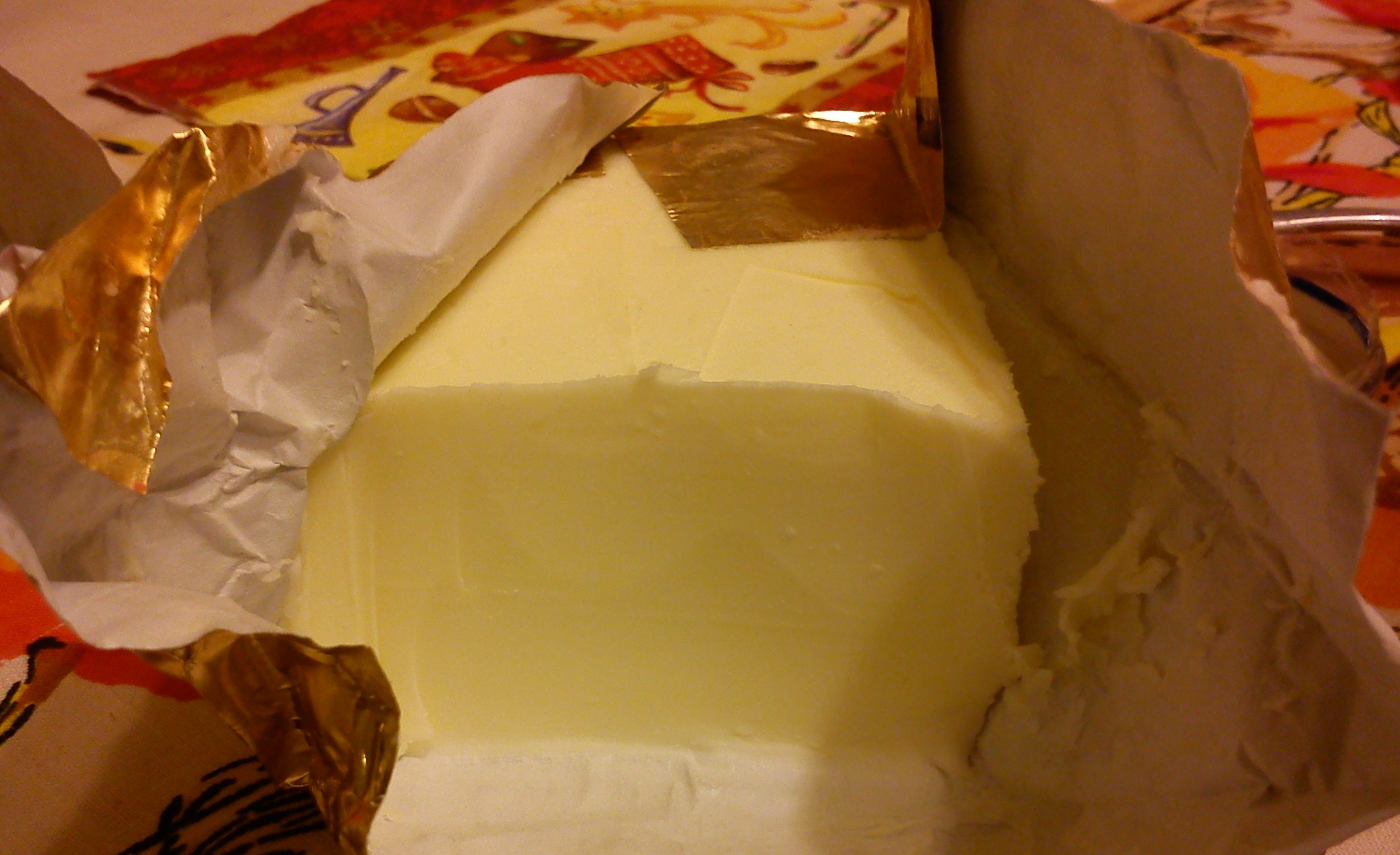
Nutritionally, butter is almost pure fat. One tablespoon (about 14 grams) of salted butter delivers roughly 100 to 102 calories, about 11.5 grams of total fat, and essentially zero carbohydrates, sugar, or fiber, with only a trace of protein. Of that fat, around 7 grams is saturated fat—the main reason dietary guidelines suggest keeping butter to moderate amounts. Butter is also a meaningful source of vitamin A, and butter from grass-fed cows tends to be higher in vitamin K2 and beneficial fatty acids such as conjugated linoleic acid (CLA).
Measured by weight, butter contains about 717 calories and 81 grams of fat per 100 grams, roughly 51 grams of which is saturated fat. Plant-based butters can land in a similar calorie range, but their saturated-fat content depends heavily on the recipe: versions built on coconut oil are higher in saturated fat, while those centered on olive, avocado, or sunflower oil are lower. If you are comparing labels, the fat and calorie counts are often close—the bigger differences are in saturated fat, sodium, and ingredients like milk protein, which dairy-free butter must avoid entirely.
Plant Butter vs. Dairy Butter: A Side-by-Side Look
Dairy butter is an animal product built on milk fat. Plant-based butter removes the cow from the equation, blending plant oils—commonly coconut, palm, avocado, olive, sunflower, or canola—with a plant milk such as oat, cashew, or almond milk, plus emulsifiers (often sunflower lecithin) and sometimes cultures, sea salt, or natural flavor. The engineering goal is to reproduce dairy butter's fat content, melting point, and mouthfeel so the two can be swapped one-for-one in baking, spreading, and cooking.
Miyoko's Creamery, the brand at the center of the recall, has long been a flagship of this category. Its plant milk butter is built on a cultured plant-milk base—historically cashew milk—combined with refined coconut oil and other plant oils, and the company promotes it as a butter that melts, spreads, bakes, and browns like dairy. That browning matters: not all plant butters brown the way dairy butter does, so the promise is part of what made the product popular with vegan bakers.
Inside the Miyoko's Recall: What Shoppers Need to Know
The recall that returned butter to the news involves Miyoko's Creamery European Style Salted Plant Milk Butter in 8-ounce (227-gram) packages. Prosperity Organic Foods, Inc., which makes the butter at its Boise, Idaho facility, voluntarily recalled 1,304 cases after the FDA flagged potential contamination with yeast, mold, and E. coli. The FDA categorized the recall as Class II, which means using the product may cause temporary or medically reversible adverse health consequences—typically a milder concern than a Class I recall, but still grounds to stop using the product.
According to the FDA enforcement report, the recalled butter was distributed to ten states: Connecticut, Florida, Georgia, Illinois, Indiana, Iowa, Maryland, New Hampshire, New Jersey, and Wisconsin. The product is sold in multi-packs of 8-ounce blocks, so if you have Miyoko's European Style Salted Plant Milk Butter in your fridge, compare the packaging against the FDA recall notice and either discard it or return it to the store for a refund. No illnesses had been widely reported in the initial recall coverage, but the recall is a reminder that even plant-based foods can carry microbial risks—E. coli and mold can be introduced through contaminated ingredients or processing, not just through milk.
Smoke Points, Baking, and Beyond: How to Use Butter Well
Choosing the right butter usually comes down to the job at hand. Reach for unsalted butter when baking so you can control the salt precisely, and use salted butter for spreading on bread, finishing vegetables, or tossing with pasta. Splurge on European-style butter for pie crusts, croissants, and laminated doughs, where its lower water content makes layers flakier. And for high-heat cooking—searing, stir-frying, deep-flavored curries—turn to ghee or clarified butter, whose higher smoke point keeps the fat from burning.
Butter's main limitation is its smoke point of roughly 350°F. Heat whole butter past that and its milk solids scorch, imparting a bitter, acrid flavor. That is why cooks either clarify butter first or pair it with a neutral, higher-smoke-point oil when searing. The same logic applies to plant-based butters: because their heat tolerance depends on the specific oil blend, it is worth checking the label before using one for frying. For most home cooks, the simplest rule is to bake with unsalted, spread with salted, and fry with clarified butter or ghee.
The Bottom Line: Butter Facts to Remember
Butter—whether dairy or plant-based—is ultimately a concentrated fat built by separating and churning cream, or by emulsifying plant oils with plant milk. Here are the essentials:
- Butter is made by churning cream until the fat globules clump together and separate from buttermilk; the result is about 80% milk fat.
- The main types are salted, unsalted (sweet cream), cultured, European-style, and clarified butter or ghee.
- One tablespoon of butter has about 100–102 calories and 11.5 grams of fat, most of it saturated.
- Plant butter replaces milk fat with plant oils and plant milk, and its saturated fat varies with the oil blend.
- Miyoko's Creamery recalled 1,304 cases of its European Style Salted Plant Milk Butter from ten states over possible yeast, mold, and E. coli contamination (FDA Class II).