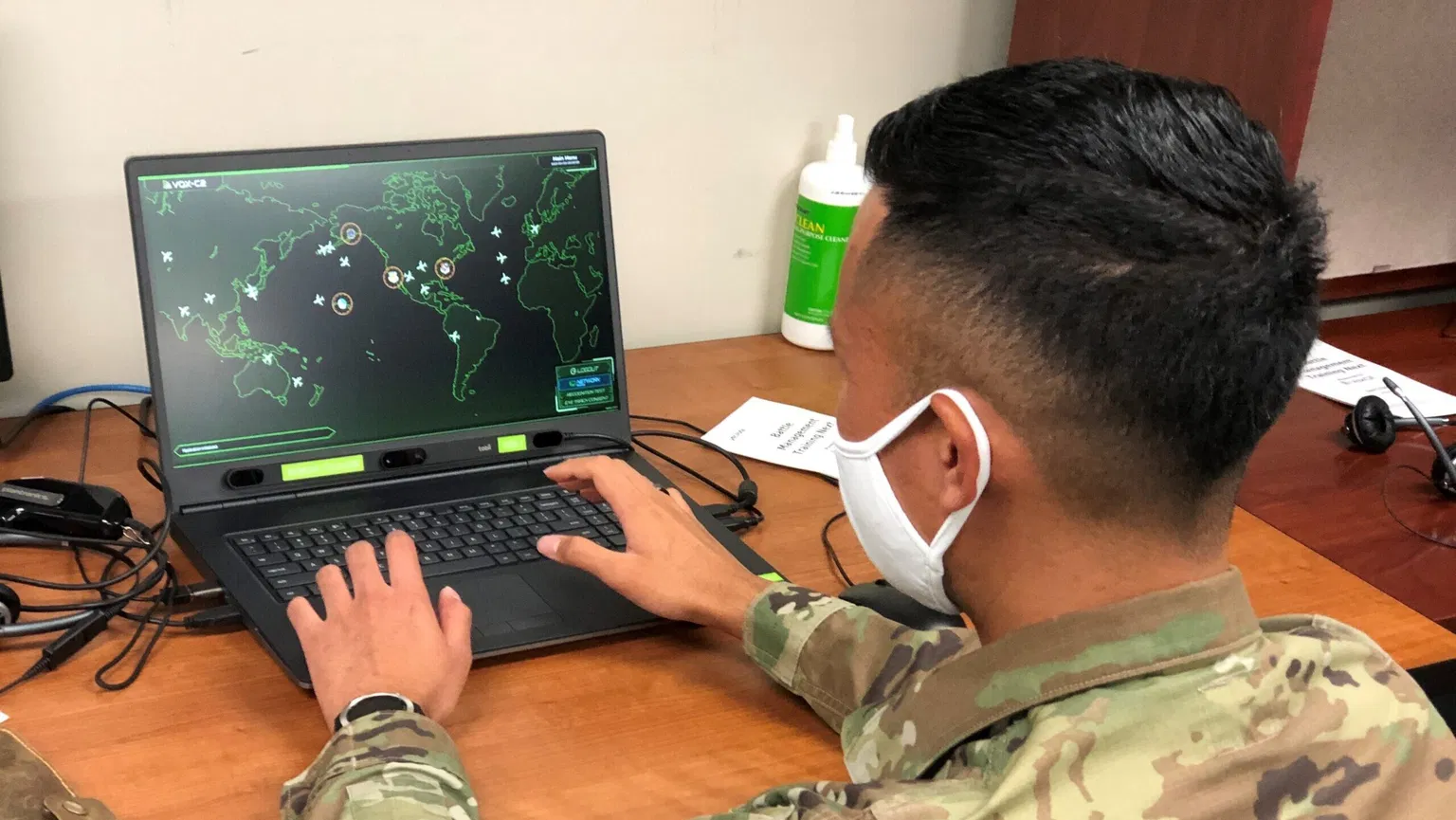
In a dramatic standoff that could reshape the future of military artificial intelligence, Anthropic—the company behind the Claude AI assistant—has publicly refused Pentagon demands to remove safety safeguards from its models. The confrontation between Defense Secretary Pete Hegseth and Anthropic CEO Dario Amodei centers on fundamental questions about how AI should be governed, what ethical boundaries should exist for military applications, and whether private companies can dictate limits on how governments use their technology. At the heart of this dispute lies Anthropic's innovative "Constitutional AI" approach, a technical framework designed to make AI systems harmless through self-supervised learning rather than human intervention.
How Constitutional AI Creates Safer Artificial Intelligence
Unlike traditional AI safety approaches that rely on human moderators flagging harmful content, Anthropic's Constitutional AI method enables AI systems to critique and revise their own outputs against a set of ethical principles. According to Anthropic's research papers, the process involves two key phases: supervised learning where the model generates self-critiques and revisions of its initial responses, followed by reinforcement learning where a preference model trained on AI feedback provides the reward signal. "We experiment with methods for training a harmless AI assistant through self-improvement, without any human labels identifying harmful outputs," explains the company's research team. "The only human oversight is provided through a list of rules or principles, and so we refer to the method as 'Constitutional AI'."

The Two Safeguards at the Center of the Pentagon Dispute
Anthropic's refusal to comply with Pentagon demands focuses on two specific restrictions that the company says are essential to maintaining ethical boundaries. First, the company prohibits the use of its AI systems for mass domestic surveillance, arguing that while foreign intelligence and counterintelligence applications are acceptable, turning AI-powered surveillance inward on American citizens "is incompatible with democratic values." Second, Anthropic restricts the use of Claude in fully autonomous weapons systems, noting that "today, frontier AI systems are simply not reliable enough to power fully autonomous weapons" and that the company "will not knowingly provide a product that puts America's warfighters and civilians at risk." In his public statement, CEO Dario Amodei emphasized: "We cannot in good conscience accede to their request."
Timeline: From Government Partnership to Constitutional Crisis
The current confrontation represents a surprising reversal in what had been a productive partnership. Anthropic was the first frontier AI company to deploy its models in the U.S. government's classified networks, the first to deploy them at National Laboratories, and the first to provide custom models for national security customers. Claude AI is extensively deployed across the Department of Defense for mission-critical applications including intelligence analysis, modeling and simulation, operational planning, and cyber operations. The relationship began deteriorating when Defense Secretary Pete Hegseth demanded that Anthropic remove all restrictions on military use, giving the company a Friday deadline to comply or face being removed from Defense Department systems. Hegseth threatened not only to cancel Anthropic's $200 million contract but also to designate the company a "supply chain risk"—a label previously reserved for foreign adversaries.
Why AI Safeguards Matter Beyond Military Applications
The Constitutional AI approach represents more than just a technical innovation—it embodies a philosophical stance about how powerful AI systems should be developed and deployed. Anthropic's constitution document outlines four core priorities for Claude models: being broadly safe, broadly ethical, compliant with Anthropic's guidelines, and genuinely helpful. "In cases of apparent conflict, Claude should generally prioritize these properties in the order in which they're listed," the constitution states. This hierarchical approach to AI ethics creates a framework where safety and ethical considerations take precedence over mere helpfulness, a design choice that becomes particularly significant when considering military applications where the stakes involve human lives and national security.
Where the Standoff Stands Today
As of the deadline passed, Anthropic has maintained its position while offering to work with the Pentagon on research and development to improve the reliability of AI systems for defense applications. The company has proposed continuing to serve military customers with the two safeguards in place, noting that these restrictions "have not been a barrier to accelerating the adoption and use of our models within our armed forces to date." Meanwhile, the Pentagon faces a difficult decision: accept Anthropic's conditions and continue using what the company describes as extensively deployed, mission-critical AI systems, or attempt to transition to alternative providers while potentially disrupting military planning and operations. The outcome will establish important precedents for how governments and AI companies negotiate ethical boundaries in an era of increasingly powerful artificial intelligence.
What Happens Next: The Future of Military AI Ethics
The Anthropic-Pentagon dispute raises fundamental questions that will shape the development of military AI for years to come. Can private companies ethically impose restrictions on how governments use their technology? Should there be universal standards governing AI use in warfare? How can AI safety research keep pace with rapidly advancing capabilities? As Amodei noted in his statement, "Powerful AI makes it possible to assemble scattered, individually innocuous data into a comprehensive picture of any person's life—automatically and at massive scale." The resolution of this conflict will determine whether such capabilities remain subject to constitutional constraints or become tools of unprecedented surveillance and autonomous warfare.
The Bottom Line: Key Takeaways from the AI Safety Standoff
First, Constitutional AI represents a significant technical advancement in creating self-regulating AI systems that can identify and avoid harmful outputs without constant human supervision. Second, the current dispute highlights growing tensions between national security imperatives and ethical AI development, particularly regarding surveillance and autonomous weapons. Third, Anthropic's willingness to forgo substantial government revenue demonstrates how some AI companies are prioritizing ethical boundaries over commercial interests. Finally, this confrontation establishes that as AI systems become more integral to national defense, the rules governing their use will require careful negotiation between technological capabilities, ethical principles, and security requirements—a balance that Constitutional AI attempts to formalize through its principled approach to artificial intelligence development.