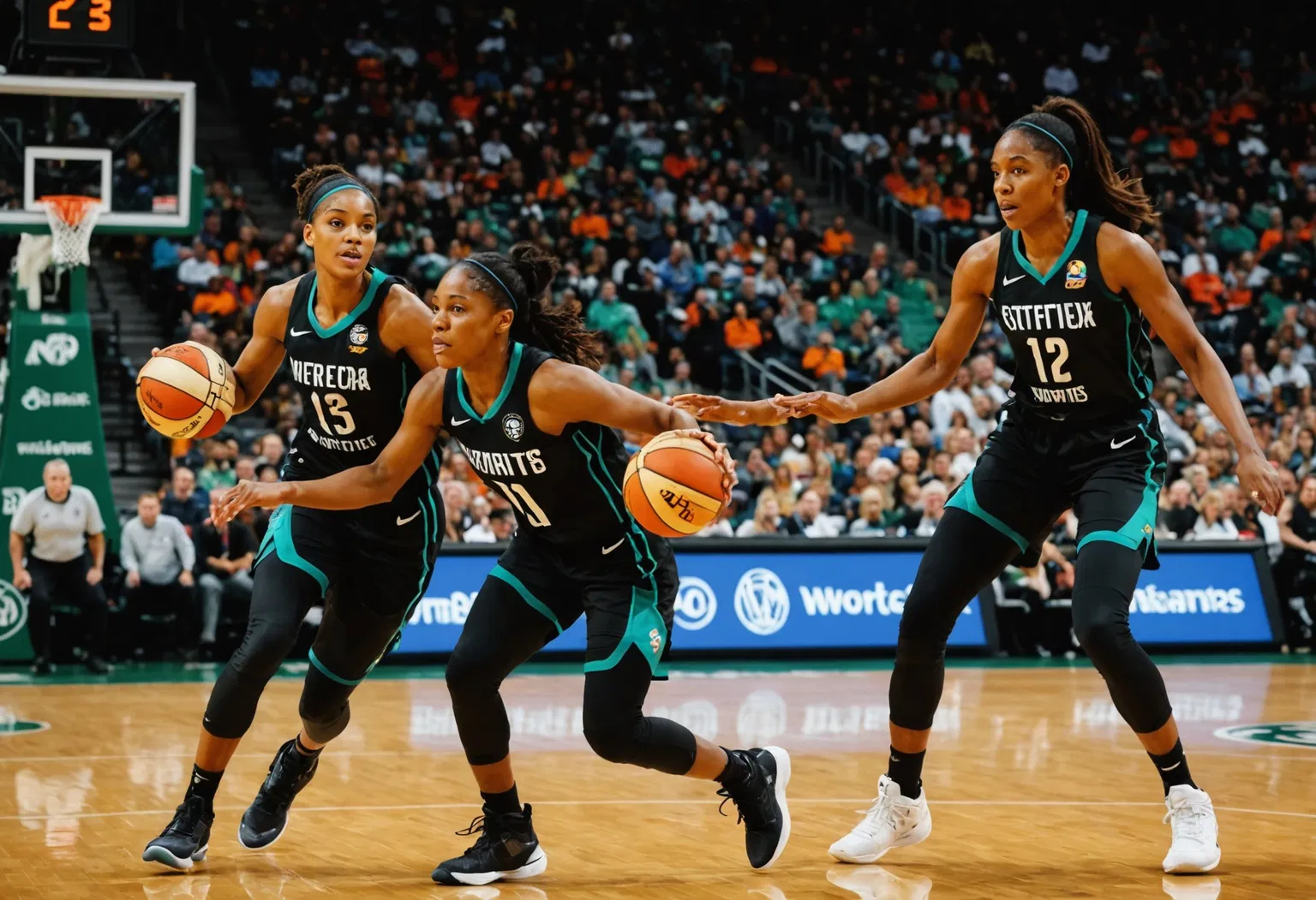
The WNBA playoffs are the three-round tournament that decides the Women's National Basketball Association's champion — and the 2026 edition is officially underway after first-round action tipped off on Sunday, September 27. Every May through October, the league's 15 teams battle through a 44-game regular season, but only the top eight get a shot at the title. From there, the postseason follows a strict 1-through-8 seeding system that escalates from best-of-three in the opening round to a best-of-seven Finals. Whether you're a new fan trying to follow Caitlin Clark's Indiana Fever or just want to understand the bracket on your screen, here's exactly how the WNBA postseason works.
Who Gets In: Eight Teams, No Conferences
The first thing to know is that the WNBA ignores conferences and divisions when building its playoff field. The eight teams with the best regular-season records qualify, and they are seeded first through eighth strictly by winning percentage — the team with the best record earns the No. 1 seed, while the eighth-best record lands at No. 8. There are no automatic bids and no play-in tournament like the NBA uses.
In 2026, a record 15 franchises competed after the Toronto Tempo and Portland Fire joined the league (following the Golden State Valkyries' 2025 debut). Each club played 44 regular-season games — a total that climbs to 50 beginning with the 2027 season — making the race for those eight spots as crowded as it has ever been.
Seeding Tiebreakers: What Happens When Records Match
With 15 teams and only eight spots, ties are common. When two or more clubs finish with identical records, the WNBA settles the order with a defined pecking order. The first tiebreaker is head-to-head winning percentage among the tied teams. If that fails to separate them, the league compares each team's winning percentage against opponents that finished .500 or better. Deeper criteria — including point differential and, as a last resort, a coin flip — only come into play after those first two steps.
How the Bracket Lines Up
The eight qualifiers slot into a fixed, traditional bracket: No. 1 plays No. 8, No. 2 plays No. 7, No. 3 plays No. 6, and No. 4 plays No. 5. Crucially, there is no reseeding between rounds. Teams remain on their side of the bracket regardless of who wins, which means a low seed's upset keeps that team on a locked-in path — a big reason why the No. 8 New York Liberty's first-round sweep of the No. 1 Minnesota Lynx this season created so much shock across the league.
Three Rounds, Escalating Series Lengths
The postseason is built around three rounds that grow longer as the stakes rise. A team must win a majority of games in each series to advance:
- First Round — Best-of-three (1-1-1): Four separate series. A team needs two wins to advance. The higher seed hosts Games 1 and 3, while the lower seed hosts Game 2 in between.
- Semifinals — Best-of-five (2-2-1): Two series. A team needs three wins. The higher seed hosts Games 1, 2, and 5.
- WNBA Finals — Best-of-seven (2-2-1-1-1): The championship series. A team needs four wins. The higher seed hosts Games 1, 2, 5, and 7, while the lower seed hosts Games 3, 4, and 6.
Because the higher seed hosts the decisive home games in every round, finishing with a better regular-season record carries real weight. Across the entire postseason, there are a maximum of 29 games — up to 12 in the first round, 10 in the semifinals, and seven in the Finals.
Why Home Court Matters
Home-court advantage is baked directly into each series' scheduling formula. In the 1-1-1 first round, the higher seed is guaranteed the opening game and a potential winner-take-all Game 3 in its own building. The 2-2-1 semifinal format hands the higher seed the first two games at home and, if needed, a Game 5 back at home. And in the 2-2-1-1-1 Finals, the higher seed would host a deciding Game 7. For the No. 1 seed, this advantage holds through every round of the playoffs.
How the Format Got Here
Today's bracket is relatively new. The WNBA's first postseasons in the late 1990s were small, conference-based tournaments, and for years the league split its field between the Eastern and Western Conferences. From 2016 through 2021, the league moved to a top-eight format regardless of conference but gave the top two seeds first-round byes while the remaining teams played single-elimination games.
That all changed in November 2021, when the WNBA approved a sweeping new format effective for 2022: byes and single-elimination games were eliminated in favor of a true eight-team bracket with a best-of-three opening round. Then, in October 2024, the league announced two more upgrades for the 2025 season. The Finals expanded from best-of-five to best-of-seven for the first time in league history, and the first round shifted to the current 1-1-1 home-court split. From 2022 through 2024, the opening round had used a 2-1 setup in which the higher seed hosted the first two games.
The 2026 Playoffs: What's Happening Right Now
The 2026 WNBA Playoffs, presented by Google Pixel, opened September 27 with four best-of-three series. The bracket immediately delivered a historic upset: the No. 8 seed New York Liberty swept the No. 1 overall seed Minnesota Lynx in two games, ending the Lynx's season and sending the Liberty to the semifinals. Meanwhile, the defending champion Las Vegas Aces — who beat the Fever 102-85 in Game 1 — watched Indiana storm back with a 99-89 Game 2 win at home to force a deciding Game 3, powered by a postseason career-high 27 points from Caitlin Clark. The Golden State Valkyries and Atlanta Dream also battled through their first-round matchups against the Dallas Wings and Washington Mystics.
What Comes Next: Semifinals and the Finals
The best-of-five semifinals tip off October 4 and can run through October 14. The two surviving teams then meet in the best-of-seven WNBA Finals, which begin October 17 and could stretch all the way to Halloween. With the Liberty carrying the momentum of their first-round sweep and Clark's Fever proving they can push the defending champions, the path to the championship is as wide open as it has been in years. Last season, the Aces claimed their third title in the first-ever best-of-seven Finals — a reminder that the new format has already produced historic moments.
The Bottom Line
- Eight of the WNBA's 15 teams qualify for the playoffs, seeded 1 through 8 by regular-season record with no conference split.
- The bracket is fixed — 1 vs. 8, 2 vs. 7, 3 vs. 6, 4 vs. 5 — with no reseeding between rounds.
- The first round is best-of-three (1-1-1), the semifinals are best-of-five (2-2-1), and the Finals are best-of-seven (2-2-1-1-1).
- Higher seeds host the decisive home games in every round.
- The current bracket debuted in 2022, and the best-of-seven Finals arrived in 2025.
- The 2026 postseason runs from September 27 through a Finals opener on October 17.