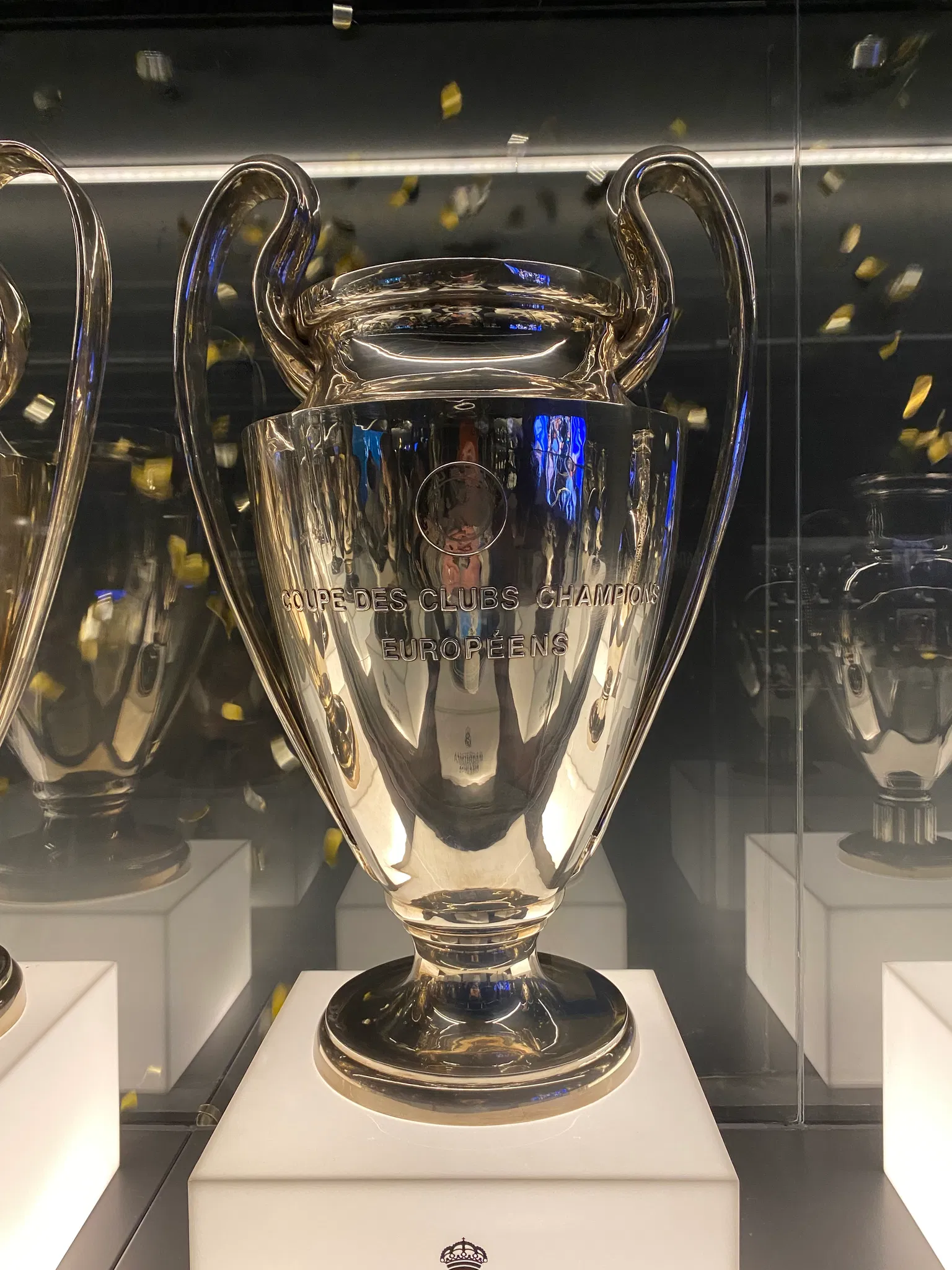
The UEFA Champions League stands as the most prestigious club football competition in the world, captivating millions of fans across the globe each season. Since its inception in 1955 as the European Champion Clubs' Cup, the tournament has evolved dramatically, with the 2024/25 season introducing the most significant format change in over two decades. Understanding how this complex competition works—from qualification to the final—reveals why it remains the pinnacle of European club football.
How the New Champions League Format Works: A Complete Breakdown
The 2024/25 season marked a historic shift in the UEFA Champions League structure, moving from the traditional 32-team group stage to a 36-team league phase. Under the new system, all participating clubs are ranked together in a single league table, creating what UEFA calls the "Swiss model." Each team plays eight matches—four at home and four away—against eight different opponents drawn from four seeding pots.
This departure from the previous format, where teams played three opponents twice in home-and-away fixtures, means clubs now face a wider variety of opposition. The draw ensures each team plays two opponents from each pot, with one home and one away match against teams from each seeding level. This creates more competitive balance and reduces the number of "dead rubber" matches that sometimes occurred in the final group stage matchdays.
The league phase results determine which teams advance to the knockout stages. The top eight teams qualify directly for the round of 16, while those finishing between 9th and 24th enter a two-legged knockout phase play-off. Teams that finish 25th or lower are eliminated from European competition entirely—a significant change from previous seasons when third-placed group stage teams would drop into the UEFA Europa League.
From European Cup to Champions League: The Evolution of a Football Institution
The competition's history spans seven decades, beginning in 1955 as the European Champion Clubs' Cup—a straight knockout tournament contested exclusively by domestic league champions. Real Madrid dominated the early years, winning the first five editions. The tournament maintained this simple format until 1991 when a group stage was introduced, and in 1992 it was rebranded as the UEFA Champions League.
Major expansions followed in 1997–98 when runners-up from stronger leagues were admitted, and again in 2003–04 when a second group stage was briefly introduced. The current format evolution represents the most substantial change since the 2003–04 season, responding to demands for more matches between top clubs and a more inclusive competition structure.
The timeline of format changes reflects European football's growth: 1955–1991 (knockout only), 1991–1993 (introduction of group stage), 1993–1994 (Champions League rebranding), 1994–1997 (expansion to include runners-up), 1997–2003 (multiple entrants from top leagues), 2003–2024 (consolidated group stage format), and 2024–present (36-team league phase).
Qualification Explained: How Teams Earn Their Place in the Champions League
Qualification for the Champions League remains primarily based on domestic league performance, but the system incorporates UEFA's coefficient rankings to determine how many teams each association can enter. The top four leagues—currently England's Premier League, Spain's La Liga, Germany's Bundesliga, and Italy's Serie A—receive four automatic qualification spots for their top-four finishing teams.
The four additional slots in the new 36-team format are allocated as follows: one place goes to the fifth-ranked association in UEFA's coefficient rankings; one place is awarded to an additional domestic champion through the qualifying rounds; and two places go to the associations with the best collective performance in the previous season's European competitions (known as "European Performance Spots").
This coefficient system rewards associations whose clubs perform well in Europe, creating a dynamic qualification process that can change annually. For example, if German clubs excel in European competition one season, the Bundesliga might earn an extra Champions League spot for the following season, potentially allowing the fifth-placed team to qualify.
Prize Money and Economic Impact: The Financial Stakes of Champions League Football
Participation in the Champions League represents a significant financial windfall for clubs, with UEFA distributing approximately €2 billion in prize money each season. The exact amounts depend on several factors: a fixed starting fee for participation, performance bonuses for wins and draws, and a share of television market pool revenue.
In the 2024/25 season, each of the 36 teams in the league phase received a guaranteed €18.6 million just for qualifying. Clubs then earned €2.1 million for each win and €700,000 for each draw during the league phase. Advancing through each knockout round brings additional millions, with the eventual champions earning over €85 million in total prize money before considering matchday revenue and commercial opportunities.
This financial model creates a self-reinforcing cycle where consistent Champions League participation allows clubs to invest in better players, facilities, and coaching, which in turn increases their chances of continued qualification. The economic disparity between Champions League regulars and other clubs has become one of the defining features of modern European football.
Current Champions and Recent History: Where European Football Stands Today
Paris Saint-Germain claimed their first Champions League title in 2025, defeating Inter Milan in the final held at Munich's Football Arena. This victory marked a breakthrough for the French club after years of investment and near-misses in the competition. Real Madrid remains the most successful club in Champions League history with 15 titles, followed by AC Milan (7), Bayern Munich and Liverpool (6 each), and Barcelona (5).
The 2025 final continued the trend of first-time winners in recent years, following Chelsea's 2021 victory and Manchester City's 2023 triumph. This parity among Europe's elite clubs reflects the increasing competitiveness of the tournament, where financial resources, tactical innovation, and squad depth have become crucial factors for success.
Looking ahead, the 2026 final is scheduled for London's Wembley Stadium, while future host cities include Milan (2027) and Madrid (2028). These iconic venues underscore the Champions League's status as European football's showpiece event.
The Fan Experience: How Supporters Engage with the Champions League
Beyond the on-field action, the Champions League has cultivated unique traditions that enhance the competition's appeal. The tournament's iconic anthem, composed by Tony Britten and based on George Frideric Handel's "Zadok the Priest," plays before every match, creating an instantly recognizable atmosphere. The "starball" design of the official match ball and the distinctive branding have become symbols of elite European football.
For traveling supporters, Champions League away days represent some of the most memorable experiences in football fandom. UEFA allocates at least 5% of stadium capacity to visiting fans for knockout matches, ensuring vibrant atmospheres even in away venues. The competition's global broadcast reach means matches are watched by hundreds of millions of viewers, with the 2025 final attracting an estimated 450 million viewers worldwide.
Digital engagement has transformed how fans follow the tournament, with official apps, fantasy football games, and social media content providing new ways to connect with the competition. UEFA's Champions League gaming and fantasy platforms have millions of active users, extending the competition's reach beyond traditional broadcast audiences.
The Future of the Champions League: What Changes Might Come Next
While the 2024 format change represents the most significant overhaul in years, European football continues to evolve. UEFA regularly reviews competition structures to balance commercial interests with sporting integrity. Potential future developments could include further expansion beyond 36 teams, changes to the revenue distribution model, or adjustments to the scheduling to accommodate growing fixture congestion.
The relationship between domestic leagues and European competitions remains a delicate balance, with concerns about player workload and competitive fairness prompting ongoing discussions. Some proposals suggest creating a more integrated European football calendar, while others advocate for protecting domestic competitions from further erosion by European matches.
What remains certain is that the Champions League will continue to adapt to football's changing landscape while maintaining its position as the ultimate club competition. As UEFA President Aleksander Čeferin stated when announcing the new format: "We are fully committed to respecting the fundamental values of sport and to defending the key principle of open competitions, with qualification based on sporting merit."
Key Takeaways: What You Need to Know About the Champions League
- New Format: Since 2024/25, 36 teams compete in a single league phase, playing 8 matches each (4 home, 4 away) against eight different opponents.
- Qualification: Based on domestic league positions and UEFA coefficients, with four extra slots for association performance and additional champions.
- Knockout Stages: Top 8 advance directly to round of 16; positions 9-24 enter playoff round; 25th and below are eliminated.
- No More Drop-Down: Teams can no longer transfer to the Europa League after Champions League elimination.
- History: Began in 1955 as European Cup, rebranded in 1992, with Real Madrid holding record 15 titles.
- Current Champions: Paris Saint-Germain (2025 winners), with the 2026 final scheduled for Wembley Stadium.