The 2026 midterm elections delivered a sweeping 'blue wave' on November 3, with Democrats flipping control of both the House of Representatives and the Senate — but those attention-grabbing projections were only the first step in a longer, tightly regulated process that turns individual ballots into certified election results. Understanding how election results work, from the moment a voter casts a ballot to the moment a winner is officially certified, explains why some races are 'called' within minutes on election night while others take days — or even weeks — to finalize.
Election results are not produced by a single tally announced on television. Instead, they are built through a chain of counting, checking, auditing, and certifying that involves poll workers, optical scanners, county election officials, state canvassing boards, and — for presidential races — a separate body called the Electoral College.
From Ballot to Box: How Votes Are Actually Counted
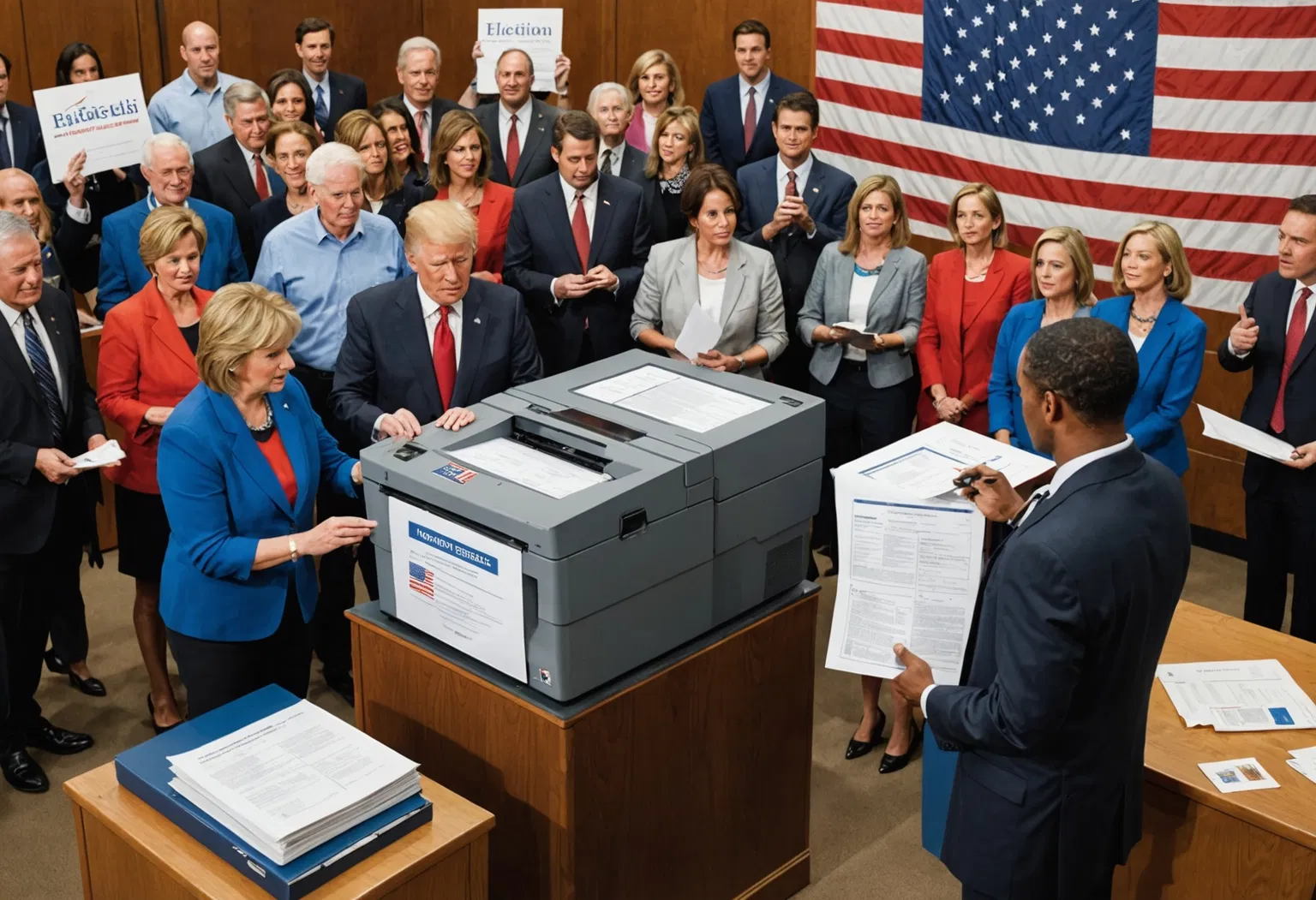
When a voter fills in a bubble or connects an arrow on a paper ballot, the result is almost always tallied by an optical scanner rather than a person. According to data from the U.S. Election Assistance Commission (EAC), most voting precincts feed paper ballots into electronic scanners that read the marked choices and tabulate them. In some states and circumstances, ballots are counted by hand or double-checked manually to verify the machine totals.
That counting process includes both in-person ballots cast on Election Day and, increasingly, mail ballots. A crucial wrinkle: several states count mail ballots for days after Election Day, so long as they were postmarked by Election Day. That is a major reason close races are not settled on election night.
After the initial count, local officials run a formal review called a canvass. During canvassing, election officials reconcile the number of ballots cast with the number of voters recorded, check for errors, and resolve any discrepancies. It is designed as a system of checks and balances to confirm that every eligible vote was captured correctly.
The Election-Week Timeline: From Projections to Certification
It helps to separate two very different things that people often conflate: a media projection and an official certification.
On election night, news organizations 'call' or 'project' winners using a combination of early vote returns, exit polls, and statistical models. These projections are not official results — they are forecasts, and they can arrive within minutes of polls closing in lopsided races. The official result, by contrast, moves much more slowly.
Once all ballots are counted and canvassed, election officials issue a written statement of certification attesting that the results are a true and accurate accounting of all votes cast. State law sets the deadlines, and they vary widely: some states require certification within a matter of days, while others allow up to 30 days or more. Counties commonly must certify their results within 30 days of the election — or within 30 days of a completed recount, if one is triggered.
Recounts add another layer of time. A recount is the re-examination and re-tabulation of ballots to confirm the outcome, typically triggered automatically when a margin is razor-thin, or requested by a candidate. Close races can therefore remain unresolved for days or weeks after the polls close.
Why the Electoral College Uses 270 Votes — and How Midterms Differ
Here is an important distinction: the process differs depending on whether a presidential race or a midterm race is on the ballot.
For congressional, gubernatorial, and local contests — including the midterms — the winner is determined directly by the popular vote in that district or state. Whichever candidate receives the most votes wins, with no intermediary body.
Presidential elections work differently. Voters cast ballots for electors, who make up the Electoral College. There are 538 electors in total, and a candidate needs a majority — 270 electoral votes — to win the presidency. Each state's number of electors equals its two U.S. Senators plus its number of U.S. Representatives, which is based on population and adjusted every decade. After state officials certify the popular vote, the winning slate of electors meets in the state capital to cast its votes. If no candidate reaches 270, the election goes to a contingent process in the House of Representatives, where each state delegation gets one vote and 26 delegations are needed to win.
Midterms, held near the midpoint of a president's four-year term, skip the Electoral College entirely. In 2026, voters decided all 435 House seats (whose members serve two-year terms) and about one-third of the 100 Senate seats (whose members serve staggered six-year terms), plus three dozen governorships and thousands of state and local offices.
Where the 2026 Midterms Stand Now
The trend that made 'election results' a breakout search is the outcome of those November 3 contests. Democrats won control of both the House and the Senate, flipping key Senate seats in states including Iowa, Kansas, Maine, Ohio, North Carolina, South Carolina, and Texas, and flipping the governorships of Ohio and Texas. The results end two years of unified Republican control of Washington and usher in a divided government, with a Democratic Congress facing a Republican White House.
Analysts pointed to voter discontent over high prices and the war in Iran as central drivers of the Democratic sweep. But even as major networks projected Democratic control within hours, many individual races — and the official certification of the full results — were still being finalized, a reminder of the gap between a projection and a certified result.
What Happens Next: Certification, Swearing-In, and a Divided Government
Over the weeks following Election Day, states and counties will complete their canvasses and issue certifications, with some close races potentially heading to recounts. Once results are certified, winners are formally sworn in — the new Congress in early January, with governors and state officials taking office on their own state schedules.
Politically, the new Democratic majorities will gain committee control, subpoena power, and the ability to set the legislative agenda for the next two years. In the weeks ahead, both parties will also hold internal leadership elections. For voters following along at home, the takeaway is that 'election results' are never a single moment — they are a months-long chain of counting, auditing, and certifying that gives every vote a paper trail.
Key Takeaways: How Election Results Really Work
- Counted, not just announced: Most ballots are tallied by optical scanners, with hand counts used for verification in some places.
- Mail ballots can delay results: Several states count mail ballots postmarked by Election Day for days afterward.
- Canvassing comes before certification: Officials reconcile and audit the count before certifying results as official.
- Certification takes weeks: State deadlines range from days to 30 days or more, with recounts adding further time.
- Projections are not results: Media calls on election night are forecasts, not official certifications.
- Midterms skip the Electoral College: Congressional and state races are decided by direct popular vote; only presidential races use the 538-elector, 270-vote system.
- 2026 outcome: Democrats swept both chambers of Congress and several governorships, setting up divided government.