Israel's October 2026 election has once again produced the result the country knows best: no single party anywhere close to a governing majority. With Prime Minister Benjamin Netanyahu's bloc projected to win roughly 54 of the Knesset's 120 seats and challenger Gadi Eisenkot's opposition bloc around 49, the shape of the next government will be decided not at the ballot box but through weeks of coalition bargaining. To understand why Israeli elections almost always end this way, you first have to understand the unusual system that runs them — a nationwide, party-list form of proportional representation unlike almost anything else in the democratic world.
One Country, One Ballot: How Israel's Party-List System Works
In most countries, proportional representation means different regions elect different representatives. Israel does the opposite. The entire country is treated as a single nationwide constituency, and each voter casts a ballot for one party list — not for an individual candidate. The Knesset's 120 seats are then divided among the party lists roughly in proportion to each list's share of the national vote.
To win any seats at all, a party must clear an electoral threshold of 3.25% of the total vote, the equivalent of roughly four seats. That bar was raised over the years from just 1% to the current level in 2014, and votes cast for parties that fall below it are effectively discarded — which is why dozens of smaller factions fight hard simply to survive.
The exact distribution of seats uses a formula Israeli law calls the Bader-Ofer method, which is essentially the same highest-average calculation known internationally as the D'Hondt method. Because a perfectly proportional split never lands cleanly on whole numbers, leftover "surplus votes" are allocated through the same formula — and parties can sign surplus-vote agreements with allies before election day so their remaining votes are pooled rather than wasted.
One consequence of this design is that voters rarely know exactly who will sit in parliament. Parties submit ordered lists of candidates before the vote, and seats go to the people at the top of each list. There are no local representatives in the American or British sense; every lawmaker represents the country as a whole.
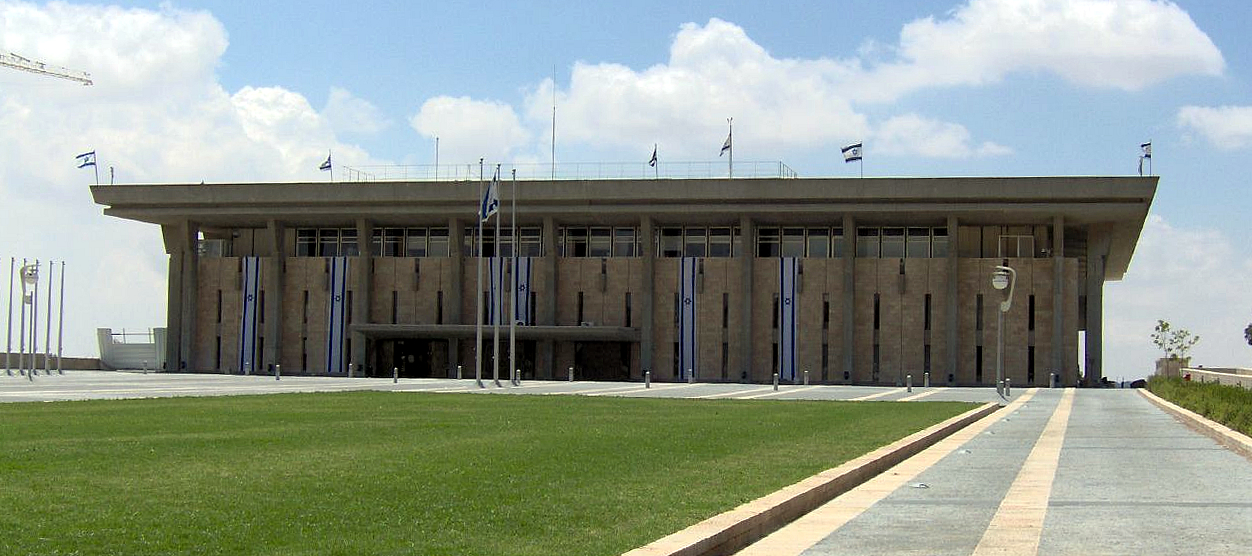
From Election Day to a New Government: How the Process Unfolds
Israelis vote on a single day that is a national holiday, intended to make it easier for everyone to reach the polls. Any citizen aged 18 or older is eligible, and — unlike in the United States — voters are registered automatically. About 7.3 million people were eligible to vote in the 2026 election, and turnout hit 77.7%, the highest in more than a quarter-century. Citizens living abroad generally must travel to Israel to cast a ballot.
Here is the sequence that follows the closing of the polls:
- Ballots are counted by the Central Elections Committee, with official results published within days.
- Israel's president — a largely ceremonial role currently held by Isaac Herzog — consults with every party that won seats.
- The president formally tasks the candidate judged most likely to succeed, typically the leader of the largest party, with forming a government.
- That candidate has 28 days, extendable by up to 14 more, to assemble a coalition commanding at least 61 of the 120 seats.
- If a coalition is sealed, it is presented to the Knesset for a vote of confidence, and the new government is sworn in.
- If the candidate fails, the president may offer the task to someone else — and if nobody succeeds, the Knesset can dissolve itself and trigger yet another election.
The gap between voting and governing can stretch for weeks or even months, which is why Israeli elections are often said to have no winner on election night.
Why Every Israeli Government Is a Coalition
Because of the low threshold and the sheer number of parties — religious, secular, right-wing, left-wing, centrist and Arab — no single party has ever won the 61 seats needed to govern alone. Every government in Israel's history has therefore been a coalition, stitched together from partners that may disagree on nearly everything else.
That arithmetic gives small parties enormous leverage. Netanyahu's outgoing government, formed after the 2022 election, held 64 seats and was widely described as the most right-wing coalition in Israel's history, relying on far-right figures such as Itamar Ben-Gvir and Bezalel Smotrich. Keeping such a coalition intact requires constant negotiation over budgets, religious policy and security — and any single partner can threaten to bring it down.
The magic number of 61 shapes nearly every strategic decision in Israeli politics. A party that crosses the threshold can hold the balance of power; a bloc that reaches 61 can govern; a bloc that falls short must find outside support — or head back to the polls.
Where Things Stand: The 2026 Deadlock
The 2026 election was the first since the Hamas attack of October 7, 2023, and it drew decades-high turnout. Exit polls and early counts showed Netanyahu's bloc leading but diminished — down from 64 seats in 2022 to roughly 54 — while Eisenkot's opposition bloc held about 49 seats and the Arab parties surged to around 17, a historic high.
That left neither main camp with a clear path to 61 seats on its own. Both Netanyahu and Eisenkot had ruled out relying on the Arab parties, leaving the country in familiar territory: a parliament in which the two largest blocs each fall short of a majority. Netanyahu, speaking at Likud headquarters, did not concede; Eisenkot said Israel had "voted against Netanyahu" but stopped short of declaring victory.
What Happens Next: The Road to a Coalition
President Herzog will now hold consultations with the parties before deciding whom to task with forming a government. Because Netanyahu's bloc is the largest, he is expected to receive the first chance — even though his path to 61 seats is far from assured.
The most likely scenarios include a narrow right-wing-religious coalition similar to Netanyahu's outgoing government; a unity government spanning the two main blocs; or, if no candidate can build a majority within the allotted time, the dissolution of the Knesset and another round of elections — a cycle Israelis know well after going to the polls repeatedly over a short span of years.
Whatever the outcome, the weeks ahead will be decided less by voters than by negotiators, as party leaders trade ministries, policy promises and red lines in pursuit of that elusive 61-seat majority.
Key Takeaways: Israeli Elections at a Glance
- Israel uses nationwide party-list proportional representation; the whole country is one electoral district.
- The Knesset has 120 seats, and 61 are needed to form a governing majority.
- Parties must win at least 3.25% of the vote — about four seats — to enter parliament.
- Seats are allocated using the Bader-Ofer method, Israel's version of the D'Hondt formula.
- Voters choose parties, not individual candidates, and the party lists determine who takes the seats.
- No party has ever won a majority outright, so every government is a coalition.
- After the vote, the president tasks a party leader with assembling that coalition — a process that can take weeks or months.
- In 2026, Netanyahu's bloc won the most seats but fell short of a majority, leaving the next government to coalition talks.