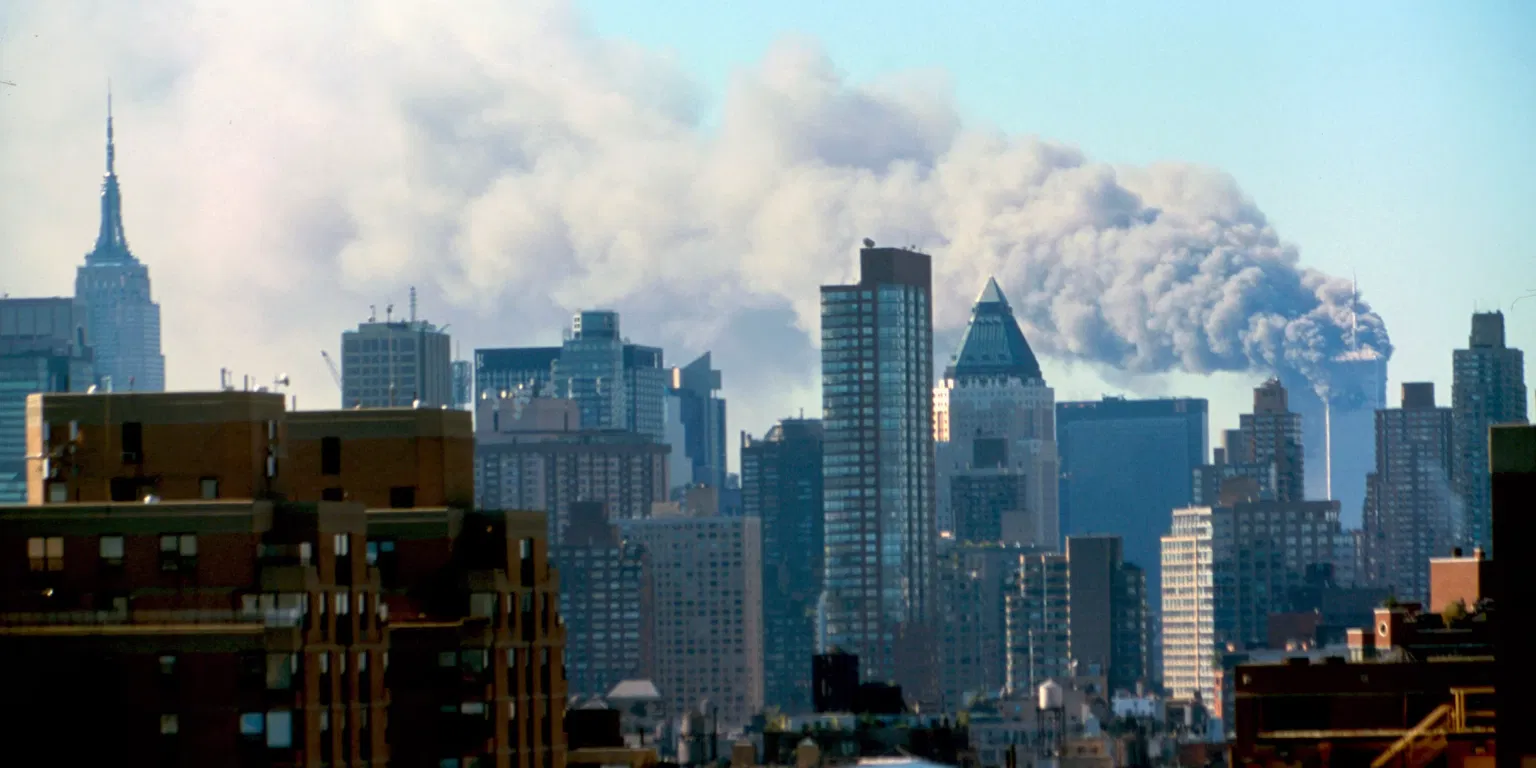
On the morning of September 11, 2001, four coordinated terrorist attacks killed 2,977 people in the United States, making it the deadliest act of terrorism in world history. Nineteen hijackers affiliated with the Islamic extremist group al-Qaeda seized four commercial airliners and deliberately flew two of them into the Twin Towers of the World Trade Center in New York City and a third into the Pentagon in Arlington, Virginia. A fourth plane, United Airlines Flight 93, crashed into a field near Shanksville, Pennsylvania, after passengers and crew fought back against the hijackers. Including the 19 hijackers, the total number of deaths reached 2,996, and the attacks reshaped the course of American and world history.
What Happened to the Twin Towers on 9/11?
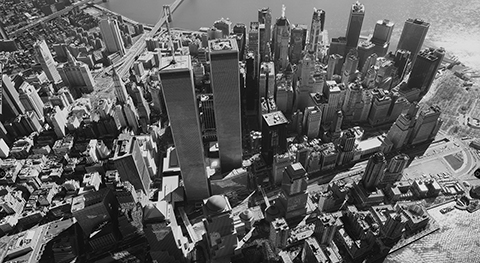
The Twin Towers — officially One World Trade Center (the North Tower) and Two World Trade Center (the South Tower) — anchored a seven-building complex in lower Manhattan. Each tower rose 110 stories, standing roughly 1,360 feet tall, and both were among the world's tallest buildings when they were completed in the early 1970s.
At 8:46 a.m., American Airlines Flight 11, a Boeing 767 carrying thousands of gallons of jet fuel, crashed into the North Tower, ripping a gaping, burning hole between the 93rd and 99th floors and instantly killing hundreds of people while trapping hundreds more above the impact zone. Seventeen minutes later, at 9:03 a.m., a second Boeing 767 — United Airlines Flight 175 — sliced into the South Tower between the 77th and 85th floors. The collision triggered a massive fireball, and it became immediately clear that the United States was under attack.
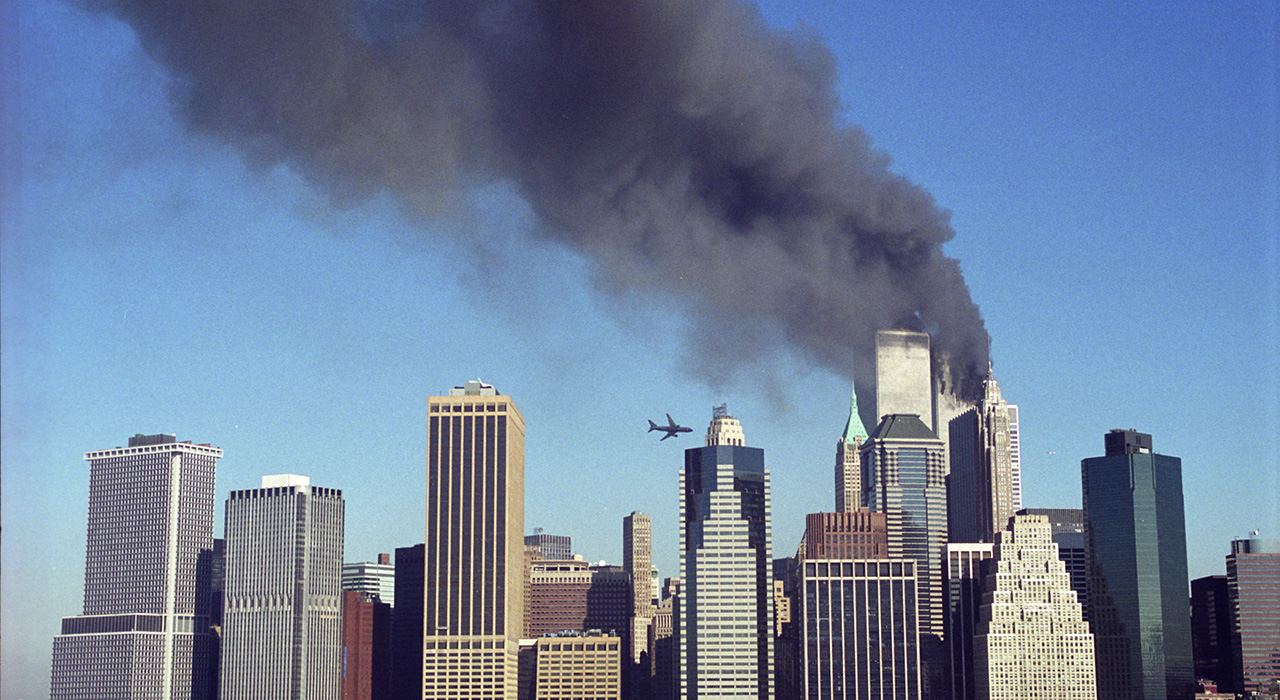
At 9:37 a.m., American Airlines Flight 77, a Boeing 757, crashed into the west side of the Pentagon, igniting a fire that caused a section of the Department of Defense headquarters to collapse. Meanwhile, passengers on the fourth hijacked plane, United Airlines Flight 93, learned through phone calls what had already happened in New York and Washington. A group of them stormed the cockpit, and the hijackers crashed the plane into an empty field in Pennsylvania at 10:03 a.m. An estimated 17,400 people had been inside the World Trade Center complex that morning, and roughly 87 percent of them were safely evacuated, thanks in large part to the efforts of firefighters.
A Minute-by-Minute Timeline of the 9/11 Attacks
The entire sequence of events in New York unfolded in just 102 minutes:
- 8:46 a.m. — American Airlines Flight 11 strikes the North Tower between floors 93 and 99.
- 9:03 a.m. — United Airlines Flight 175 strikes the South Tower between floors 77 and 85.
- 9:37 a.m. — American Airlines Flight 77 crashes into the Pentagon.
- 9:59 a.m. — The South Tower collapses, just 56 minutes after being hit.
- 10:03 a.m. — United Airlines Flight 93 crashes in a field near Shanksville, Pennsylvania.
- 10:28 a.m. — The North Tower collapses, 102 minutes after impact.
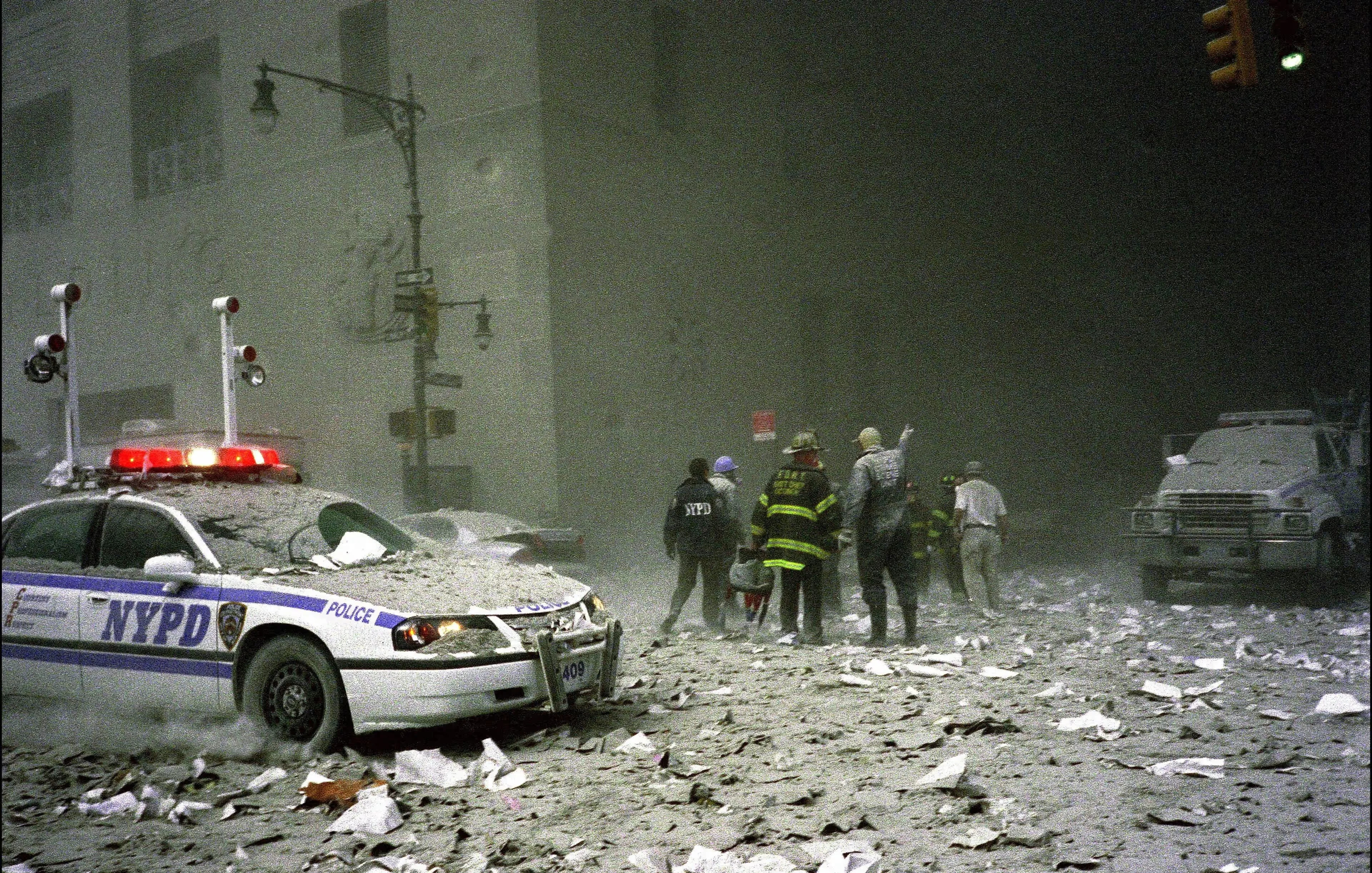
The collapse of the towers sent enormous clouds of dust and debris rolling through lower Manhattan, destroying or damaging surrounding buildings and coating the area in ash. Only 16 people who were inside the towers when they collapsed survived — most of them firefighters sheltering in the North Tower's Stairwell B.
Why Did the Twin Towers Collapse? The Engineering Behind the Disaster
The Twin Towers were engineered to withstand hurricane-force winds and even the impact of a large aircraft, but they were not designed to survive the combination of severe structural damage and sustained jet-fuel fires. When each plane struck, it severed dozens of steel columns and, critically, stripped away the fireproofing that protected the steel frame.
The burning jet fuel ignited office contents across multiple floors, producing fires hot enough to weaken the steel. As the floors above the impact zones sagged, they pulled the exterior columns inward, and once the weakened structure could no longer support the weight above, the towers collapsed in a rapid, progressive failure. Federal investigators at the National Institute of Standards and Technology (NIST) concluded that the collapse was initiated by the fires, not by the aircraft impact alone.
At the Pentagon, 184 people were killed, including everyone aboard Flight 77. In Pennsylvania, all 40 passengers and crew members of Flight 93 died, but their actions prevented the hijackers from reaching their intended target, which investigators believe was the U.S. Capitol or the White House.
Who Was Responsible for the 9/11 Attacks?
The attacks were orchestrated by al-Qaeda, the militant Islamist network founded by Osama bin Laden. Fifteen of the 19 hijackers came from Saudi Arabia, two from the United Arab Emirates, one from Egypt, and one from Lebanon. Some had lived in the United States for more than a year and taken flight training at American flight schools, while others slipped into the country in the months before the attacks.
Bin Laden cited U.S. support for Israel, American involvement in the Persian Gulf War, and the continued U.S. military presence in the Middle East as his stated grievances. The 9/11 Commission Report, released in 2004, later identified Khalid Sheikh Mohammed as the principal architect of the 9/11 attacks.
The Aftermath: How 9/11 Changed the World
President George W. Bush declared a global war on terror and launched the U.S.-led invasion of Afghanistan in October 2001 to dismantle al-Qaeda and remove the Taliban regime that sheltered it. Bin Laden evaded capture for nearly a decade before U.S. forces killed him in Abbottabad, Pakistan, on May 2, 2011.
Domestically, the attacks prompted the largest reorganization of the federal government in decades, including the creation of the Department of Homeland Security in 2002 and sweeping changes to airport security. Thousands of first responders and lower Manhattan residents exposed to the toxic dust were later diagnosed with 9/11-related illnesses; by the end of 2018, more than 10,000 members of the World Trade Center Health Program had cancers certified as linked to the attacks.
Remembering 9/11: The Memorial and the Survivor Tree
At the World Trade Center site, two reflecting pools now sit within the exact footprints of the Twin Towers as part of the Reflecting Absence memorial designed by architect Michael Arad. The names of all 2,977 victims are engraved on bronze panels surrounding the pools, and each September the Tribute in Light — two beams rising into the night sky — is projected over the site. A Callery pear tree that survived the collapse, known as the Survivor Tree, still stands in the memorial plaza as a symbol of resilience.
The Bottom Line: Key Facts About 9/11
- 2,977 people were killed in the attacks, not including the 19 hijackers.
- 2,753 people died at the World Trade Center, including 343 firefighters, 23 NYPD officers, and 37 Port Authority police officers.
- 184 people died at the Pentagon, and 40 aboard Flight 93.
- Four planes were hijacked by 19 al-Qaeda terrorists.
- The South Tower collapsed 56 minutes after impact; the North Tower collapsed 102 minutes after impact.
- The towers fell because jet-fuel fires weakened their steel frames, not because of the impact alone.