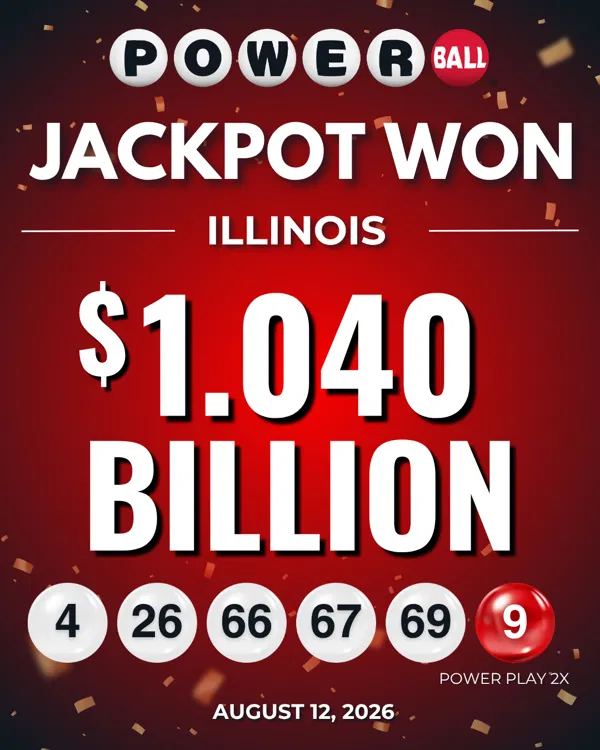
A single $2 ticket sold in Quincy, Illinois, turned into a $1.04 billion fortune overnight. On Wednesday, Aug. 12, 2026, one lucky player matched all six numbers — the white balls 4, 26, 66, 67, and 69, plus the red Powerball 9 — to claim the eighth-largest jackpot in Powerball history and the biggest prize of the year so far. Before taxes, the winner can choose between an annuitized $1.04 billion paid out over 29 years or a one-time lump sum of $450.5 million.
But behind the headlines sits a game with precise rules, staggering odds, and a clear set of steps every winner should follow. Whether you're a regular player or just curious about how a Powerball winner emerges from a $2 ticket, here's how the game actually works.
How Powerball Works: The Rules Behind the Jackpot
Powerball is the flagship multi-state lottery in the United States, overseen by the Multi-State Lottery Association (MUSL) and sold in 45 states, Washington, D.C., Puerto Rico, and the U.S. Virgin Islands. On July 21, 2026, ticket sales expanded to the United Kingdom, making the recent jackpot run the first to include international players.
Playing is simple: for $2 per play, you select five numbers between 1 and 69 for the white balls, plus one number between 1 and 26 for the red Powerball. You can pick your own numbers or let the lottery terminal generate a random "quick pick." Drawings are held three times a week — every Monday, Wednesday, and Saturday at 10:59 p.m. Eastern Time — at the Florida Lottery's draw studio in Tallahassee.
The drawing uses two separate ball machines, a two-drum concept Powerball pioneered when it launched in 1992. Five white balls are drawn from the first machine and the red Powerball from the second, using Halogen machines manufactured by Smartplay International. The balls are mixed by a turntable inside each machine, and every drawing is supervised by an independent accounting firm to ensure fairness.
Two optional add-ons can boost your payout. For an extra $1, Power Play multiplies non-jackpot prizes by 2x, 3x, 4x, 5x, or 10x — though the 10x multiplier only appears when the advertised jackpot is $150 million or less. For another $1, Double Play enters your same numbers into a separate second drawing with a top prize of $10 million.
Your Real Odds: The 9 Ways to Win
Most players know the jackpot is hard to hit, but few grasp exactly how hard. The odds of matching all five white balls plus the red Powerball are 1 in 292,201,338. To put that in perspective, you are far more likely to be struck by lightning in your lifetime than to win the Powerball jackpot.
The good news is that Powerball offers nine ways to win, so you don't need all six numbers to take home cash. The overall odds of winning any prize are 1 in 24.87:
- Match 5 + Powerball: Jackpot — odds 1 in 292,201,338
- Match 5 (no Powerball): $1 million — odds 1 in 11,688,053
- Match 4 + Powerball: $50,000 — odds 1 in 913,129
- Match 4: $100 — odds 1 in 36,525
- Match 3 + Powerball: $100 — odds 1 in 14,494
- Match 3: $7 — odds 1 in 580
- Match 2 + Powerball: $7 — odds 1 in 701
- Match 1 + Powerball: $4 — odds 1 in 92
- Match Powerball only: $4 — odds 1 in 38
That $1 million "Match 5" prize is real and far more common than the jackpot. In the Aug. 12 drawing alone, four tickets sold in Arizona, California, Florida, and North Carolina matched all five white balls for $1 million each, while a fifth ticket in Massachusetts added Power Play to double its prize to $2 million.
Annuity vs. Lump Sum: How a Winner Gets Paid
If you beat those odds, you face an immediate decision: take the advertised jackpot as an annuity or accept a smaller lump sum now.
The annuity option pays the full advertised amount in 30 graduated payments over 29 years, with each payment increasing 5% annually. The lump-sum option pays roughly half of the advertised figure in one cash payment. For the Illinois winner, that meant choosing between $1.04 billion spread across nearly three decades or $450.5 million in cash up front.
Whichever option you pick, the money is taxed as ordinary income in the United States. Both prize figures are advertised before federal and, in most cases, state taxes — one reason many winners hire financial professionals before they ever claim the check.
What to Do If You Win
Winning is rare, but the steps that follow are surprisingly standard. Here's what lottery officials and financial experts recommend:
- Sign the back of your ticket immediately. A signed ticket proves ownership if it's ever lost or stolen.
- Claim your prize in the right place. Prizes must be claimed in the jurisdiction where the ticket was purchased. Amounts up to about $600 can usually be claimed at a licensed retailer; larger prizes require a lottery office or state headquarters.
- Watch the clock. Ticket expiration dates typically run from 90 days to one year, depending on the state.
- Keep it quiet at first. Consult a lawyer and a financial advisor before going public or making any major decisions.
- Decide between annuity and lump sum with professional guidance, not impulse.

Even smaller winners follow the same process. Alabama's Theresa Stuckey, for example, recently turned a routine pit stop in Kentucky into a $150,000 Powerball prize, joining the thousands of players who claim non-jackpot prizes every week.
The Latest Winner: $1.04 Billion in Illinois
The Aug. 12 drawing capped a 44-drawing jackpot run that began after the jackpot was last won on May 2. It was the largest Powerball prize of 2026 and the eighth-largest in the game's history, trailing the record $2.04 billion won in California in November 2022.
"Congratulations to our newest Powerball jackpot winner in Illinois," said Stephen Durrell, Chair of the Powerball Product Group and Executive Director of the Kansas Lottery. "For more than three decades, Powerball has shown that a winning ticket can be sold anywhere the game is played, giving every $2 ticket the chance to change not only a winner's life, but generations to come."
More than 3 million tickets won cash prizes in the drawing, and lottery officials urged everyone to check their numbers carefully. For the next drawing, the jackpot resets to its $20 million starting point — and because that figure is below $150 million, the 10x Power Play multiplier returns to play.
On average, 35% of every $2 Powerball ticket stays in the jurisdiction where it was sold, supporting education, scholarships, veterans' services, and parks. Over 34 years, the game has generated an estimated $38 billion for those public causes — meaning even a losing ticket helps fund something bigger than the jackpot itself.
The Bottom Line: Key Takeaways
- A single Illinois ticket won a $1.04 billion Powerball jackpot on Aug. 12, 2026 — the eighth-largest in the game's history.
- Powerball costs $2 per play: pick five numbers from 1–69 and one Powerball from 1–26.
- Your odds of winning the jackpot are 1 in 292,201,338; overall odds of any prize are 1 in 24.87.
- Winners choose between a 30-year annuity or a lump sum worth roughly half the advertised total, both before taxes.
- If you win, sign your ticket, claim it in the correct state, and consult a financial advisor before deciding.