The Big Ten men's basketball tournament represents one of the most exciting events in college sports, serving as the culmination of the regular season and determining which team earns the conference's automatic bid to the NCAA Tournament. For 2026, the tournament undergoes significant changes with a new 18-team format that includes every member institution for the first time in conference history. Understanding how this tournament works—from seeding procedures to bracket structure—provides fans with deeper appreciation for the drama that unfolds each March.
The Evolution of Big Ten Tournament Format
Since its inception in 1998, the Big Ten men's basketball tournament has evolved significantly to accommodate conference expansion and changing competitive landscapes. What began as an 11-team event has grown alongside the conference itself, which now boasts 18 member institutions following recent additions of UCLA, USC, Oregon, and Washington. The tournament has traditionally served as the final test before March Madness, with the champion receiving the conference's automatic NCAA Tournament bid—a prize that can make or break a team's postseason aspirations.
Breaking Down the 2026 Tournament Structure
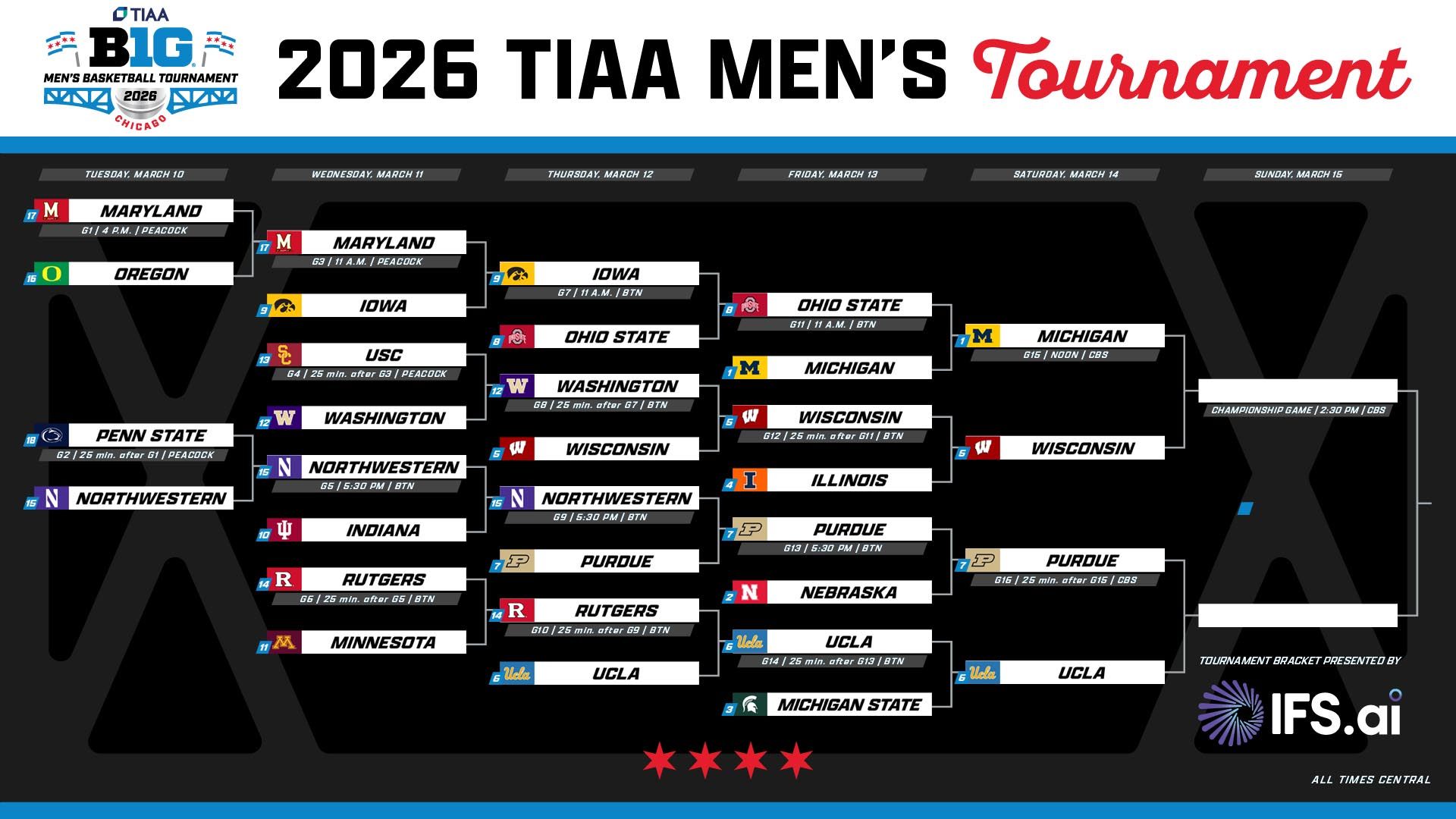
The 2026 TIAA Big Ten Men's Basketball Tournament introduces a comprehensive 18-team single-elimination bracket that guarantees every conference member a chance to compete for the championship. According to official conference documents, the tournament follows a specific progression: "The lowest four seeds compete in two games on the first day. The next lowest four seeds play the winners of those two games and each other on the second day." This structure creates a natural progression where higher-ranked teams enter the bracket later, rewarding regular-season performance while giving every team a path to the championship.
The tournament spans six days from March 10-15, 2026, with games taking place at the United Center in Chicago—the historic home of the NBA's Chicago Bulls. The schedule breaks down as follows: First-round games on March 10, second-round games on March 11, third-round games on March 12, quarterfinals on March 13, semifinals on March 14, and the championship game on March 15. This extended format accommodates the additional teams while maintaining the tournament's traditional rhythm and television broadcast windows.
How Teams Are Seeded and Ranked
Seeding determines tournament matchups and can significantly impact a team's path to the championship. Teams are ranked No. 1 through No. 18 based on their regular-season conference records, with tiebreakers applied when necessary. The Detroit Free Press outlines the official tiebreaking procedure: "Head-to-head record, using winning percentage for ties of more than two teams. Record against teams..." This system ensures that teams with identical conference records are fairly differentiated based on their performance against common opponents.
The top four seeds receive particularly valuable advantages. As noted by CBS Sports, "The top four seeds in the Big Ten Tournament get byes until the quarterfinals (March 13). Securing one of those seeds—preferably the No. 2 or..." provides crucial rest and preparation time while avoiding the early-round gauntlet that lower-seeded teams must navigate. This reward for regular-season excellence adds strategic importance to late-season games as teams jockey for position.
Understanding Tournament Tiebreakers
When teams finish with identical conference records, the Big Ten employs a multi-step tiebreaking system to determine seeding. The process begins with head-to-head results between the tied teams. If more than two teams are involved, the conference uses winning percentage in games among the tied group. Subsequent steps consider records against teams higher in the standings, progressing downward until the tie is broken. This meticulous approach ensures fairness while maintaining competitive integrity throughout the seeding process.
For teams on the NCAA Tournament bubble, these tiebreakers can have monumental consequences. A single seed line difference might mean facing a tougher opponent or playing an extra game, potentially affecting both tournament success and NCAA Tournament resumes. Coaches and analysts pay close attention to these scenarios as the regular season concludes, with mathematical possibilities often determining late-game strategies and lineup decisions.
The Championship's March Madness Implications
The ultimate prize for winning the Big Ten tournament extends beyond conference bragging rights. According to Wikipedia, "The winner of the tournament is designated the Big Ten Tournament Champion, and receives the conference's automatic bid to the NCAA tournament." This automatic qualification provides security for teams that might otherwise be on the NCAA Tournament bubble, while also potentially improving seeding for teams already destined for March Madness.
Historical data shows that Big Ten tournament champions often carry momentum into the NCAA Tournament, with several past winners making deep March runs. The tournament serves as both a conclusion to conference play and a springboard into national championship contention, creating compelling narratives as teams balance conference glory with national aspirations.
2026 Tournament Location and Logistics
The United Center in Chicago returns as host for the 2026 tournament, marking the 29th edition of the event. As the United Center website notes, "The 29th annual tournament will be held March 10-15 at the United Center in Chicago, Ill., home of the NBA's Chicago Bulls." This central location provides accessibility for fans across the conference's geographically diverse membership while offering world-class facilities for teams and media.
Tournament tickets follow a reserved seating model, with all-session packages and single-session options available. The venue's capacity of approximately 20,000 ensures substantial fan presence while maintaining the intimate atmosphere that characterizes college basketball's most exciting events. Chicago's status as a major transportation hub makes it an ideal destination for what has become one of the Midwest's premier sporting events.
Broadcast Coverage and How to Watch
The 2026 tournament will receive comprehensive television coverage across multiple networks, including the Big Ten Network, CBS, and NBC Sports Network. Early-round games typically air on the Big Ten Network, with quarterfinals and semifinals splitting between BTN and national partners, and the championship game broadcast nationally on CBS. This tiered approach ensures maximum exposure while catering to both dedicated conference fans and national audiences.
Streaming options will include network apps and conference streaming platforms, providing flexibility for viewers across devices. International broadcast arrangements ensure global reach for a conference that now includes coast-to-coast membership. The expanded media coverage reflects the tournament's growing significance in the college basketball landscape and the conference's increased national profile.
Historical Context and Tournament Legacy
The Big Ten tournament has developed a rich history since its 1998 debut, with memorable moments including buzzer-beaters, championship upsets, and breakout performances that launched professional careers. Traditional powers like Michigan, Michigan State, and Ohio State have enjoyed success, while newer members seek to establish their own legacies. The tournament's evolution mirrors broader changes in college athletics while maintaining the competitive intensity that defines Big Ten basketball.
Notably, the 2026 format represents both continuity and change—maintaining the single-elimination drama that has characterized the event while expanding access to all conference members. This balance honors tradition while embracing the conference's expanded future, creating a template that may influence other conferences considering similar expansions.
What the Future Holds for Big Ten Basketball
The 2026 tournament format likely represents a new normal for the expanded conference, with all indications suggesting the 18-team bracket will continue in subsequent years. Conference officials have emphasized the importance of inclusive competition while maintaining the tournament's competitive integrity and commercial viability. Future adjustments may include venue rotations, scheduling refinements, or broadcast enhancements as the conference continues to integrate its new members.
For fans, the expanded tournament means more basketball, more rivalry games, and more opportunities for dramatic moments. For players and coaches, it represents both challenge and opportunity—navigating a deeper field while competing for a championship that now requires conquering every conference opponent. As college basketball continues to evolve, the Big Ten tournament stands as both reflection and driver of that change, maintaining its position as one of the sport's premier events.
Understanding the Big Ten basketball tournament's mechanics enhances appreciation for the strategic decisions, competitive drama, and historical significance that unfold each March. From seeding tiebreakers to bracket construction, each element contributes to an event that crowns a conference champion while shaping the national championship landscape. Whether you're a casual fan or devoted follower, knowing how the tournament works deepens engagement with one of college sports' most compelling annual events.