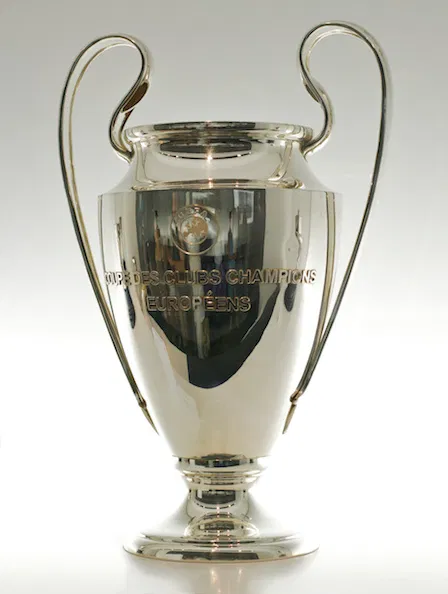
The UEFA Champions League is the most prestigious club football competition in the world — an annual tournament that pits the best teams in Europe against each other for the continent's ultimate prize. From Real Madrid, the competition's record 15-time winners, to three-time champions Inter Milan, every club follows the same route: qualify through domestic success, navigate a 36-team league phase, and survive two-legged knockout ties to reach a single-leg final. Here is a complete breakdown of how the Champions League works, from the first qualifying round to lifting the famous 'Big Ears' trophy.
How the Champions League Works: A Season From Start to Finish
Organised by the Union of European Football Associations (UEFA), the Champions League was introduced in 1955 as the European Champion Clubs' Cup, a straight knockout tournament open only to each nation's domestic champions. It took its current name in 1992 and today follows a two-stage structure: a round-robin league phase followed by two-legged knockout rounds and a one-off final.
Since the 2024/25 season, the competition has featured 36 clubs in its league phase, an expansion from the previous 32 teams split into eight groups of four. The 36 clubs are now ranked together in a single league table, with each side playing eight matches against eight different opponents — four at home and four away. Three points are awarded for a win and one for a draw, and every result carries weight, because the final league position decides who progresses automatically, who enters the play-offs and who is eliminated.
From European Cup to Champions League: Seven Decades of History
The competition kicked off in the 1955–56 season, when Real Madrid won the first of five consecutive European Cups — a feat no other club has ever repeated. In those early years, entry was restricted to national champions and the format was a pure knockout. A round-robin group stage was added in 1991, and from the 1997–98 season multiple entrants from the strongest leagues were allowed, transforming the event into a genuine league of Europe's elite clubs.
Real Madrid remain the most successful club in the competition's history with 15 titles, ahead of AC Milan (7), Bayern Munich (6), Liverpool (6) and Barcelona (5). Inter Milan, one of the tournament's historic powers, won the European Cup back-to-back in 1964 and 1965 and lifted the Champions League again in 2010. Real Madrid and Inter have been drawn together in recent group stages — a reminder of how the draw can pair giants early. In total, 24 different clubs have won the trophy, and 13 of them have done so more than once.
How Do Teams Qualify? The Road Into the League Phase
Entry to the Champions League is earned on sporting merit, not bought. Qualification depends on a club's final position in the previous season's domestic league, combined with its national association's UEFA coefficient ranking, which measures the collective strength of each country's clubs in Europe. The top five leagues — Spain, England, Italy, Germany and France — each receive four automatic places by default, while smaller nations send their champions through qualifying rounds.
The competition begins in early July with three qualifying rounds and a play-off round, all played over two legs. Seven teams emerge from this qualifying path and join the 29 clubs that qualified automatically to form the 36-team league phase. Since 2024/25, four additional places have been allocated as follows: one goes to the club finishing third in the fifth-ranked association, one is awarded to an extra domestic champion through the qualifying path, and two 'European Performance Spots' go to the associations whose clubs performed best across all UEFA competitions the previous season.
The League Phase Explained: 36 Teams, One Big Table
In the league phase, teams are divided into four seeding pots according to their UEFA club coefficients. Each club is then drawn to face two opponents from each pot — one at home and one away — for a total of eight matches against eight different teams. This replaced the old format, in which teams played three opponents twice, home and away.
Every match feeds into a single league table. The top eight sides qualify automatically for the round of 16, while teams finishing 9th to 24th enter a two-legged knockout play-off to contest the remaining eight places. Teams placed 25th or lower are eliminated from European competition altogether — there is no longer a fall-back into the Europa League. UEFA says the format was designed so there is 'more to play for all the way through to the final night', and the final matchday is played simultaneously so late goals can dramatically reshape the table.
Knockout Rounds: How the Champion Is Crowned
From the play-off stage onwards, the Champions League follows a familiar knockout structure. In the play-off round, the teams that finished 9th to 16th are seeded and face sides placed 17th to 24th, with the higher-ranked club hosting the return leg. The eight winners progress to the round of 16, where they meet the top-eight finishers.
From the round of 16 through the semi-finals, ties are played over two legs, home and away, with the team scoring more goals across both matches advancing. The away-goals rule was abolished from 2021–22, so if a tie is level on aggregate it goes to extra time and, if necessary, penalties. The competition then concludes with a single-leg final at a neutral venue selected by UEFA, traditionally held in late May or early June and played on a Saturday. The winners lift the trophy, qualify automatically for the next season's Champions League, and earn a place in the UEFA Super Cup, the FIFA Intercontinental Cup and the FIFA Club World Cup.
The Numbers That Define the Champions League
A few figures capture the scale of Europe's premier club competition. Spanish clubs have won the most titles with 20, ahead of England (15), Italy (12), Germany (8), the Netherlands (6), Portugal (4) and France (3). Bayern Munich are the only side to have won every match in a single campaign, doing so in 2019–20. And since the 1992 rebrand, only two clubs from outside the 'big five' leagues — Porto and Ajax — have reached the final, underlining how difficult it is for outsiders to break the elite's grip.
What to Watch Next Season
The current format is set to remain in place for the coming seasons, with the league phase running between September and January and the knockout rounds following from February. For fans of giants such as Real Madrid and Inter Milan, the structure means the biggest clubs can now meet earlier than ever, with every team guaranteed eight matches against a broader range of opponents. With every result feeding one 36-team table, the race for the top eight — and the drama of the play-off places — promises to keep the Champions League the most compelling club competition in world football.
Key Takeaways at a Glance
- The Champions League began in 1955 as the European Cup and was rebranded in 1992.
- 36 teams now contest a single league phase, each playing eight matches against eight different opponents.
- Clubs qualify through domestic league position and their country's UEFA coefficient ranking.
- The top eight reach the round of 16, while teams placed 9th to 24th enter a two-legged play-off.
- Knockout ties are two-legged until a single-leg final at a neutral venue.
- Real Madrid are the most successful club with 15 titles, while Inter Milan have won three.