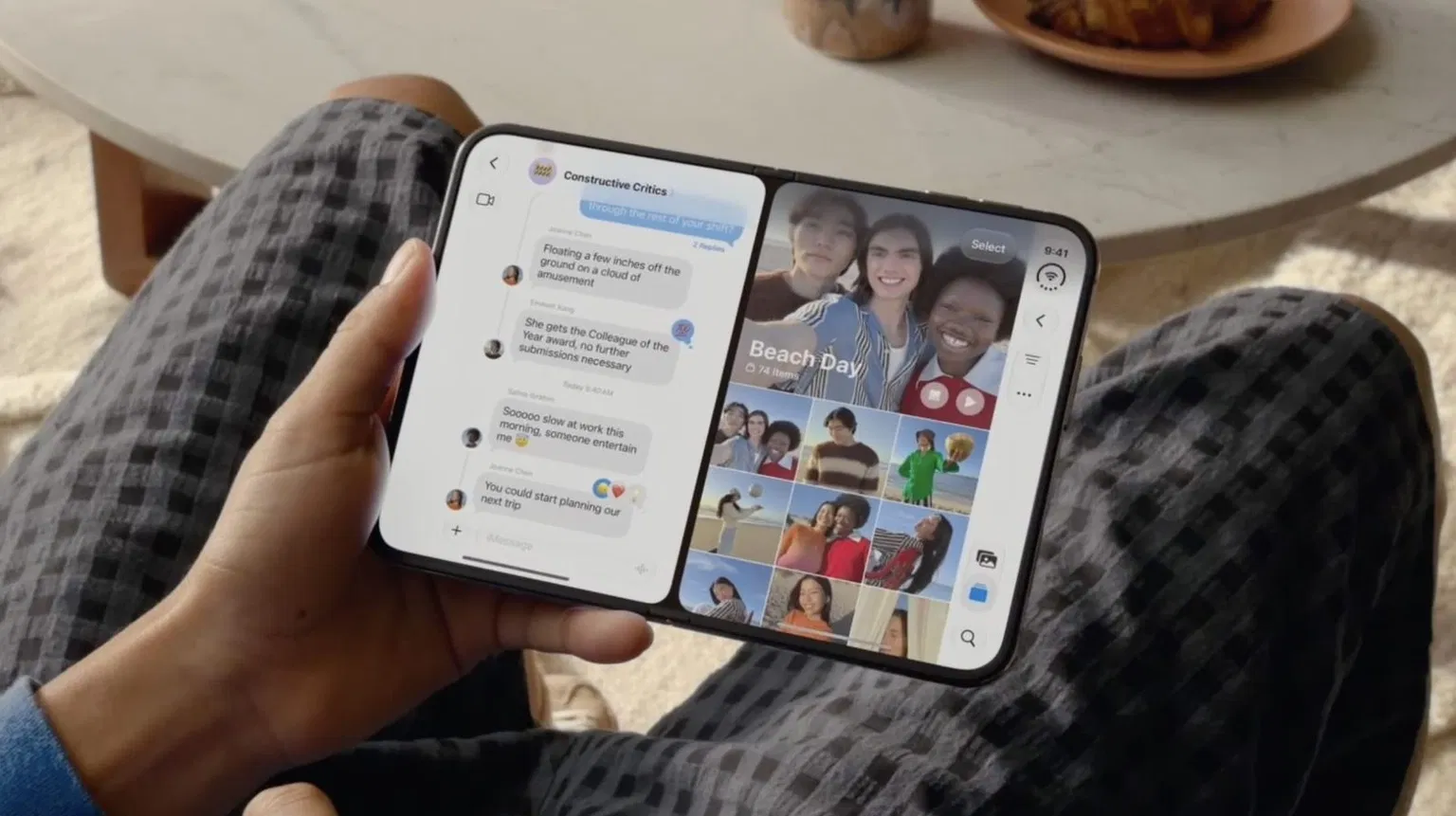
Apple has officially joined the foldable phone race. The iPhone Duo, unveiled on September 9, 2026, is the company's first foldable iPhone — a book-style device that snaps shut into a compact 5.4-inch phone and opens into a tablet-sized 7.6-inch display. Priced from $1,999, it is at once the most expensive and the thinnest iPhone Apple has ever made. Here's what the iPhone Duo is, how it works, and when you'll be able to get one.
What Is the iPhone Duo? Apple's First Foldable iPhone
Apple introduced the iPhone Duo alongside the iPhone 18 Pro and iPhone 18 Pro Max during its September 2026 event. Instead of a single screen, the device uses two displays joined by a folding hinge. When closed, you get a 5.4-inch outer screen — roughly the size of the now-discontinued iPhone mini — and when opened, a 7.6-inch inner screen that is the largest display ever put on an iPhone.
Apple shaped the Duo like a passport, so it is wider than it is tall when open. Both displays share the same aspect ratio, which means apps and content scale naturally as you move between the small outer screen and the large inner one. At 7.6 inches, the inner panel is closer to a small tablet than a phone, while the outer panel keeps the Duo usable one-handed. In practice, it behaves like a cross between a pocketable iPhone and an iPad mini.
How the Fold Works: Design, Hinge and Durability
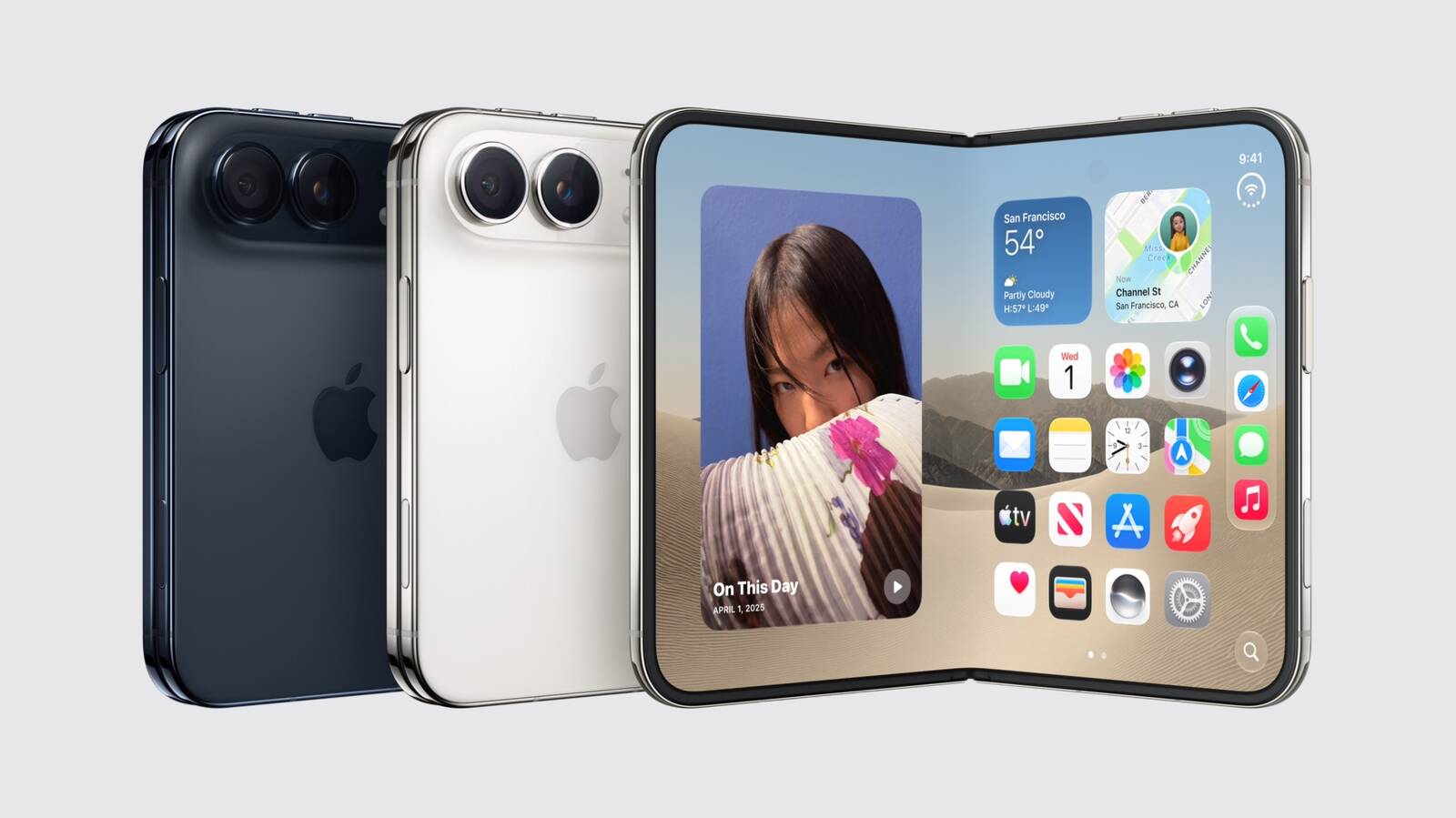
The folding mechanism is where Apple concentrated much of its engineering effort. The hinge contains more than 100 individual components that open and close smoothly while shielding the flexible display, and it delivers a satisfying magnetic click when the phone snaps shut. At just 5.2mm thick when unfolded, the iPhone Duo is the thinnest iPhone yet — though it is also the heaviest, at 254 grams — and it measures 11.3mm when folded.
For durability, Apple used a mirror-polished grade 5 titanium frame, a 3D-printed hinge cover, internal support ribs, and ceramic fiber antenna inserts. The phone carries an IP68 rating for dust and water resistance and comes in two colors, Star White and Night Sky. The outer display is protected by Ceramic Shield 2, while the inner display is built from ten ultra-thin layers topped with a nano-texture polymer cover that cuts glare and helps hide the crease in the middle of the screen.
Both screens are OLED panels with 120Hz ProMotion, True Tone, Always-On support, and up to 3,000 nits of peak brightness. The 7.6-inch inner panel runs at 1878 x 2670 (430 pixels per inch), and the 5.4-inch outer panel runs at 1398 x 2034 (460 ppi). A hidden FaceTime camera sits under the inner display, with a 12-megapixel hole-punch selfie camera on the outer screen.
Inside the iPhone Duo: Chip, Cameras and Battery
Powering the Duo is the same 2nm A20 Pro chip found in the iPhone 18 Pro, paired with 12GB of RAM. Apple says it is up to 20 percent faster than the previous-generation A19 Pro, with a 7-core GPU that is 40 percent faster and a new dual 16-core Neural Engine. A vapor chamber cooling system offers up to 35 percent better sustained performance than the iPhone 17 Pro, and an updated display engine can drive both screens at once.
The camera system centers on a 48-megapixel Fusion main camera (26mm) and a 48-megapixel Ultra Wide camera (13mm), plus a 12-megapixel 2x optical-quality zoom — but no telephoto lens. Apple also added foldable-specific tricks, including Smart Take (AI that snaps the group photo when everyone is ready), Duo Preview (letting subjects see themselves on the outer screen), Kid Cue (Peanuts animations to grab a child's attention), and Duo FaceTime (using both cameras on one call). Video tops out at 4K120 Dolby Vision.
There is a battery inside each half of the phone, managed as a single unit and rated for up to 24 hours of typical use. Fast charging reaches 50 percent in about 20 minutes over USB-C with a 60W adapter, and 25W MagSafe and Qi2 wireless charging are supported. Connectivity includes the Apple-designed C2 modem with 5G (including mmWave in the U.S.), Wi-Fi 7, Bluetooth 6, and Thread, plus satellite features like Emergency SOS.
How iOS 27 Adapts to Two Screens
The iPhone Duo ships with iOS 27.1, and Apple reworked the interface for a dual-screen layout. The Dock is now vertical and lives along the side of the display, the status bar sits in the upper corner, and there is a vertical Dynamic Island on both screens. You can run two apps side by side in Split View — or two windows of the same app — and the interface rotates and flips between displays depending on how you hold the phone.
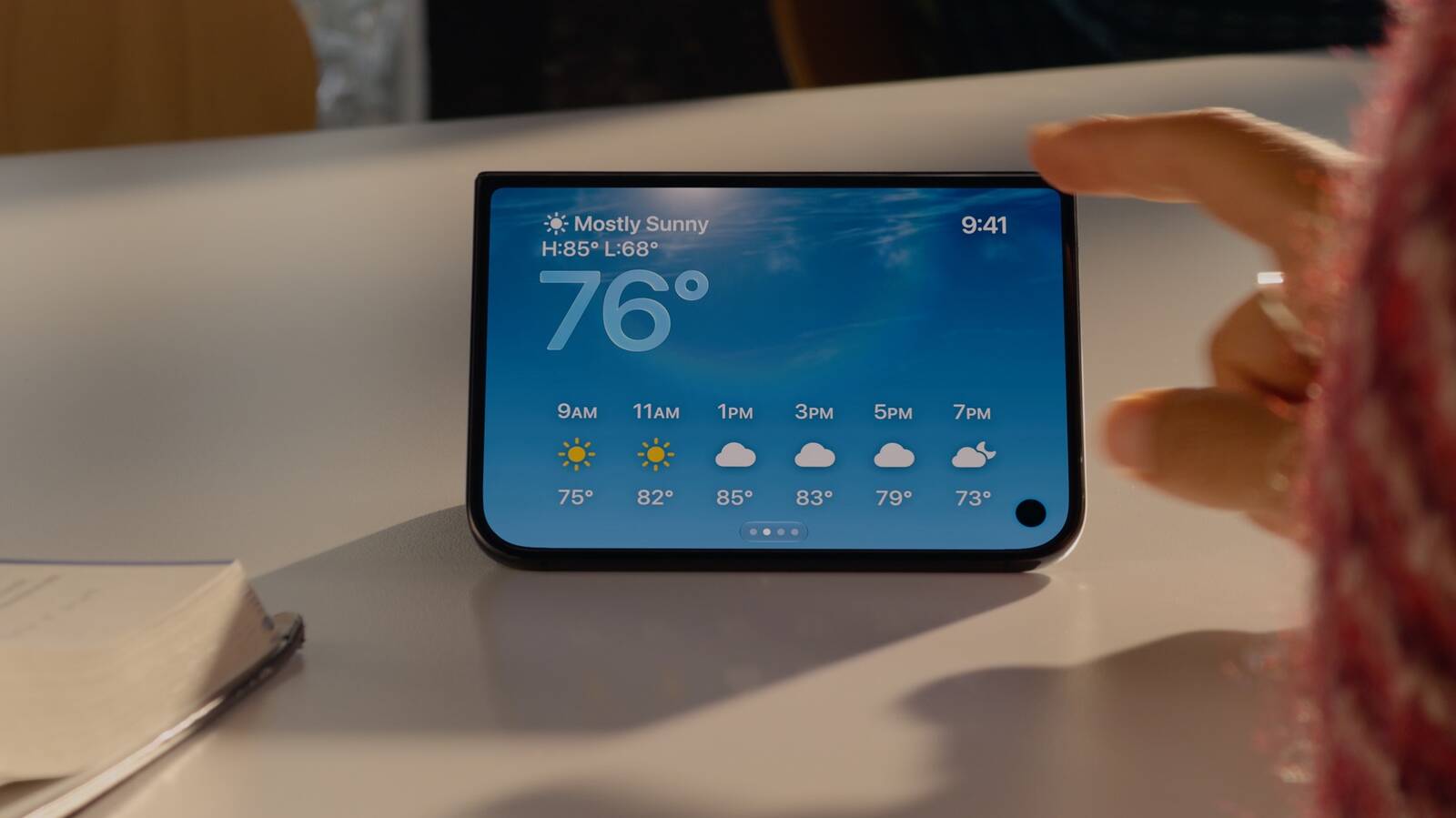
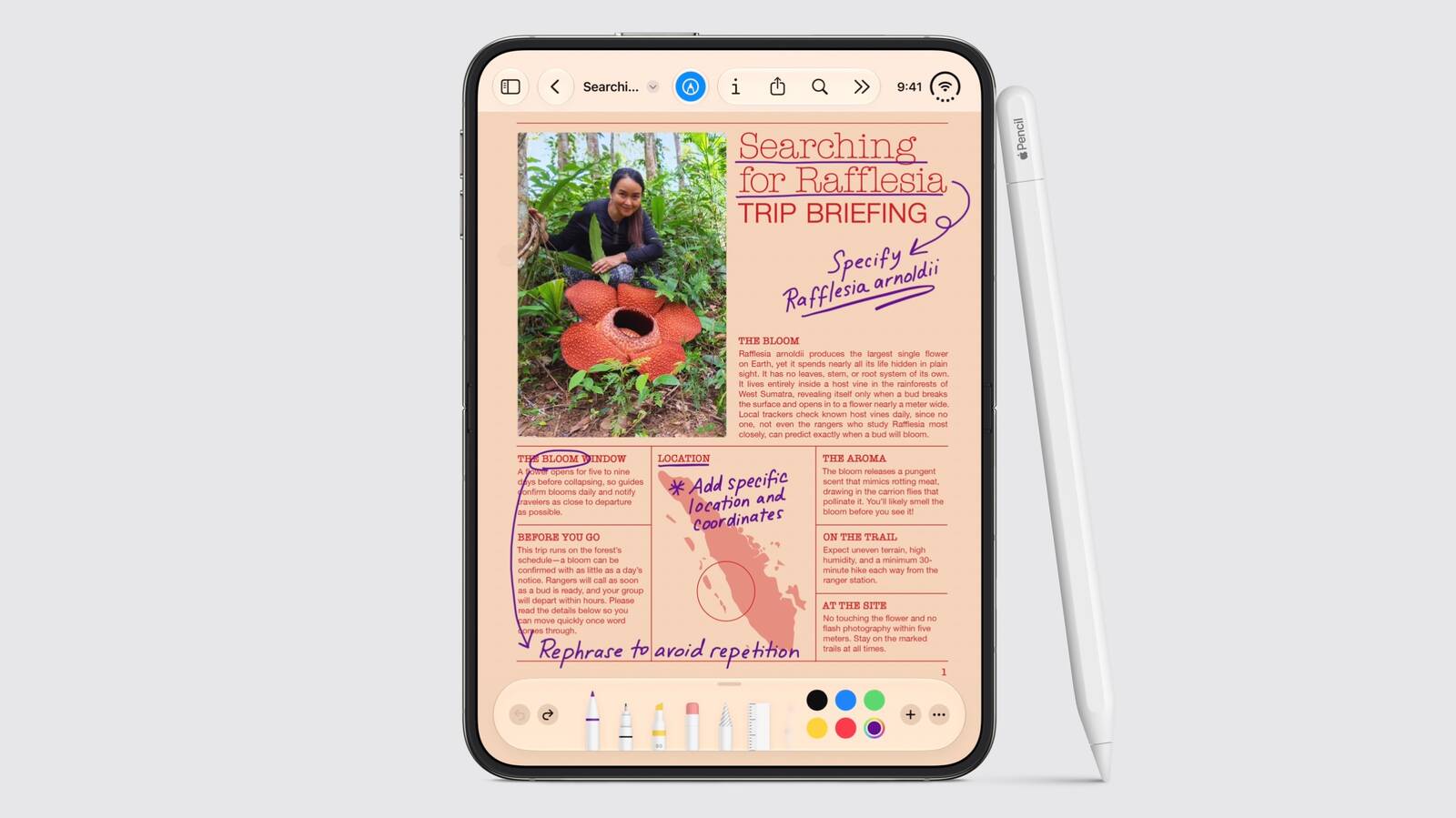
Apple adapted its own apps for the larger screen and worked with developers such as Netflix, Zoom, and Slack ahead of launch. There is also a Duo-specific StandBy mode that shows widgets like Calendar and Weather when the phone is propped up, plus an alarm clock that wakes you with a soft glow. And before the end of 2026, Apple is adding Apple Pencil support — though it works only with the USB-C Apple Pencil.
One hardware note: the iPhone Duo uses Touch ID built into the side button instead of Face ID, since there is no TrueDepth camera system. Touch ID works whether the phone is open or closed, and the Duo can also be unlocked with a connected Apple Watch. It is eSIM only worldwide, like the iPhone Air.
iPhone Duo Price and Release Date
The iPhone Duo starts at $1,999 for 256GB of storage and climbs to $3,199 for the 2TB model. Pre-orders open at 5:00 a.m. Pacific Time on Friday, October 16, 2026, and the launch follows on Friday, October 23 in more than 70 countries, expanding to 28 additional countries on October 30.
What's Next for Apple's Foldable iPhone
Analysts expect the Duo to make a quick impact. Research firm TrendForce projects the iPhone Duo could capture roughly 25 percent of the foldable smartphone market in 2026, helping offset a broader slump in the segment. Apple is already planning a second-generation iPhone Duo for 2027, timed to the 20th anniversary of the original iPhone, with future models rumored to add Face ID and a telephoto lens.
Key Takeaways
- The iPhone Duo is Apple's first foldable iPhone, with a 5.4-inch outer display and a 7.6-inch inner display.
- It uses a book-style fold with a 100-component hinge, a grade 5 titanium frame, and an IP68 rating.
- It runs the 2nm A20 Pro chip with 12GB of RAM and ships with iOS 27.1, a vertical Dock, and Split View.
- Pricing starts at $1,999, with pre-orders on October 16 and a launch on October 23, 2026.