On Veterans Day 2026, a U.S. Army sentinel standing watch at Arlington National Cemetery's Tomb of the Unknown Soldier did something the entire world noticed: he raised his voice. Defense Secretary Pete Hegseth and his group, who had been chatting, laughing, and posing for photographs near the white marble sarcophagus, were sharply reminded to keep "silence and respect." The moment went viral — but for the soldiers who guard this memorial, it was simply the rules being enforced. To understand why that quiet is sacred, it helps to understand what the Tomb of the Unknown Soldier is, how it is guarded, and why it has been watched over without interruption for nearly a century.
What Is the Tomb of the Unknown Soldier?
The Tomb of the Unknown Soldier sits on a hill overlooking Washington, D.C., within Arlington National Cemetery in Virginia. It was dedicated on November 11, 1921 — the third anniversary of the armistice that ended World War I — as a final resting place for a single unidentified American service member killed in that war. The remains were chosen from four unknown soldiers exhumed from American military cemeteries in France and were buried beneath a layer of soil brought from the French battlefields.
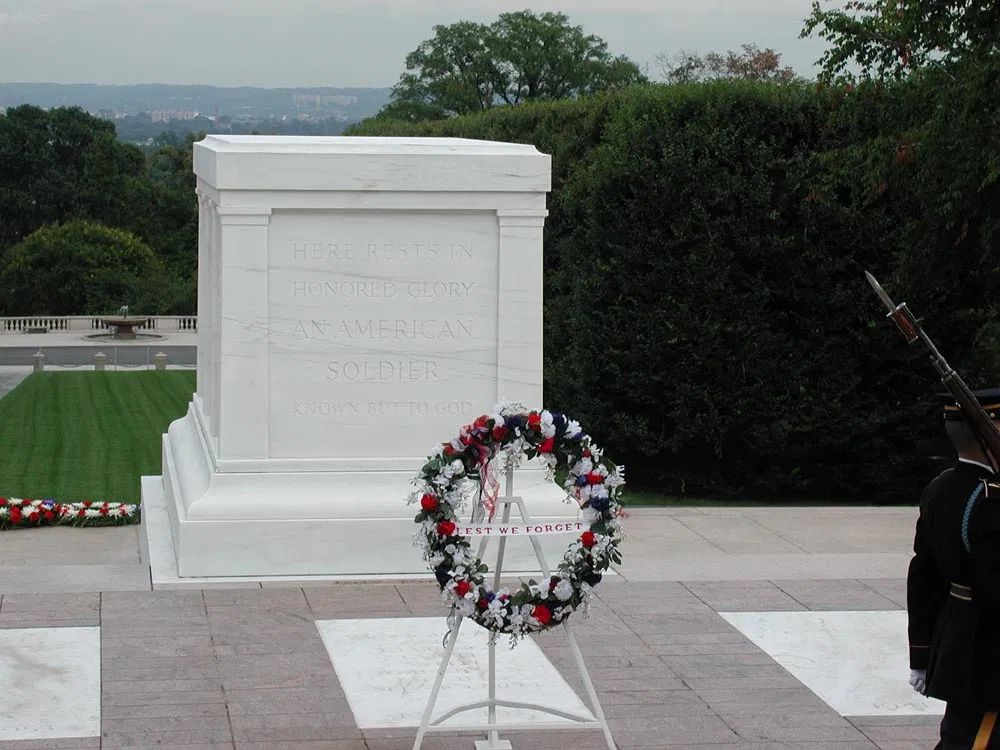
Over the years, the memorial grew to honor unidentified service members from multiple conflicts. In 1958, unknowns from World War II and the Korean War were interred in crypts beside the original. A Vietnam War unknown was added in 1984 but was later identified through DNA testing as Air Force 1st Lt. Michael J. Blassie; his remains were returned to his family in 1998, and that crypt was left empty.
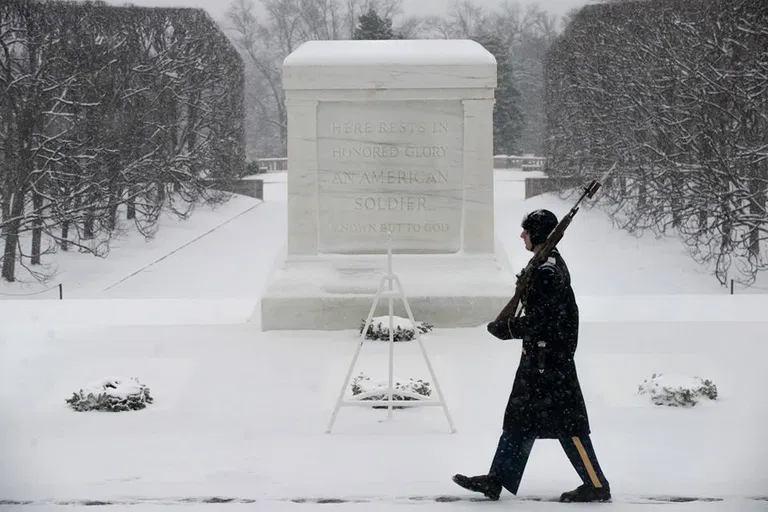
The white marble sarcophagus that visitors see today was placed in 1932. Its western panel carries the inscription: "HERE RESTS IN HONORED GLORY AN AMERICAN SOLDIER KNOWN BUT TO GOD." Six wreaths carved into the north and south panels represent the major campaigns of World War I.
How the Sentinels Guard the Tomb: 21 Steps and a 24/7 Watch
Since July 1, 1937, the Tomb has been guarded around the clock — 24 hours a day, 365 days a year, in every kind of weather — by sentinels of the 3rd U.S. Infantry Regiment, known as "The Old Guard," the Army's oldest active-duty infantry unit.
The ritual is precise and unchanging. The sentinel marches exactly 21 steps down a black mat in front of the Tomb, turns to face east for 21 seconds, turns again, faces the Tomb for 21 seconds, and marches back. The number 21 symbolizes the 21-gun salute, the highest military honor. Sentinels carry their rifles on the shoulder farthest from the Tomb as a gesture of protection, and their uniforms are so immaculate that a sentinel can spend hours preparing before each shift.
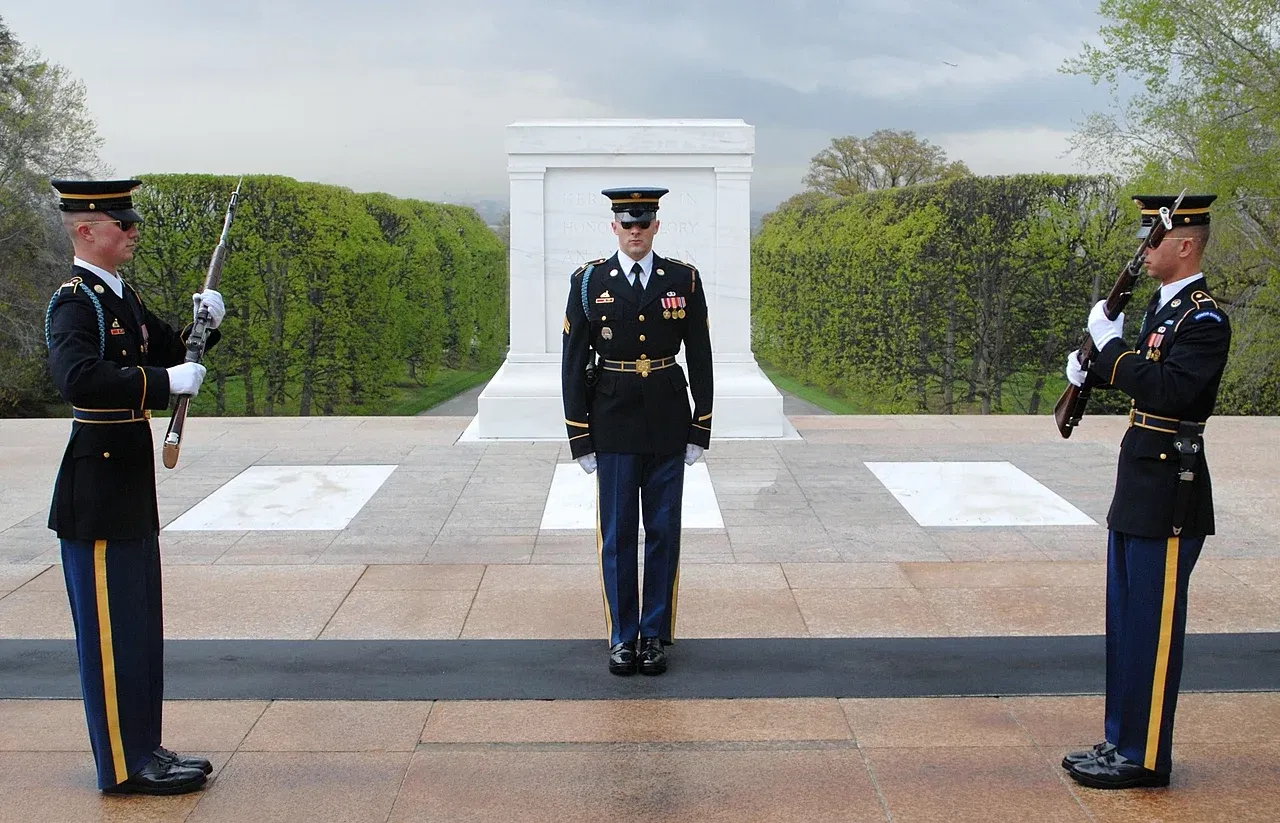
The ceremonial changing of the guard takes place every hour on the hour from October 1 through March 31, and every 30 minutes from April 1 through September 30, with the watch passing every two hours overnight when the cemetery is closed. During the ceremony, the incoming sentinel's uniform and weapon are carefully inspected before the watch is formally transferred.
How to Become a Sentinel: The Army's "Best of the Best"
Becoming a sentinel is extraordinarily difficult. Candidates must volunteer from within The Old Guard, be in superb physical condition, hold an unblemished military record, and meet strict height requirements — typically between 5 feet 10 inches and 6 feet 4 inches for men, with a minimum of 5 feet 8 inches for women.
Those accepted undergo intensive training in which they must memorize the history of the Tomb and Arlington National Cemetery word for word, learn the exact steps of the walk, and master the bearing of the watch. Only after passing a series of tests do they earn the Guard, Tomb of the Unknown Soldier Identification Badge — one of the rarest in the U.S. Army. It is the second-least-awarded badge in the service, behind only the Astronaut Badge, and it can be revoked for any failure to uphold the sentinel's standards.
Why Silence Is Sacred: The Veterans Day Reprimand
The recent Veterans Day moment illustrated exactly what those standards require. On November 11, 2026, Defense Secretary Pete Hegseth attended a wreath-laying ceremony at the Tomb with his wife and a group of advisers. Video showed the group laughing, chatting, and posing for photographs near the memorial.
A sentinel on duty — from The Old Guard — turned and shouted toward the group, telling them to maintain "silence and respect" at the Tomb at all times. A Pentagon spokesperson later confirmed the sentinel had "reminded everyone to maintain decorum."
The incident underscored the point of the guard's existence: the Tomb is treated not as a tourist backdrop but as a sacred gravesite for service members whose identities are known "but to God." Sentinels are trained to enforce that reverence — even for the most senior officials — and visitors are expected to remain silent and respectful while in the plaza.
Key Takeaways
- The Tomb of the Unknown Soldier was dedicated on November 11, 1921, and honors unidentified U.S. service members from World War I, World War II, and the Korean War.
- It has been guarded continuously since July 1, 1937, in all weather, by sentinels of the 3rd U.S. Infantry Regiment, "The Old Guard."
- The sentinel's ritual — 21 steps and 21-second pauses — honors the 21-gun salute, the nation's highest military honor.
- Earning the Tomb Guard badge is among the hardest accomplishments in the Army; it is the service's second-least-awarded badge.
- On Veterans Day 2026, a sentinel publicly reminded Defense Secretary Pete Hegseth's group to keep silent, reinforcing the Tomb's demand for reverence.