
The White House press secretary holds one of the most visible jobs in American government: standing at a podium nearly every day to explain the president's actions to reporters and, through them, to the public. The role returned to the headlines in October 2026 when Katie Zacharia stepped up as the 37th White House press secretary, succeeding Karoline Leavitt, who at age 27 had become the youngest person ever to hold the post. But behind the podium lies a job with nearly a century of history, a precise set of responsibilities, and a daily routine that has become a fixture of American politics.
What Does a Press Secretary Actually Do?
A press secretary — sometimes called a press officer — is a senior communications advisor who serves as the official spokesperson for a government official, agency, or organization. At the White House, the press secretary is responsible for collecting information about actions and events within the president's administration, then delivering the administration's reactions and statements to the news media.
Government transition guides typically divide the job into four principal roles:
- Information conduit: providing presidential information to reporters on a regular basis, in both formal briefings and informal settings.
- Constituent representation: acting as the public face and voice of the administration on camera and in print.
- Administration: managing the press office staff, credentials, and the logistics of press events.
- Communications planning: developing messaging in coordination with the White House communications director and policy teams.
In practice, that means holding daily press briefings, drafting press releases and statements, answering reporters' questions, coordinating press conferences, and doing damage control when a story turns negative. The press secretary is often the first person the public hears from after major presidential decisions, crises, and policy announcements.
From 1929 to Today: How the Press Secretary Role Was Born
Presidents have always needed someone to talk to reporters, but the press secretary as an official position dates to 1929, when President Herbert Hoover appointed former journalist George E. Akerson as the first person to formally hold the title. Akerson, a newspaperman who had joined Hoover's staff years earlier, served from 1929 to 1931 and helped establish the office at the dawn of the mass media age.
The role matured quickly. Steve Early, who served under Franklin D. Roosevelt from 1933 to 1945, holds the record for the longest tenure — 12 years spanning the Great Depression and World War II. Under Dwight D. Eisenhower, press secretary James Hagerty professionalized the job and even helped open presidential news conferences to television cameras in 1955. For decades, Ron Ziegler, who took the role under Richard Nixon in 1969 at age 29, was the youngest press secretary — until 27-year-old Karoline Leavitt broke the record in 2025.
The position has also grown more inclusive over time. Dee Dee Myers became the first woman to serve as White House press secretary when President Bill Clinton appointed her in 1993, and the role has since been held by prominent women including Dana Perino, Sarah Huckabee Sanders, Jen Psaki, and Kayleigh McEnany.

Inside the James S. Brady Press Briefing Room
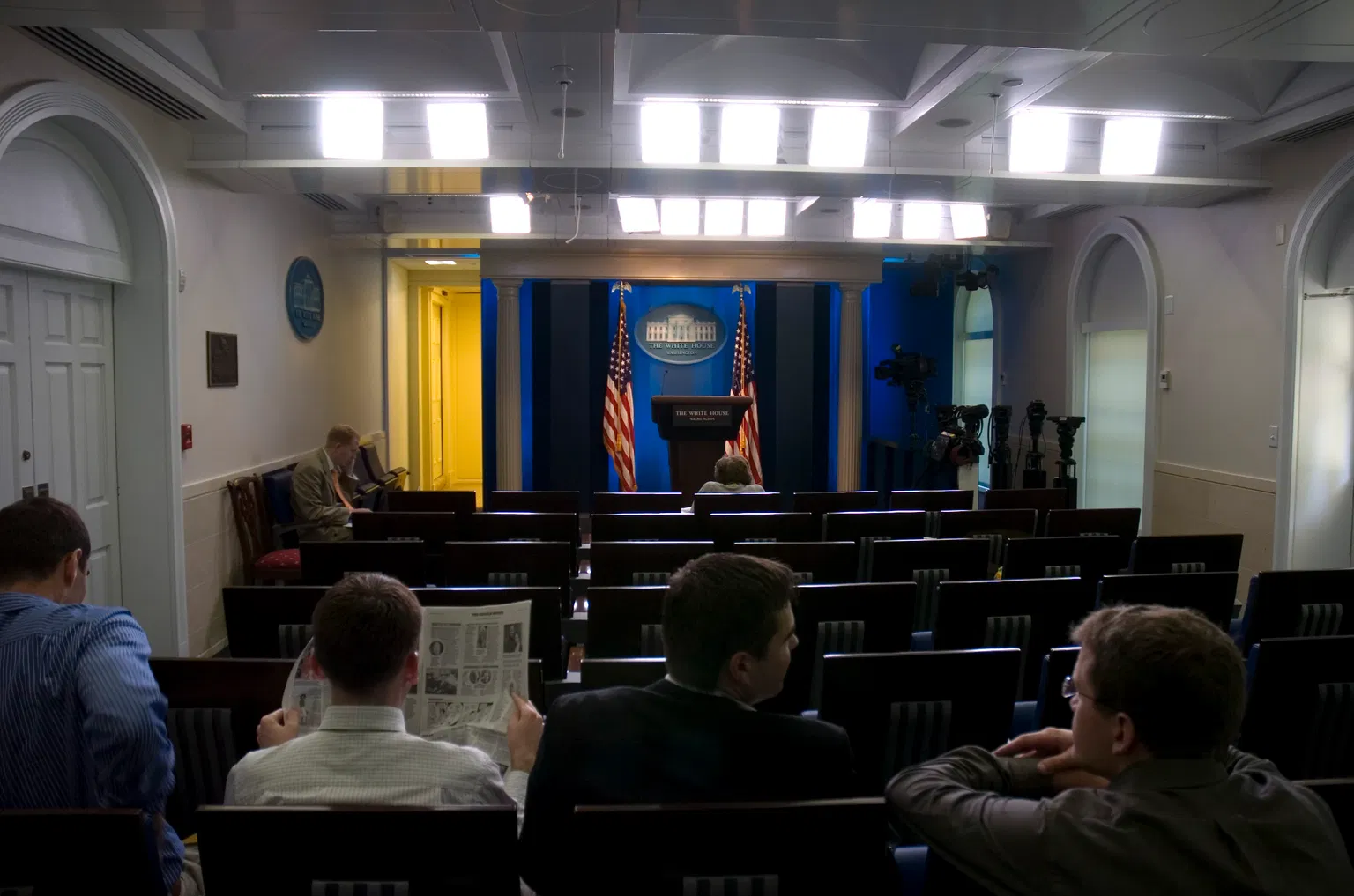
Most of the press secretary's work unfolds in a small theater in the West Wing known as the James S. Brady Press Briefing Room. The room holds just 49 seats, and those seats are assigned not by the White House but by the independent White House Correspondents' Association — a tradition that keeps the briefing room from becoming a mouthpiece for whichever party holds power.
The room is named for James Brady, President Ronald Reagan's press secretary, who was shot and permanently disabled during the 1981 assassination attempt on Reagan. In 2000, President Bill Clinton renamed the briefing room in Brady's honor. The space itself was upgraded in 1981, when Reagan converted the old press lounge into a proper briefing room with a stage and fixed seats, and it received a major renovation in 2007.
A typical day follows a familiar rhythm. Before the on-camera briefing, the press secretary often holds a "gaggle" — an informal, off-camera question-and-answer session in which reporters can press for details in a more relaxed setting. Then comes the formal briefing, where the press secretary delivers prepared remarks and takes questions from the assembled press corps.
Press Secretary vs. Communications Director: Two Very Different Jobs
It is easy to confuse the press secretary with the White House communications director, but they are distinct roles. The press secretary is the on-camera voice — the person who handles day-to-day media interactions, briefs reporters, and answers questions in real time. The communications director is the strategic architect who oversees the White House's long-term messaging, coordinates across departments, and plans how the administration's narrative will be shaped over weeks and months.
One useful shorthand: the press secretary delivers the message, while the communications director designs it. The two roles work closely together, but the press secretary is the one reporters see at the podium every day.
The Press Secretaries Who Defined the Podium
A handful of press secretaries have become famous in their own right. James Hagerty set the modern template under Eisenhower. Marlin Fitzwater served two presidents — Ronald Reagan and George H.W. Bush. Bill Moyers and George Stephanopoulos later became major television journalists. Sean Spicer's combative 2017 debut briefing went viral and even inspired a recurring Saturday Night Live character.
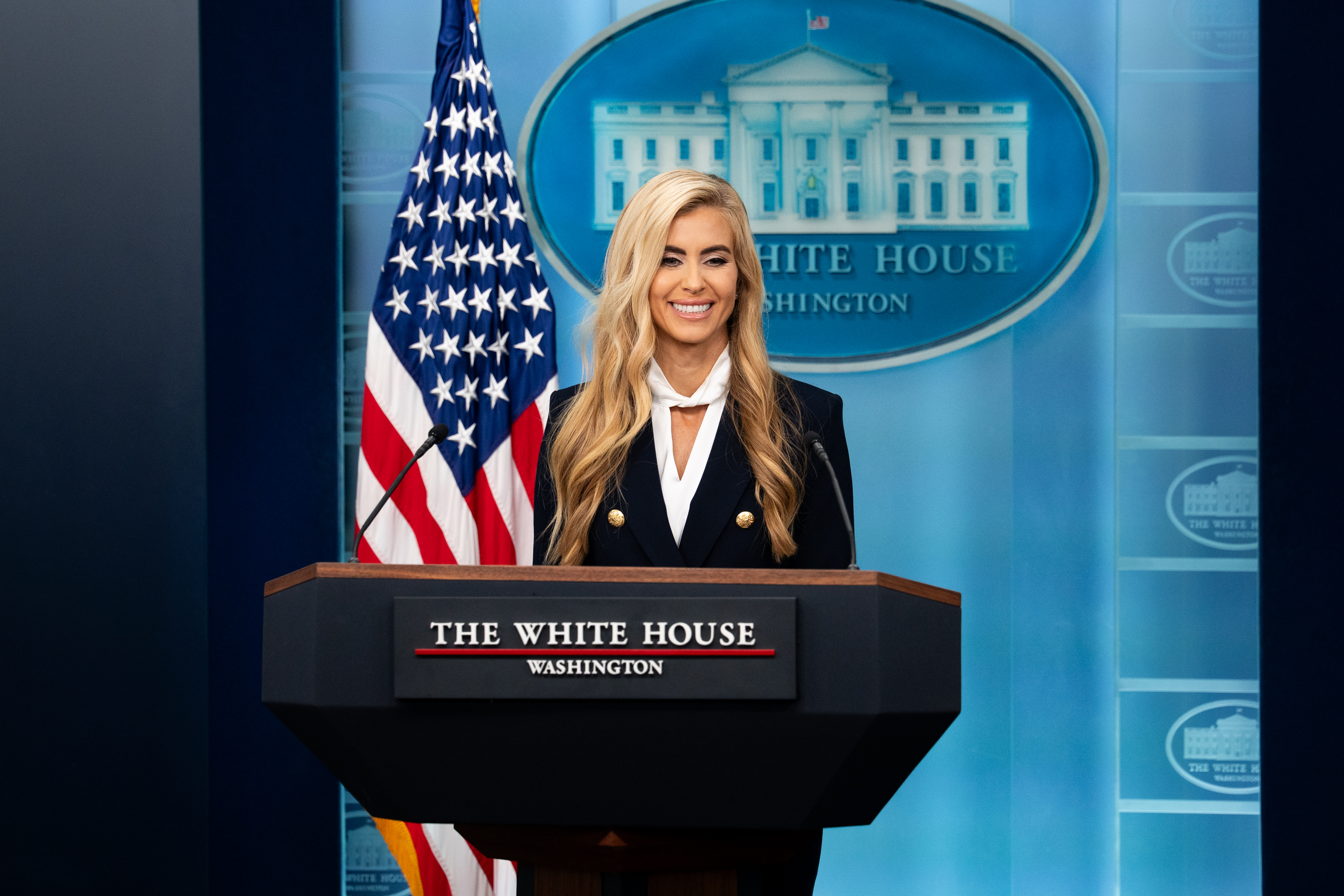
More recently, the job has continued to make history. Karoline Leavitt, who served from January 2025 to August 2026, became the youngest press secretary in U.S. history at 27 and the first member of Generation Z to hold the position. Her successor, Katie Zacharia, took the podium as the 37th press secretary in October 2026.
How to Become a Press Secretary
There is no single path to the podium, but most press secretaries share a common toolkit. A degree in communications, journalism, public relations, or political science is a typical starting point, followed by years of experience in media relations, political communications, or journalism itself.
The job demands exceptional writing and speaking skills, quick thinking under pressure, a deep understanding of policy, and a strong network of contacts in the press. Many press secretaries first work as campaign spokespeople, congressional communications staffers, or reporters before moving to the White House. Above all, the role requires credibility — reporters have to trust that the person at the podium is relaying accurate information, because that trust is the currency of the job.
Where Things Stand at the Podium Today
The press secretary role has been unusually newsworthy in late 2026. Karoline Leavitt departed in August 2026 after a historic, high-profile tenure as the youngest person ever to hold the job. Katie Zacharia was announced as her successor and made her debut briefing on October 13, 2026, though her time at the podium proved brief, making her one of the shortest-serving press secretaries in the office's history.
One point worth clarifying: White House chief of staff Susie Wiles, whose name has appeared in coverage of the press secretary shuffle, is not the press secretary. The chief of staff is a separate, more senior role focused on running White House operations and advising the president, rather than briefing the press. The confusion is understandable — both jobs sit close to the president — but they carry very different day-to-day duties.
The Bottom Line: Key Points to Remember
- The press secretary is the president's official spokesperson, responsible for explaining administration actions to the media and the public.
- The role dates to 1929, when Herbert Hoover appointed George E. Akerson as the first official White House press secretary.
- The job has four core functions: information conduit, constituent representation, administration, and communications planning.
- Daily briefings take place in the James S. Brady Press Briefing Room, whose 49 seats are assigned by the White House Correspondents' Association.
- The press secretary handles daily media interactions, while the communications director shapes long-term messaging.
- Karoline Leavitt became the youngest press secretary in history at 27; Katie Zacharia took over as the 37th press secretary in October 2026.


.jpg?ref=cdn.posts.market)