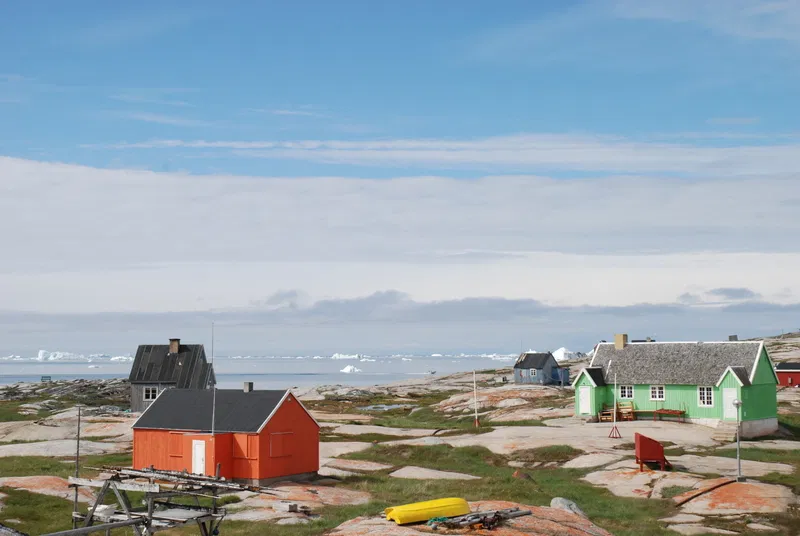
Greenland, the world's largest non-continental island, has suddenly found itself at the center of international geopolitics as the United States openly discusses acquiring the Danish autonomous territory—including through potential military action. Home to just 56,000 people, this vast Arctic landmass is 80% covered by ice, yet its strategic location and untapped mineral resources have made it a focal point of global power competition. While Greenland has enjoyed extensive self-government within the Kingdom of Denmark since 1979, recent threats from the Trump administration have raised fundamental questions about sovereignty, security, and the future of transatlantic alliances.
The World's Largest Island: Understanding Greenland's Geography and People
Greenland is a geographical giant, spanning 2.16 million square kilometers—making it three times the size of Texas. Despite its massive area, only about 410,000 square kilometers are ice-free, with the rest buried under the world's second-largest ice sheet. This icy covering contains enough frozen water to raise global sea levels by approximately 7 meters if it were to melt completely, making Greenland a critical indicator of climate change.
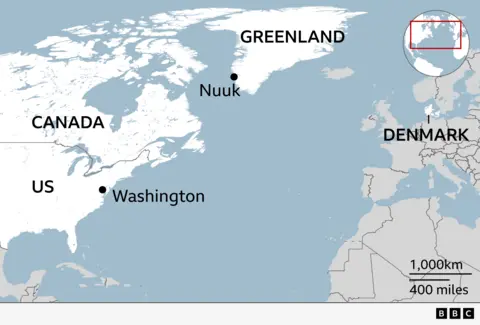
The population of approximately 56,600 people is concentrated along the southwest coast, where the climate is slightly milder. About 19,600 residents live in the capital, Nuuk, which is actually closer to New York (2,900 km) than to Copenhagen (3,500 km). The majority of Greenlanders are Inuit, indigenous peoples who have inhabited the island for thousands of years, with Danish influence dating back to colonial times.
From Viking Settlement to Self-Government: Greenland's Historical Journey
Greenland's history spans multiple waves of human migration, beginning with the Paleo-Inuit cultures over 4,000 years ago. Norse Vikings led by Erik the Red established settlements in southern Greenland around 985 CE, but these communities mysteriously disappeared by the 15th century. Danish colonization began in earnest in 1721 when missionary Hans Egede arrived, establishing Greenland as a Danish colony for the next two centuries.
In 1953, Greenland's status changed from colony to an integral part of Denmark. The island gained home rule in 1979, followed by expanded self-government in 2009 under the Self-Government Act. This arrangement grants Greenland control over most domestic affairs—including natural resources, education, and health—while Denmark manages foreign policy, defense, and currency (the Danish krone). Greenlanders are EU citizens despite the territory not being an EU member, having left the European Community in 1985.
Why Great Powers Want Greenland: Strategic Value in a Changing Arctic
Greenland's geopolitical significance stems from three key factors: military positioning, resource wealth, and climate-driven accessibility. The U.S. maintains the Pituffik Space Base (formerly Thule Air Base) in northwest Greenland, which serves as a critical node in North America's ballistic missile early-warning system and provides the shortest flight path between North America and Europe.

Beneath Greenland's ice lie vast deposits of rare earth minerals—essential for smartphones, electric vehicles, and military technology. A 2023 survey found 25 of 34 "critical raw materials" identified by the European Commission. Additionally, melting Arctic ice is opening new shipping routes, potentially transforming Greenland into a strategic maritime corridor. These factors have attracted not only U.S. interest but also attention from China and Russia, both of which have increased their Arctic activities in recent years.
The Standoff: How Denmark and Greenland Are Responding to US Threats
Recent statements from the Trump administration have brought Greenland-Denmark relations into sharp focus. In December 2024, the White House confirmed it was exploring "a range of options" to acquire Greenland, including military means, calling it a "national security priority." This followed earlier comments from President Trump that the U.S. "needed" Greenland and would "go as far as we have to go" to obtain it.
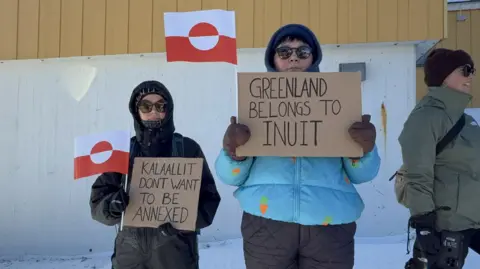
The response from Copenhagen and Nuuk has been unequivocal rejection. Danish Prime Minister Mette Frederiksen warned that any U.S. attack on Greenland would mean "the end of NATO." Greenland's Prime Minister Jens-Frederik Nielsen called the U.S. rhetoric "completely unacceptable" and "disrespectful." In January 2025, Denmark announced a $1.5 billion defense package for Greenland, signaling its commitment to protecting the territory's sovereignty.
European allies have rallied behind Denmark, with leaders of the UK, France, Germany, Italy, Poland, and Spain issuing a joint statement affirming that "Greenland belongs to its people, and only Denmark and Greenland can decide on matters concerning their relations."
Greenland's Future: Independence, Autonomy, or Annexation?
Looking ahead, Greenland faces three potential paths. The first is continued autonomy within the Kingdom of Denmark, possibly with expanded powers. The second is full independence—a right granted under the 2009 Self-Government Act, though economically challenging given Greenland's reliance on Denmark's annual block grant of approximately $650 million. The third, and most contentious, is some form of U.S. control, whether through purchase, forced annexation, or enhanced military presence.
Most Greenlanders favor eventual independence from Denmark but overwhelmingly oppose becoming part of the United States. A 2024 opinion poll showed 67.7% of Greenlanders view their relationship with Denmark as strained, yet only a tiny fraction support American annexation. The local economy remains heavily dependent on fishing, though tourism and mining offer growth potential if environmental and indigenous concerns are addressed.
Key Facts About Greenland at a Glance
- Official Name: Greenland (Kalaallit Nunaat in Greenlandic)
- Status: Autonomous territory within the Kingdom of Denmark
- Population: Approximately 56,600 (2023)
- Capital: Nuuk (population: 19,600)
- Area: 2,166,086 km² (world's largest island)
- Ice Coverage: 80% of land area
- Government: Parliamentary democracy with 31-seat Inatsisartut
- Head of State: King Frederik X of Denmark
- Head of Government: Prime Minister Jens-Frederik Nielsen (since April 2025)
- Currency: Danish krone (DKK)
- Languages: Greenlandic (official), Danish
- Military Defense: Responsibility of Denmark, with NATO membership
As climate change accelerates and great-power competition intensifies in the Arctic, Greenland's significance will only grow. Its future will test international norms of sovereignty, the strength of alliances, and the rights of indigenous peoples—making this remote island one of the most important geopolitical flashpoints of the 21st century.