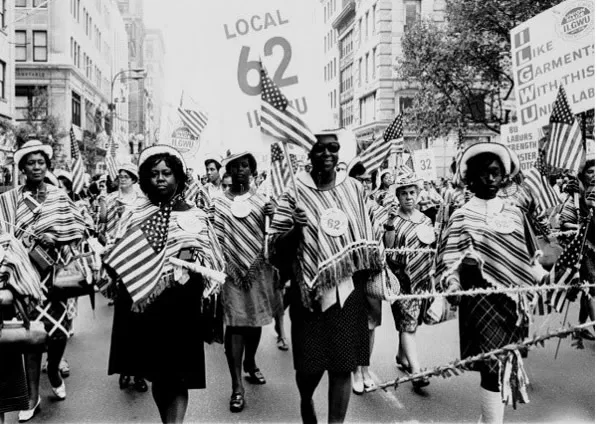
Labor Day is a United States federal holiday observed on the first Monday of September, a day dedicated to honoring the American labor movement and the contributions working people have made to the nation's strength, prosperity, and well-being. For most Americans, it is also the unofficial end of summer, marked by parades, backyard cookouts, and some of the biggest retail sales of the year. In 2026, Labor Day falls on Monday, September 7, more than 140 years after the very first celebration took place in New York City.
The holiday has deep roots in the late 19th century, when labor activists campaigned for a national day of recognition during an era of long workdays, unsafe factories, and few legal protections for employees. Knowing what Labor Day actually is means understanding the parades, strikes, and political compromises that turned a local workers' gathering into a nationwide tradition.
The Origins of Labor Day: A Parade That Almost Didn't Happen
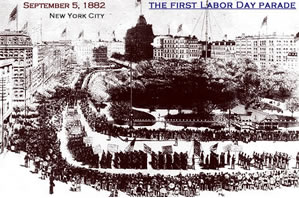
The first Labor Day celebration was held on Tuesday, September 5, 1882, in New York City. Organized by the Central Labor Union and the Knights of Labor, the event was designed around a street parade that would show "the strength and esprit de corps of the trade and labor organizations," followed by a festival for workers and their families. At the time, it was not unusual for American workers, including children, to labor 12 hours a day, seven days a week, in factories, mines, and mills with little regard for safety, and the push for a dedicated holiday was part of a broader fight for the eight-hour day and the right to organize.
According to the U.S. Department of Labor, the inaugural march nearly turned into a disaster: fewer marchers than expected showed up at the start, and it took the arrival of a band and a contingent of jewelers before the procession finally got moving through the streets of lower Manhattan.
There is still some dispute over who first proposed the holiday, and two men with remarkably similar names are credited in competing accounts. Matthew Maguire, secretary of the Central Labor Union, is believed by many historians to have first suggested a national Labor Day. An alternative tradition credits Peter J. McGuire, a vice president of the American Federation of Labor, who said he proposed a "general holiday for the laboring classes" on May 8, 1882, after visiting Toronto and seeing labor parades there. McGuire reportedly chose the first Monday in September because of the pleasant weather and its spot on the calendar, sitting neatly between the Fourth of July and Thanksgiving.
From Street Parade to Federal Holiday: The Road to 1894
After that first parade, the idea spread quickly across the country. Municipal ordinances recognizing the holiday were passed in 1885 and 1886, and a movement developed to secure state legislation. Oregon became the first state to make Labor Day an official public holiday in 1887, and within a few years many others followed. By 1894, roughly 30 states were already celebrating Labor Day in some form.
The push for a federal holiday reached a turning point in the summer of 1894, in the aftermath of the Pullman Strike, a nationwide railroad labor dispute that turned violent. Seeking to mend ties with the labor movement, Congress passed a bill recognizing the first Monday of September as Labor Day, and President Grover Cleveland signed it into law on June 28, 1894.
It is worth noting that the new federal law applied only to federal workers. As late as the 1930s, unions were still encouraging workers to strike to make sure they received the day off. Over time, all U.S. states, the District of Columbia, and the territories made Labor Day a statutory holiday. In 1909, the American Federation of Labor convention also designated the Sunday before Labor Day as Labor Sunday, dedicated to the spiritual and educational aspects of the labor movement.
Why Labor Day Falls in September — and Not May Day
One of the most common questions about Labor Day is why the United States celebrates it in September while more than 150 other countries observe International Workers' Day on May 1. The answer is rooted in politics.
May 1, an ancient European folk holiday, became associated with the labor movement in 1886, when the American Federation of Labor called for the eight-hour workday effective May 1 of that year. The resulting strikes in Chicago culminated in the Haymarket affair of May 4, 1886, a deadly bombing that became a rallying point for socialist and anarchist movements around the globe. President Cleveland and others worried that a May 1 labor holiday would become a commemoration of the Haymarket affair and strengthen radical movements. In 1887, Cleveland publicly backed the September date as a less politically charged alternative, and that is the date he ultimately signed into law.
How Americans Celebrate Labor Day Today
More than a century later, the modern Labor Day still echoes the original blueprint: a street parade to showcase organized labor, followed by a festival for recreation. Many cities host parades and picnics, and speeches from civic and labor leaders remain a staple of the day.
For many families, Labor Day has also become a cultural landmark that signals the end of summer. Pools close, schools reopen, and a long-standing fashion rule once declared that people should not wear white after the holiday, a custom that has largely faded in recent decades. The three-day weekend is one of the busiest travel periods of the year and a marquee moment for American sports, including the start of the college football season, the NFL kickoff, the U.S. Open tennis tournament, and NASCAR races.
Retailers treat Labor Day as a major shopping event, too. Because so many people have time off, the weekend has become one of the biggest discount dates of the year, second only to Black Friday, with back-to-school deals leading the way. Major cities add their own traditions, from New York's West Indian American Day Carnival to the free Labor Day Concert at the U.S. Capitol featuring the National Symphony Orchestra.
The Bottom Line: What Labor Day Really Means
At its core, Labor Day is a tribute to the American worker. The U.S. Department of Labor puts it plainly: American labor has raised the nation's standard of living and helped build the most productive economy the world has ever known, and the holiday is the country's way of paying tribute to that achievement.
- Labor Day is a federal holiday observed on the first Monday of September.
- The first celebration was held September 5, 1882, in New York City.
- Oregon was the first state to adopt it as an official holiday, in 1887.
- President Grover Cleveland signed it into federal law on June 28, 1894.
- The September date was chosen, in part, to avoid the political overtones of May Day.
- Today it is celebrated with parades, travel, sports, and major retail sales.