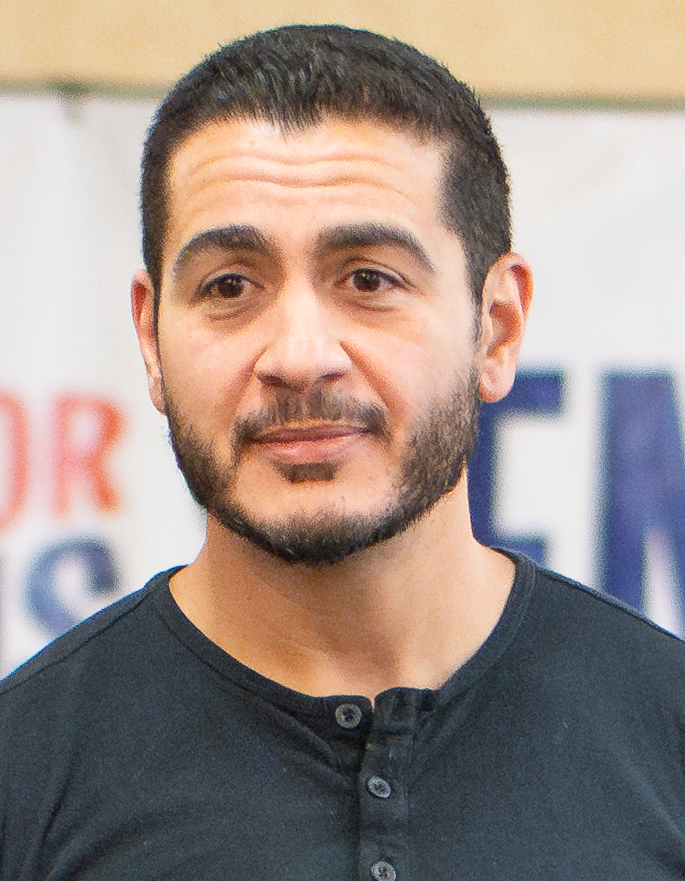
Abdul El-Sayed is not your typical U.S. Senate candidate. A physician, epidemiologist, and Rhodes Scholar who once led Detroit's health department, El-Sayed captured the Democratic nomination for Michigan's 2026 Senate race on August 5, 2026. If he defeats Republican nominee Mike Rogers in the general election, he will make history as the first Muslim ever to serve in the United States Senate. But his path from public health doctor to Democratic standard-bearer has been anything but conventional — and understanding his background reveals a lot about where the progressive wing of the Democratic Party is headed.
The Making of a Public Health Champion: El-Sayed's Early Life and Education
Born on October 31, 1984, in Rochester Hills, Michigan, Abdulrahman Mohamed El-Sayed grew up in the Detroit suburbs as the son of Egyptian immigrants. His father, Mohamed, came to the United States to pursue a PhD at Wayne State University, while his stepmother Jacqueline — a native of Gratiot County, Michigan — and his father both worked as engineers. His mother, Fatten Elkomy, is a nurse practitioner.
El-Sayed's academic journey reads like a blueprint for high achievement. He graduated from the University of Michigan Phi Beta Kappa with Highest Distinction in 2007, where he notably delivered the commencement speech — speaking just before former President Bill Clinton, who was so impressed he told the young graduate, "I wish every person in the world who believes that we are fated to have a clash of civilizations could have heard you speak today."
From there, El-Sayed won a Rhodes Scholarship to attend Oriel College, Oxford, where he earned a Doctor of Philosophy (DPhil) in public health in 2011. He then completed his Doctor of Medicine (MD) at Columbia University's College of Physicians and Surgeons in 2014, funded by a prestigious Paul and Daisy Soros Fellowship for New Americans. Rather than pursue a medical license, El-Sayed channeled his expertise into public health epidemiology — a decision that would shape his entire career.
From Detroit's Health Department to the National Stage
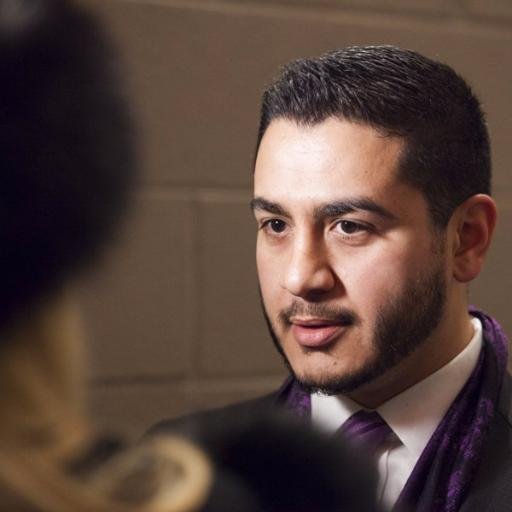
In 2015, at just 30 years old, El-Sayed was appointed by Detroit Mayor Mike Duggan as Health Officer and Executive Director of the Detroit Health Department — making him the youngest health officer of a major U.S. city at the time. His mission was substantial: rebuild the department after Detroit's municipal bankruptcy had outsourced public health functions to a nonprofit.
During his tenure, El-Sayed led efforts to reduce sulfur dioxide emissions from Marathon Petroleum's Southwest Refinery, tested Detroit schools for lead contamination in the wake of the Flint water crisis, and provided free glasses to children in city schools. His work earned him recognition as one of Crain's Detroit "40 under 40" and the Michigan League of Conservation Voters' "Public Official of the Year."
After leaving the Detroit role, El-Sayed spent time as a public health professor at Columbia University, authored over 100 scholarly articles, and launched the podcast "America Dissected with Dr. Abdul El-Sayed" through Crooked Media in 2019 — exploring the intersection of politics and public health. He later returned to public service as director of Wayne County's Department of Health, Human, and Veterans Services from 2023 to 2025.
El-Sayed's Political Journey: The 2018 Governor's Race and What It Taught Him
El-Sayed's first major political campaign came in 2017, when he resigned as Detroit's health director to run for governor of Michigan. Inspired to act after witnessing the Flint water crisis, he said at the time: "I watched as Governor Snyder and his team of accountants were cutting costs and cutting corners. Their inattention to communities ultimately poisoned thousands of children."
Running as a progressive Democrat, El-Sayed refused corporate PAC donations and raised over $5 million from individual contributions. He earned endorsements from Senator Bernie Sanders, then-congressional candidate Alexandria Ocasio-Cortez, and Women's March organizer Linda Sarsour. In the August 2018 primary, he received roughly 30% of the vote — a strong second-place finish to Gretchen Whitmer, who went on to become governor.
That loss didn't end his political ambitions. El-Sayed founded Southpaw Michigan, a political action committee to elect progressive candidates, and in 2020 served on the Biden-Sanders Unity Task Force on healthcare — deepening his national profile within Democratic politics.
The 2026 Senate Race: How El-Sayed Captured the Democratic Nomination
On April 17, 2025, El-Sayed announced his candidacy for Michigan's open U.S. Senate seat after incumbent Democrat Gary Peters announced his retirement. The Democratic primary field was crowded and competitive, but El-Sayed carved out a lane as the race's progressive champion.
The race drew national attention in April 2026 when El-Sayed campaigned on several Michigan university campuses alongside U.S. Representative Summer Lee and popular political streamer Hasan Piker. Piker's involvement proved controversial — his past comments about the September 11 attacks, Hamas, and Israel became a flashpoint within the party. El-Sayed defended the collaboration, saying he was working to engage young voters and didn't agree with everything Piker had said.
After State Senator Mallory McMorrow dropped out of the primary in July 2026, the race solidified into a contest between two visions for the Democratic Party: the moderate, establishment-backed candidacy of Representative Haley Stevens, and the progressive insurgency led by El-Sayed. The Associated Press called the race for El-Sayed on the morning of August 5, 2026. He now faces Republican Mike Rogers in the general election.
Where El-Sayed Stands: 5 Key Policy Positions
El-Sayed describes himself as a progressive who supports regulated capitalism — not a socialist, as he often clarifies. Here is where he stands on the major issues:
Healthcare: A longtime advocate for Medicare for All, El-Sayed co-wrote the 2021 book "Medicare for All: A Citizen's Guide" with Micah Johnson. His healthcare expertise, grounded in years of public health work, forms the backbone of his political identity.
Immigration: El-Sayed supports abolishing Immigration and Customs Enforcement (ICE), arguing the agency is "corrupted at its soul." While he supports securing the U.S.-Mexico border and "certain kinds" of border enforcement, he believes ICE no longer functions as a legitimate law enforcement body.
Foreign Policy and Israel: El-Sayed has taken some of the most critical positions on Israel of any major Senate candidate. He has called the Gaza war a genocide, referred to Israel as an "ethno-state" and a "rogue state," and advocates for cutting off U.S. military assistance. At the same time, he has affirmed he does not question Israel's right to exist and distinguishes his views from those questioning Israel's legitimacy.
Economy and Labor: A member of multiple unions including the UAW, SEIU, and AFT, El-Sayed has made workers' rights central to his platform. He supports the PRO Act, stronger antitrust enforcement, and eliminating corporate tax breaks. In June 2026, his campaign was endorsed by the United Auto Workers.
Technology and AI: El-Sayed has called for tougher regulation of artificial intelligence companies, releasing a dedicated AI policy plan that positions him at the forefront of lawmakers attempting to address the rapidly evolving technology.
What Comes Next: The Path to November
El-Sayed now faces a general election contest against Republican Mike Rogers, a former congressman and one-time FBI agent. The race is expected to be closely watched nationally, as Michigan remains a critical swing state. For El-Sayed, the challenge will be expanding his coalition beyond the progressive base that powered his primary win to appeal to moderate and independent voters.
If successful, his election would mark several historic firsts: the first Muslim U.S. senator, and a significant victory for the progressive wing of the Democratic Party in the Midwest — a region where progressives have sometimes struggled to gain traction. Regardless of the outcome, Abdul El-Sayed has already reshaped Michigan politics, proving that a public health doctor with bold progressive ideas can compete — and win — at the highest levels.
Key Takeaways About Abdul El-Sayed
- Born in 1984 to Egyptian immigrants in Michigan; raised in the Detroit suburbs
- Rhodes Scholar at Oxford, MD from Columbia, and former University of Michigan commencement speaker
- Served as Detroit's youngest-ever health director, rebuilding the department after the city's bankruptcy
- Ran for Michigan governor in 2018, placing second to Gretchen Whitmer with 30% of the vote
- Won the 2026 Democratic Senate primary on August 5, 2026, defeating Representative Haley Stevens
- Would be the first Muslim U.S. senator if elected in November 2026
- Progressive platform includes Medicare for All, abolishing ICE, ending military aid to Israel, and AI regulation
- Endorsed by Bernie Sanders, Alexandria Ocasio-Cortez, and the United Auto Workers