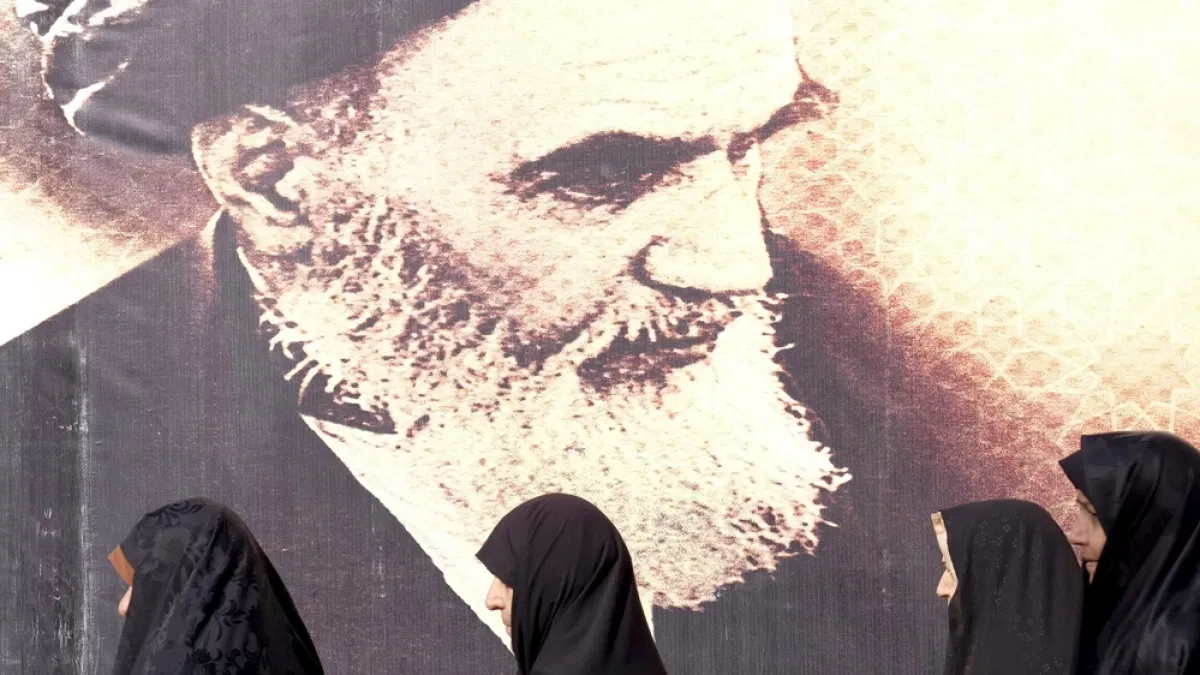
Ayatollah Ruhollah Khomeini stands as one of the most consequential figures in modern Middle Eastern history. As the architect of Iran's 1979 Islamic Revolution and the nation's first Supreme Leader, Khomeini transformed Iran from a secular monarchy into a theocratic Islamic republic, reshaping regional politics and inspiring Islamist movements worldwide. Understanding who Khomeini was, how he rose to power, and the legacy he left behind provides crucial insight into contemporary Iran and its global stance.
The Making of a Revolutionary: Khomeini's Early Life and Rise
Born on September 24, 1902, in the small town of Khomein, Ruhollah Musavi came from a family of religious scholars. His father, a cleric, was murdered when Khomeini was just an infant, leaving him to be raised by his mother and aunt. From an early age, Khomeini showed exceptional intellectual abilities, studying Islamic jurisprudence, philosophy, and mysticism in the holy city of Qom, where he would eventually become a respected teacher and scholar.
Khomeini's political awakening began in the 1960s when he openly criticized Shah Mohammad Reza Pahlavi's "White Revolution" modernization program, which included land reforms and women's suffrage that many conservative clerics viewed as Westernization undermining Islamic values. His outspoken opposition led to his arrest in 1963 and subsequent exile in 1964—first to Turkey, then Iraq, and finally France. During his 14 years in exile, Khomeini developed his political philosophy of Velayat-e Faqih (Guardianship of the Islamic Jurist), which would become the foundation of Iran's post-revolutionary government.
The 1979 Revolution: How Khomeini Toppled the Shah
By 1978, widespread dissatisfaction with the Shah's regime—fueled by economic inequality, political repression, and perceived Western imperialism—created revolutionary conditions. Khomeini, from his exile in France, orchestrated the opposition through audio cassettes and printed materials smuggled into Iran, positioning himself as the moral alternative to the monarchy. When millions of Iranians took to the streets in late 1978, the Shah's government collapsed, and Khomeini returned triumphantly to Tehran on February 1, 1979.
The revolution unfolded rapidly: within weeks, Khomeini appointed a provisional government, and in April 1979, Iranians voted overwhelmingly to establish an Islamic republic. This marked the world's first modern theocratic state, where religious authorities held ultimate political power. The new constitution, ratified in December 1979, created the position of Supreme Leader (rahbar), with Khomeini as its first occupant, endowed with extensive powers over the military, judiciary, and media.
Building the Islamic Republic: Khomeini's Vision for Iran
Khomeini's vision for Iran combined Shia Islamic principles with anti-imperialist, anti-Western ideology. He sought to create a society governed by Islamic law (sharia) while promoting economic independence from foreign powers. Domestically, this meant implementing strict social codes, including mandatory hijab for women, banning Western entertainment, and establishing religious courts. Economically, Khomeini advocated for nationalization of industries and redistribution of wealth, though his policies faced challenges from both conservative clerics and leftist groups.
Internationally, Khomeini adopted the slogan "Neither East nor West," positioning Iran as independent from both Western capitalism and Soviet communism. He supported Islamist movements throughout the Muslim world and championed the cause of the "oppressed" (mustaz'afin) against the "arrogant" (mustakbirun) powers—primarily the United States and Israel. This foreign policy orientation continues to define Iran's international relations today.
Defining Moments: Hostage Crisis, Iran-Iraq War, and the Rushdie Fatwa
Three events during Khomeini's leadership particularly shaped Iran's relationship with the world. The 1979-1981 U.S. embassy hostage crisis, in which 52 American diplomats were held for 444 days, severed diplomatic relations with Washington and cemented Khomeini's anti-American credentials. The 1980-1988 Iran-Iraq War, initiated by Saddam Hussein's invasion, became a defining national struggle that Khomeini framed as a defense of Islamic revolution against Western-backed aggression, despite costing hundreds of thousands of Iranian lives.
Perhaps most controversially, Khomeini's 1989 fatwa (religious edict) calling for the death of British author Salman Rushdie for his novel The Satanic Verses demonstrated the global reach of his religious authority and sparked international debates about freedom of expression versus religious sensitivity. These events collectively established Iran as a revolutionary state willing to challenge international norms and confront major powers.
Legacy and Controversy: How Khomeini Shaped Modern Iran
Khomeini died on June 3, 1989, from complications following a heart attack. His funeral drew millions of mourners—one of the largest in history—reflecting both genuine devotion and state-orchestrated display. Today, his legacy remains deeply contested. Supporters view him as a liberator who freed Iran from Western domination and established authentic Islamic governance. Critics, both inside and outside Iran, blame him for establishing a repressive theocracy, devastating the economy through isolation, and suppressing political freedoms.
For younger Iranians born after the revolution, Khomeini's legacy is often viewed through the lens of current economic struggles and social restrictions. Yet his ideological framework remains institutionalized through Iran's constitution, educational system, and state media. The annual commemorations of his death and the revolution continue to serve as important rituals of political legitimacy for the Islamic Republic.
From Khomeini to Khamenei: Understanding Iran's Leadership Transition
Before his death, Khomeini helped engineer the succession of Ayatollah Ali Khamenei as the next Supreme Leader. This transition revealed important aspects of Iran's political system: Khamenei, while a loyal disciple of Khomeini, lacked his predecessor's religious credentials and charisma, necessitating a consolidation of power through the Revolutionary Guards and security apparatus. The succession also demonstrated the system's resilience, maintaining continuity despite the loss of its founding figure.
Today, Khamenei continues to govern according to Khomeini's principles, though adapting them to new challenges. Understanding this transition helps explain both the durability of Iran's revolutionary system and the tensions within its leadership between ideological purity and pragmatic governance.
Key Takeaways: What You Need to Know About Ayatollah Khomeini
• Khomeini transformed Iran from a pro-Western monarchy to a theocratic Islamic republic in 1979.
• His political philosophy, Velayat-e Faqih, established clerical rule as Iran's governing system.
• Key events like the U.S. hostage crisis and Iran-Iraq War defined his anti-Western foreign policy.
• Khomeini's legacy continues to shape Iran's domestic politics and international relations.
• His successor, Ali Khamenei, has maintained Khomeini's ideological framework while adapting to new realities.
Understanding Ayatollah Khomeini is essential for comprehending modern Iran—its motivations, its internal dynamics, and its place in the world. While interpretations of his legacy vary dramatically, his impact on Iran and the broader Middle East remains undeniable nearly four decades after his death.