
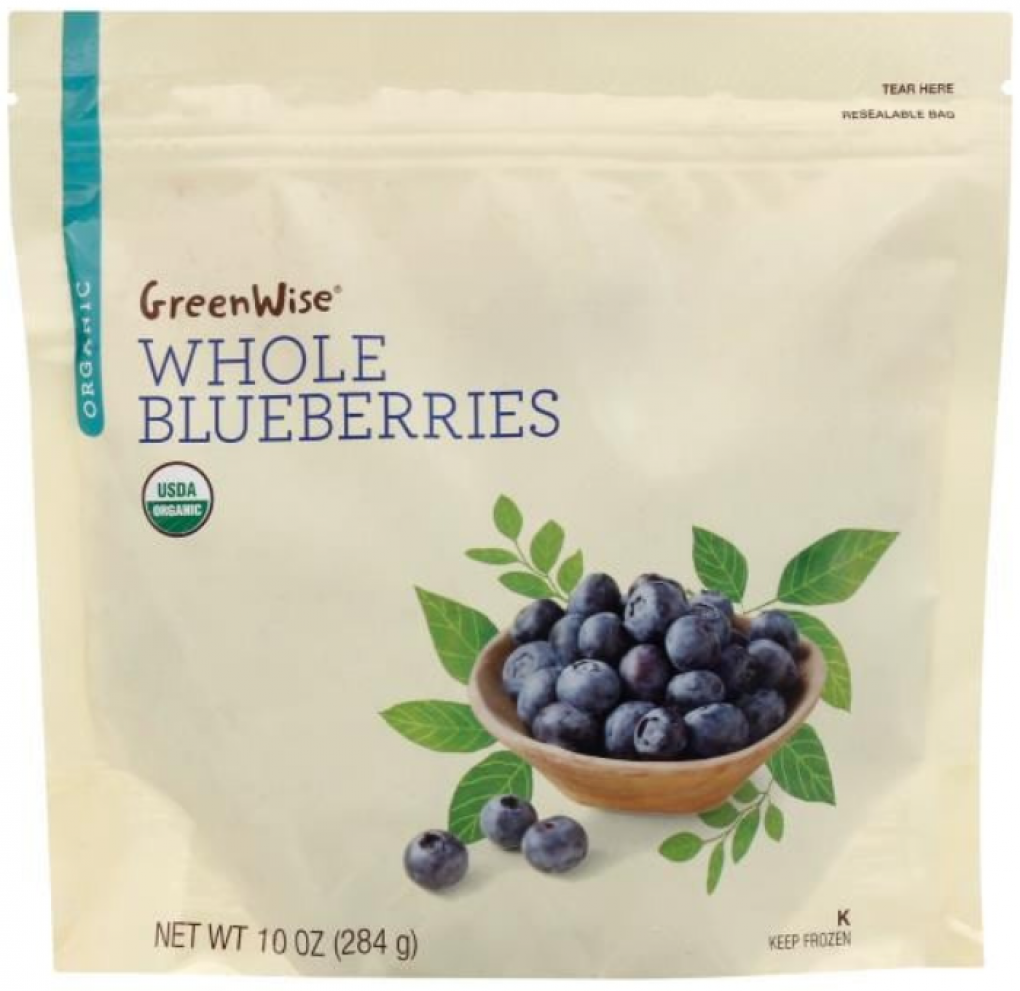
Blueberries are one of America's most popular frozen fruits, but this week the humble berry is at the center of a multistate food safety investigation. After federal health officials linked frozen GreenWise-brand organic blueberries to a cluster of E. coli O145:H28 infections, Publix pulled every lot of its GreenWise Organic Frozen Whole Blueberries and Whole Mixed Berries from shelves across eight states. The blueberry recall is a real-time lesson in how food recalls work—from the first traceback clue to the moment a bag of frozen fruit is removed from a home freezer.
Here's what happened, why it matters, and what you should do if a recalled bag is sitting in your freezer right now.
What We Know About the Publix Blueberry Recall
On July 29, 2026, Publix announced it was recalling all lots of GreenWise Organic Frozen Whole Blueberries and Whole Mixed Berries because the products may be contaminated with Escherichia coli O145:H28, a Shiga toxin-producing strain of E. coli (STEC). The recall covers four products sold under the grocery chain's GreenWise label:
- GreenWise Organic Whole Blueberries, 10-ounce (UPC 41415-06453)
- GreenWise Organic Whole Blueberries, 48-ounce (UPC 41415-12053)
- GreenWise Organic Whole Mixed Berries, 10-ounce (UPC 41415-06753)
- GreenWise Organic Whole Mixed Berries, 48-ounce (UPC 41415-12153)
The frozen berries were shipped to Publix retail stores throughout Alabama, Florida, Georgia, Kentucky, North Carolina, South Carolina, Tennessee, and Virginia. As of the end of June 2026, Publix had already placed an internal stop sale on the products, and they remain unavailable for sale while the investigation continues.
How Food Recalls Actually Work: From First Clue to Store Shelves
A food recall is the process of removing a product from the market because it violates U.S. Food and Drug Administration (FDA) safety regulations—typically because it may be contaminated or mislabeled. In the United States, most recalls are voluntary actions taken by the manufacturer or distributor itself, though the FDA can also request or mandate a recall in some situations.
The typical recall follows a clear chain of events:
- Detection: Illnesses are reported to public health officials, or routine testing flags contamination.
- Traceback: Investigators interview sick people to identify a common food, then trace that food back through distributors to the original source.
- Recall announcement: The company voluntarily removes the product, and the FDA posts the company's announcement as a public service.
- Classification: The FDA assigns a recall class—Class I for products that could cause serious health problems or death, Class II for temporary or reversible issues, and Class III for products unlikely to cause harm.
- Removal and cleanup: Stores pull products from shelves, and consumers are told to return or discard them.
In the blueberry case, the CDC and Florida state health partners identified a cluster of E. coli O145:H28 illnesses, and product traceback led investigators to frozen GreenWise-brand organic blueberries distributed by Frutas y Hortalizas del Sur S.A., a processor in San Carlos, Chile.
What Causes a Blueberry Recall? Inside the E. coli Threat
Blueberries—like other fresh and frozen produce—can become contaminated with disease-causing bacteria at several points along the supply chain. E. coli O145:H28 belongs to the Shiga toxin-producing family of E. coli, the same group of bacteria behind many high-profile foodborne outbreaks. Contamination can happen through irrigation water, contact with animal waste in the field, or during processing and packaging.
According to the FDA, common reasons a food product gets recalled include contamination with microorganisms such as E. coli or Salmonella, manufacturing defects, the presence of foreign objects like glass or metal fragments, or failure to list a major allergen. For frozen berries specifically, freezing does not kill E. coli—it merely pauses bacterial growth, which is why the bacteria can survive in a bag that has been sitting in a freezer for months.
As part of its investigation, the FDA conducted a remote regulatory assessment of Frutas y Hortalizas del Sur S.A. and collected records to understand the firm's procedures and hazard controls. Based on those findings, the agency raised concerns about at least one additional lot of blueberries and added the company's frozen blueberries to Import Alert 99-35, meaning future shipments can be detained without physical examination at the U.S. border.
Timeline: How the Blueberry Outbreak Unfolded
- May 11 – June 5, 2026: Illness onset dates for the 12 confirmed cases, according to the CDC.
- July 3, 2026: Frutas y Hortalizas del Sur S.A. recalls Frozen GreenWise Organic IQF Blueberries (10 oz, lot code 60401, best-by date February 9, 2028).
- End of June 2026: Publix conducts an internal stop sale of GreenWise Organic Whole Blueberries and Whole Mixed Berries.
- July 29, 2026: Publix expands the recall to all lots of GreenWise Organic Whole Blueberries and Whole Mixed Berries.
- July 30, 2026: The CDC issues a food safety alert, and the FDA posts its outbreak advisory. The investigation remains open.
E. coli Symptoms and Who Is Most at Risk
Most people infected with Shiga toxin-producing E. coli experience severe stomach cramps, diarrhea (often bloody), and vomiting. Symptoms usually begin three to four days after swallowing the bacteria, and most people recover without treatment within five to seven days.
However, some infections can lead to a serious kidney complication called hemolytic uremic syndrome (HUS), which can require hospitalization. Young children, older adults, and people with weakened immune systems face the highest risk. The CDC advises contacting a healthcare provider if you have any of these severe symptoms:
- Diarrhea and a fever higher than 102°F
- Diarrhea lasting more than three days that is not improving
- Bloody diarrhea
- Vomiting so severe you cannot keep liquids down
- Signs of dehydration, such as infrequent urination, dry mouth and throat, or dizziness when standing up
What to Do If You Have Recalled Blueberries
Public health officials are clear: do not eat, sell, or serve any recalled GreenWise frozen berries. If you find them in your freezer, throw them away or return them to Publix for a full refund. If you froze berries without the original packaging and can't tell whether they are part of the recall, the safest move is to throw them out.
It's also important to wash and sanitize any items or surfaces that may have touched the recalled blueberries using hot soapy water or a dishwasher, since E. coli can spread through cross-contamination. Customers with questions can contact Publix Customer Care at (800) 242-1227.
Where the Investigation Stands Now
As of July 30, 2026, the CDC reports 12 confirmed illnesses across two states—11 in Florida and 1 in Georgia—with four hospitalizations and no deaths. Seven of nine people (78%) interviewed reported eating frozen blueberries, and five specifically named GreenWise-brand organic frozen blueberries purchased from Publix.
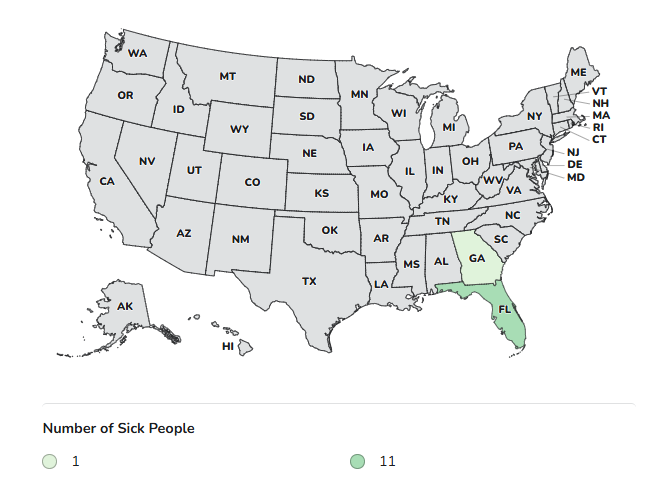
The investigation is still open, and officials are working to determine the original source of contamination. Because traceback can identify additional affected lots, the FDA has warned that more products could be added to the advisory as the investigation continues.
The Bottom Line: Key Points to Remember
- The recall involves all lots of Publix's GreenWise Organic Frozen Whole Blueberries and Whole Mixed Berries.
- The products are linked to an E. coli O145:H28 outbreak with 12 illnesses and 4 hospitalizations across Florida and Georgia.
- Freezing does not kill E. coli, so recalled berries should be thrown away or returned for a full refund.
- Most people recover from E. coli within a week, but young children, older adults, and the immunocompromised face a higher risk of serious kidney complications.
- The FDA has placed the Chile-based supplier on Import Alert 99-35 while the source of contamination is investigated.