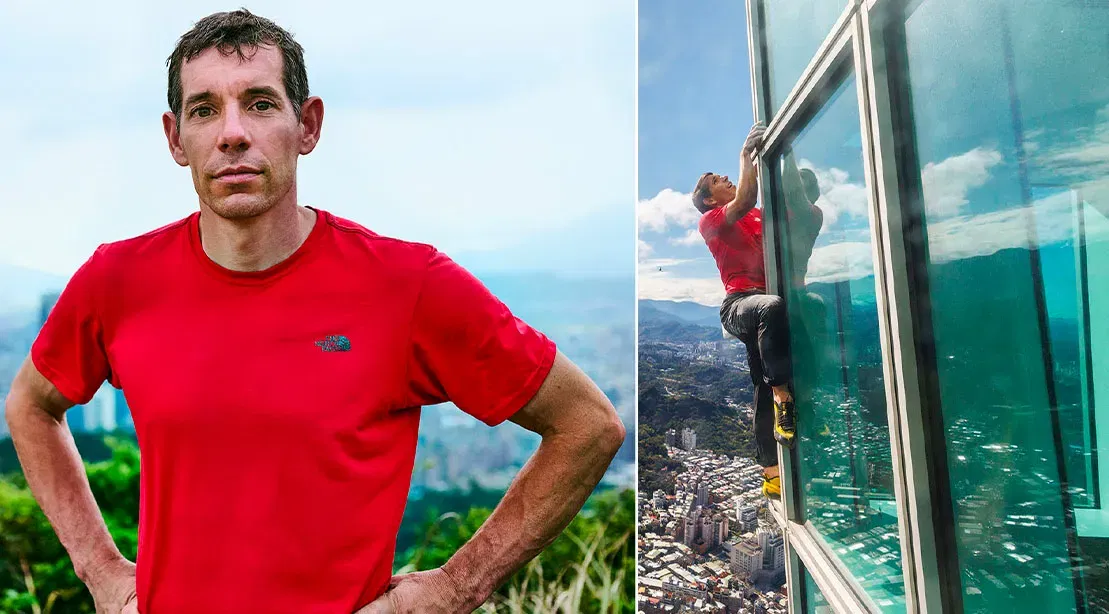
When Alex Honnold reached the top of Taipei 101 on January 25, 2026, he didn't just complete another climb - he redefined what humans consider possible. The American rock climber scaled the 1,667-foot skyscraper without ropes, harnesses, or any safety equipment, relying solely on his hands, feet, and decades of climbing experience. As millions watched the live Netflix broadcast, one question dominated conversations worldwide: how does someone climb at lethal heights without protection and make it look almost routine? The answer lies in a fascinating combination of neuroscience, physics, technique, and psychology that makes free solo climbing one of the most extreme human endeavors.
The Anatomy of a Free Solo Climb: How It Actually Works
Free solo climbing represents the purest and most dangerous form of climbing. Unlike traditional rock climbing where ropes and protective gear catch falls, free soloists rely entirely on their ability to not fall. The term "free" means climbers use only natural features of the climbing surface - no artificial aids for upward progress. "Solo" means they climb alone without a partner belaying them. This combination creates a situation where any mistake, slip, or moment of lost focus results in almost certain death.
What separates free solo climbing from simply being reckless is the meticulous preparation and technique involved. Successful free soloists like Honnold spend years studying routes, practicing moves with ropes first, and developing intimate knowledge of every handhold and foothold. The actual climbing emphasizes efficiency and flow rather than brute strength. Climbers use precise footwork to minimize arm fatigue, maintain three points of contact whenever possible, and constantly assess weight distribution and balance.

The Physics of Staying on the Wall: Grip, Friction, and Body Mechanics
The fundamental physics behind free solo climbing revolves around friction and force vectors. When a climber grips a handhold, they're not just hanging - they're creating opposing forces that keep them attached to the wall. The key principles include:
- Friction Management: Rubber climbing shoes maximize friction between feet and the climbing surface. Climbers keep their hips close to the wall to increase shoe contact area.
- Force Vector Control: By positioning their body correctly, climbers direct their weight through their bones rather than muscles, conserving energy for longer climbs.
- Center of Gravity: Maintaining the center of gravity over the feet whenever possible reduces the load on hands and fingers.
- Grip Techniques: Different holds require different grips - crimping (fingers bent at 90 degrees), open-hand gripping, pinching, and pocket gripping all distribute force differently across hand muscles and tendons.
For Taipei 101, Honnold faced unique challenges beyond natural rock climbing. The building's glass and steel surface offered fewer natural features, requiring adaptations to his technique. He utilized minute imperfections in the building's facade, window frames, and architectural details that would be invisible to most observers.
The Fearless Brain: Neuroscience Behind High-Stakes Climbing
Perhaps the most fascinating aspect of free solo climbing isn't physical but neurological. In 2016, neuroscientist Jane Joseph conducted fMRI scans of Honnold's brain while he viewed fear-inducing images. The results were startling: while a control subject's amygdala (the brain's fear center) lit up with activity, Honnold's showed virtually no response.
This doesn't mean Honnold feels no fear at all, but rather that his brain processes threatening stimuli differently. Researchers classify him as a "super sensation seeker" - someone with approximately double the sensation-seeking drive of an average person. This neurological profile combines several factors:
- Reduced amygdala reactivity: Less activation in the brain's primary fear-processing center
- Enhanced prefrontal cortex control: Better executive function and emotional regulation
- Altered dopamine response: Different reward system processing that finds intense experiences more rewarding
- Muted physiological stress response: Lower heart rate and cortisol levels in high-pressure situations
This neurological makeup doesn't eliminate risk but changes how risk is perceived and managed. For Honnold, the focus remains on problem-solving rather than emotional reaction - assessing each move logically rather than reacting to the height.
Training and Preparation: The Years Behind the Minutes
What appears as a spontaneous, daring climb actually represents years of systematic preparation. Honnold's Taipei 101 ascent followed a training regimen that included:
- Route Memorization: Studying every inch of the building through photographs, videos, and physical inspections
- Practice Climbs with Ropes: Multiple ascents using safety equipment to perfect movements and identify potential problem areas
- Physical Conditioning: Focus on finger strength, core stability, and endurance rather than bulk muscle development
- Mental Rehearsal: Visualization techniques where he would mentally climb the route hundreds of times
- Weather and Condition Analysis: Monitoring wind patterns, temperature, and precipitation that could affect grip
This preparation extends to understanding the unique challenges of skyscraper climbing versus natural rock. Building surfaces can be slippery when wet, have unexpected temperature variations, and present different texture challenges than natural stone.
Risk Assessment and Safety Philosophy
While free solo climbing inherently lacks physical safety equipment, practitioners develop sophisticated risk assessment systems. The fundamental safety principle is simple: don't climb anything where the risk exceeds your skill level. This involves:
- Gradual Progression: Building up to more difficult climbs over years, not attempting beyond-current-ability routes
- Redundancy in Skill: Developing such mastery that even at 80% capacity, the climb remains within ability
- Continuous Assessment: Evaluating conditions and personal state right up to and during the climb
- Pre-planned Bail Options: Identifying points where retreat is possible if something feels wrong
For the Taipei 101 climb, Honnold had multiple practice sessions with ropes and identified specific sections where he could potentially retreat if needed. He also monitored weather meticulously, postponing the climb by 24 hours when conditions weren't ideal.
Ethical Considerations and Future of the Sport
The live broadcast of Honnold's climb on Netflix sparked significant ethical debate. Critics argue that broadcasting potentially fatal activities normalizes extreme risk and could encourage inexperienced climbers to attempt dangerous feats. Supporters counter that such events showcase human potential and are conducted by professionals with meticulous preparation.
Looking forward, free solo climbing faces questions about its evolution. As buildings become more secure against unauthorized climbing and natural climbing areas see increased regulation, the opportunities for such ascents may diminish. Simultaneously, advances in neuroscience may help identify individuals whose neurological profiles make them particularly suited - or unsuited - for such activities.
Key Takeaways: What Free Solo Climbing Teaches Us
Alex Honnold's Taipei 101 ascent provides more than just thrilling entertainment - it offers insights into human capability, risk management, and the mind-body connection:
- Free solo climbing works through a combination of meticulous preparation, precise technique, and specialized neurological processing
- The sport's "safety system" is entirely cognitive - based on risk assessment, skill redundancy, and continuous evaluation
- Neuroscience reveals that fear processing varies significantly between individuals, with implications beyond climbing
- Physical success depends more on technique, balance, and efficiency than raw strength
- Even the most extreme human activities follow principles of progressive training and systematic preparation
While few will ever attempt free solo climbing at any level, understanding how it works provides valuable perspectives on risk assessment, skill development, and human potential. Honnold's climb reminds us that what appears impossible often represents the culmination of years of dedicated work, deep self-knowledge, and respect for both capability and limitation.