
Jalen Hurts' blood clot has turned a routine calf injury into a medical emergency that ended the Philadelphia Eagles quarterback's season and left him with blood clots in both lungs. The Eagles confirmed that Hurts, a former Super Bowl MVP, was diagnosed with deep vein thrombosis (DVT) and bilateral pulmonary emboli — meaning a blood clot that began in his lower leg broke loose and traveled through his bloodstream to his lungs. It is a serious, potentially life-threatening condition that has raised questions about how a seemingly minor injury could escalate so quickly — and a valuable reminder of how blood clots actually form, spread, and are treated.
What makes Hurts' case so instructive is that it unfolded in visible stages. Doctors first found a "superficial blood clot" in his calf during an evaluation in London, where the Eagles were playing an international game. Hurts was cleared to play and took the field anyway. A follow-up ultrasound days later showed the clot had moved. By Monday, October 19, the diagnosis had escalated to deep vein thrombosis and bilateral pulmonary emboli, and Hurts was placed on blood thinners and ruled out for the remainder of the season.
What Is a Blood Clot — and Why Does a "Minor" One Matter?
A blood clot, or thrombus, is what happens when liquid blood turns into a gel-like, semi-solid mass. That clotting ability is normally a good thing: it plugs damaged blood vessels and stops bleeding after a cut or injury. The problem arises when a clot forms inside a vein without an obvious injury — or when it grows large enough to block blood flow or breaks off and travels somewhere it should not be.
Not all clots are the same, and the distinction explains why Hurts' condition became so serious. A clot in a vein just beneath the skin is called superficial vein thrombosis (SVT). These are generally considered less dangerous and often resolve with monitoring and a short course of treatment. But SVT is not always harmless. Studies show that roughly one in four people with a superficial clot also has — or soon develops — a deeper clot, and a small percentage go on to develop a pulmonary embolism. That progression is what appears to have happened to Hurts.
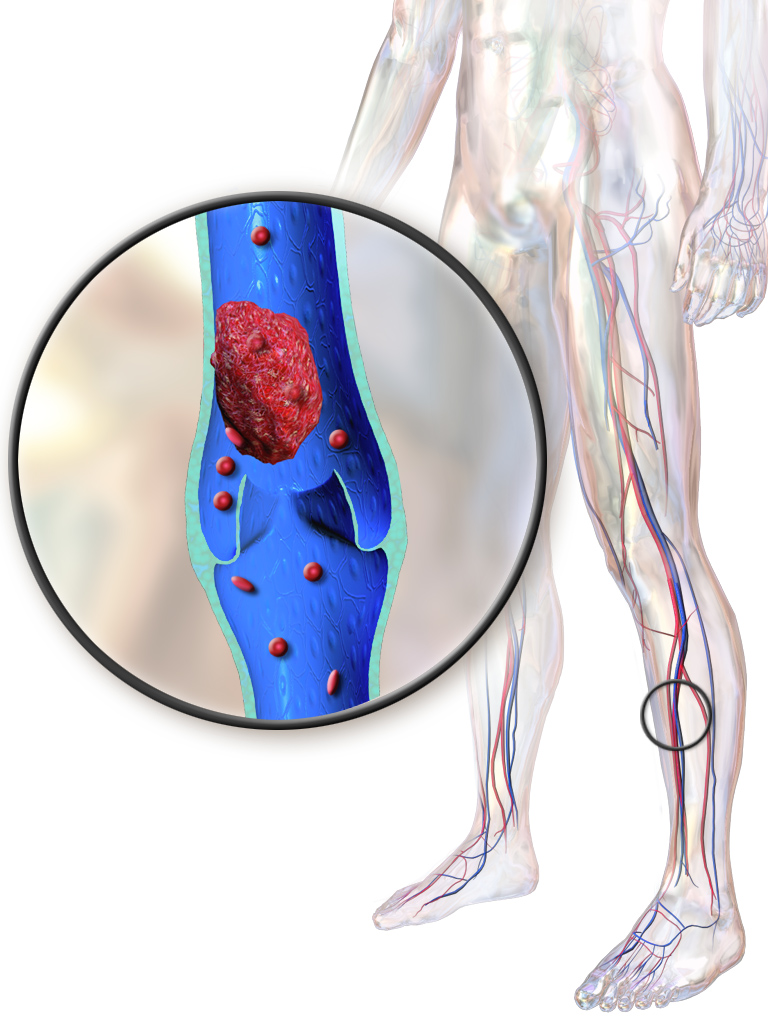
A deep vein thrombosis (DVT) is a clot that forms in a deep vein — most often in the lower leg, thigh, or pelvis. Deep veins sit beneath the muscle, which makes them larger and, crucially, connected to the main channel that returns blood to the heart. That connection is what makes a DVT dangerous: a clot in a deep vein has a direct route to the lungs.
How a Clot Travels From Your Leg to Your Lungs
A pulmonary embolism (PE) happens when a piece of a blood clot — or the entire clot — breaks loose and travels with the blood flow. From a leg vein, the clot is carried through larger veins into the right side of the heart, which pumps it straight into the arteries of the lungs. Because those lung arteries narrow as they branch, a clot eventually gets stuck and blocks blood flow to part of the lung.
That blockage is what makes a PE so dangerous. When blood cannot reach a section of the lung, oxygen levels can drop and the heart has to work harder to push blood through the obstruction. The classic warning signs of a pulmonary embolism include sudden shortness of breath, chest pain that worsens when you breathe in or cough, a rapid heart rate, lightheadedness or fainting, and sometimes coughing up blood. In Hurts' case, the diagnosis was "bilateral" — meaning clots were found in both lungs.
Why Elite Athletes Like Jalen Hurts Are at Higher Risk
It might seem counterintuitive that a world-class athlete in peak physical condition would develop a blood clot, but the opposite can be true. Athletes are exposed to several specific risk factors, many of which line up with Hurts' experience in the days before his diagnosis.
The first is travel. Hurts flew from Philadelphia to London for the Eagles' international game — a long transatlantic flight. Sitting still for extended periods slows circulation in the legs, one of the most well-documented triggers for clot formation. The second is dehydration, which thickens the blood and makes it more prone to clotting; intense training and competition, often in warm conditions, can leave athletes dehydrated. The third is injury and trauma. Hurts had been dealing with a calf issue and had requested treatment for it days earlier — damaged tissue and blood vessels can set the stage for a clot to form.
Other contributing factors in athletes include taller-than-average height (longer limbs mean longer veins and more distance for blood to travel), prior surgery, and, in some cases, inherited clotting disorders that surface only through follow-up testing. Experts emphasize that a blood clot in an athlete is rarely caused by a single thing — it is usually the combination of travel, dehydration, and recent injury that tips the balance.
Timeline: How Hurts' Diagnosis Unfolded
The sequence of events around Hurts' clot shows how quickly a superficial problem can escalate:
- Thursday, Oct. 8: Hurts requests treatment for a calf issue.
- Friday, Oct. 9: Hurts flies to London with the team for the Eagles' international game.
- Saturday, Oct. 10: An evaluation and ultrasound in London reveal a superficial blood clot in his calf.
- Sunday, Oct. 11: Despite the finding, Hurts is cleared and plays the full game in London. He was reportedly awake for roughly 36 hours around this stretch.
- Wednesday night, Oct. 14: A follow-up ultrasound reveals the small blood clot has moved.
- Thursday, Oct. 15: The Eagles rule Hurts out for Sunday's game against the Carolina Panthers.
- Monday, Oct. 19: Hurts is diagnosed with deep vein thrombosis and bilateral pulmonary emboli, placed on blood thinners, and ruled out for the season.
The timeline has prompted sharp criticism from some corners of the sports world, with commentators questioning whether Hurts should have played in London at all after the initial clot was found. The debate underscores a central lesson: superficial clots can become serious, and any clot that changes or grows warrants immediate medical attention.
Treatment and Recovery: Blood Thinners and the Road Back
The mainstay treatment for deep vein thrombosis and pulmonary embolism is anticoagulant medication — commonly called blood thinners. Despite the name, these drugs do not dissolve an existing clot. Instead, they stop the clot from growing and prevent new clots from forming, giving the body time to break down the clot on its own. In more serious cases, doctors may use clot-busting drugs or a procedure to remove the blockage, but for most patients, medication alone is the standard of care.
Recovery timelines vary widely. If a clot was triggered by a temporary, reversible factor — such as surgery or a long flight — treatment may last around three months. If an underlying condition is found, treatment can continue much longer. Physically, most patients can return to normal activity within weeks or months, though many report it takes six months to a year to feel fully like themselves again. For Hurts, whose diagnosis is still being evaluated, the priority is clear: prevent further clotting, protect his lungs, and let his body recover before any talk of returning to football.
The Bottom Line: What Hurts' Case Teaches Everyone
- A blood clot is a normal healing process gone wrong — it becomes dangerous when it forms without an injury, grows, or breaks loose.
- A superficial clot (SVT) near the skin is usually milder, but roughly one in four people with SVT also has a deeper clot.
- A deep vein thrombosis (DVT) in the leg can break off and travel to the lungs, causing a potentially life-threatening pulmonary embolism.
- Long flights, dehydration, and recent injury are key risk factors — and they all lined up for Hurts before his diagnosis.
- Blood thinners are the standard treatment; they stop clots from growing while the body dissolves them over time.
If you notice new swelling, pain, warmth, or redness in one leg — or sudden shortness of breath and chest pain — seek medical care promptly. Blood clots are treatable, but they are not something to ignore.