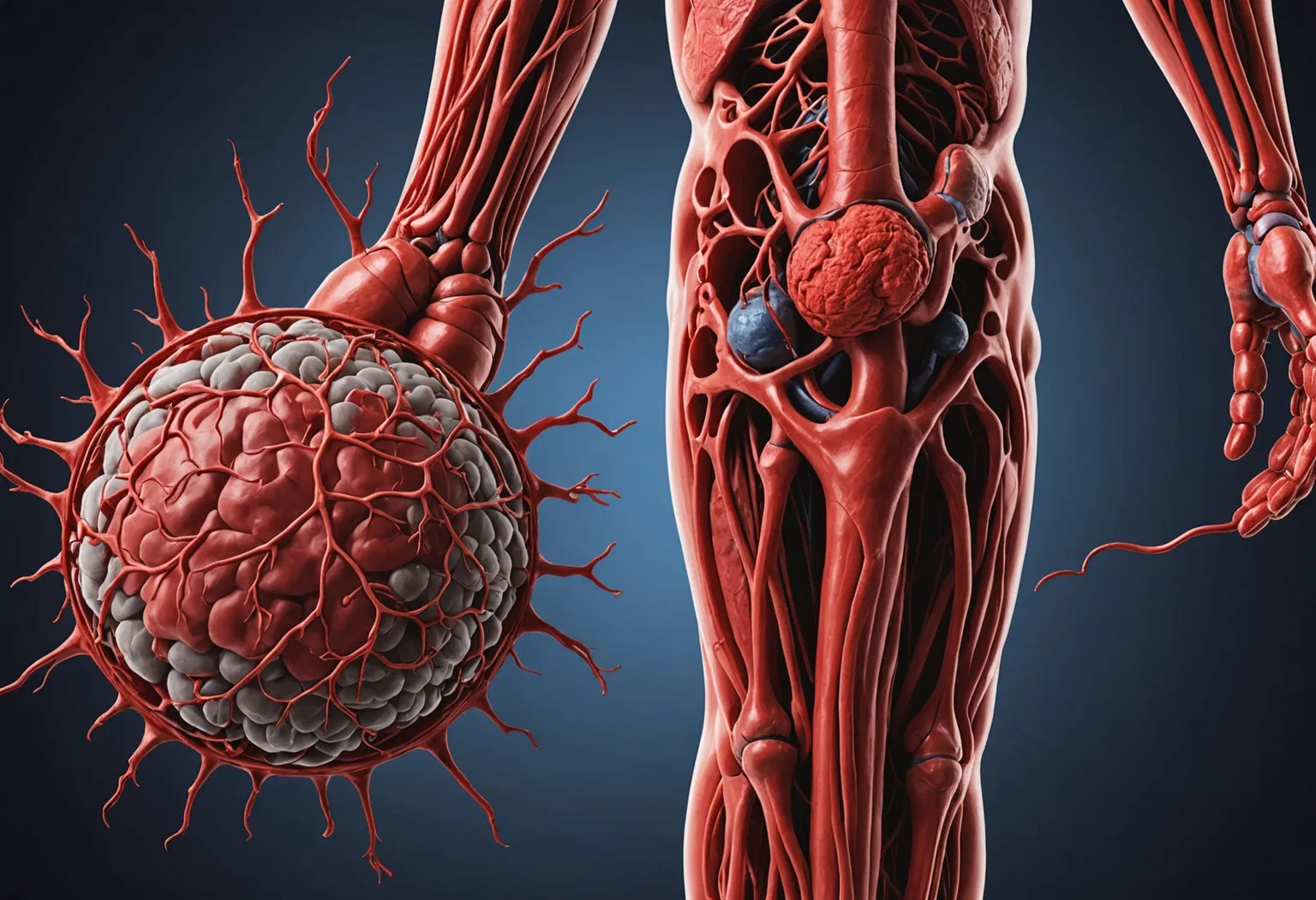
When the Philadelphia Eagles announced that quarterback Jalen Hurts had been diagnosed with blood clots in both lungs, it turned a seemingly minor calf injury into one of the most serious medical stories in professional sports. Hurts' diagnosis — deep vein thrombosis (DVT) that progressed to bilateral pulmonary emboli — is a real-world example of how a blood clot can form in one part of the body, break loose, and travel to become life-threatening. Blood clots affect as many as 900,000 Americans each year, yet many people do not recognize the warning signs until it is too late. Here is a closer look at what blood clots are, how they form, and what everyone should know about the symptoms, causes, and treatment of this potentially deadly condition.
The sequence of events in Hurts' case began on October 4, 2026, when the Eagles quarterback was struck in his left calf by another player's cleat during a game against the Los Angeles Rams. The blow caused a superficial blood clot, known medically as superficial venous thrombosis (SVT), to form in his calf. At first, the injury appeared manageable, but the situation worsened after the team traveled to London for an international game on a seven-hour flight.
In London, a follow-up ultrasound revealed that the clot had moved. By the time the Eagles and Hurts' agent released a statement on October 19, doctors had diagnosed him with deep vein thrombosis and bilateral pulmonary emboli, meaning a blood clot had traveled from his leg to both of his lungs. The team placed Hurts on injured reserve, ending his season, and announced he would undergo treatment with blood thinners for at least three months. He is expected to make a full recovery.
This progression, from a leg injury to a clot that reaches the lungs, is exactly how the most dangerous blood clots develop. It is also why doctors take even minor calf injuries seriously, especially when they are combined with long periods of sitting still.
What Is a Blood Clot? Understanding DVT and Pulmonary Embolism
A blood clot is a gel-like clump of blood that has changed from a liquid to a semi-solid state. Under normal circumstances, clotting is a lifesaving process: it is the body's natural way of stopping bleeding after an injury. Problems arise, however, when clots form inside veins or arteries without an injury, or when they grow large enough to block blood flow.
There are two main types of dangerous blood clots that develop in veins. The first is deep vein thrombosis (DVT), a clot that forms in a deep vein, most often in the leg or thigh. The second is a pulmonary embolism (PE), which occurs when a piece of a clot, or the entire clot, breaks loose and travels through the bloodstream to the lungs, where it can block blood flow. When clots appear in both lungs at once, as in Hurts' case, the condition is called bilateral pulmonary emboli.
A pulmonary embolism is a medical emergency. According to the National Heart, Lung, and Blood Institute, a PE can be life-threatening because it prevents the lungs from getting oxygen into the blood. This is why a clot that starts as a routine leg issue can escalate quickly.
Timeline: How Hurts' Injury Escalated Over Two Weeks
Hurts' case unfolded over roughly two weeks, and the timeline shows how quickly a clot situation can change:
- October 4, 2026: Hurts is struck in his left calf by a cleat during a game against the Los Angeles Rams.
- October 10, 2026: While in London with the team, an ultrasound discovers a superficial venous thrombosis (SVT) in his left calf.
- October 17, 2026: The Eagles place Hurts on injured reserve after revealing the calf blood clot.
- October 19, 2026: The team and Hurts' agent announce he has deep vein thrombosis and bilateral pulmonary emboli, or clots in both lungs, and will miss the rest of the season.
The key turning point, according to reports, was the discovery that the clot had moved after the team's long flight to London. That is a reminder that immobility, such as sitting for hours on a plane, is one of the factors that can allow a clot to grow or break free.
Warning Signs: How to Recognize a Blood Clot
Recognizing the symptoms of a blood clot can be the difference between early treatment and a life-threatening emergency. The symptoms depend on where the clot is located.
For a DVT in the leg, the classic warning signs include swelling in one leg (rarely both), pain or cramping that often starts in the calf, a feeling of warmth in the affected area, and red or discolored skin. According to the Mayo Clinic and Cleveland Clinic, these symptoms typically appear in just one leg rather than both.
For a pulmonary embolism, when a clot reaches the lungs, the symptoms are different and more urgent. They include sudden shortness of breath, sharp chest pain that worsens when breathing deeply or coughing, coughing up blood, a rapid or irregular heartbeat, and feeling lightheaded or faint. The National Health Service notes that a PE can be fatal if left untreated. According to the Mayo Clinic, about one-third of people with an undiagnosed and untreated pulmonary embolism do not survive, so any of these symptoms warrant immediate medical attention.
Who Is at Risk? The Factors Behind Dangerous Clots
Blood clots do not happen at random. Doctors group the risk factors into a few key categories. The first is injury to a vein, which is exactly what happened to Hurts when he was hit in the calf. Trauma from an injury or surgery can damage the blood vessel wall and trigger clotting.
The second major factor is slow blood flow, which happens when someone sits still for long periods, whether on a long flight, during a hospital stay, or while recovering from surgery. This is why Hurts' seven-hour flight to London was such an important detail in his case.
Other risk factors identified by the Centers for Disease Control and Prevention and the American Heart Association include increased estrogen (from birth control pills, hormone therapy, or pregnancy), certain chronic illnesses such as cancer and heart disease, obesity, a family history of blood clots or an inherited clotting disorder, and older age. The risk of a blood clot rises sharply after age 60, though clots can occur at any age. Hurts is a reminder that even young, elite athletes are not immune.
How Blood Clots Are Treated: From Blood Thinners to Recovery
The foundation of blood clot treatment is anticoagulant medication, better known as blood thinners. Despite the name, blood thinners do not actually make blood thinner. Instead, they slow down the body's clotting process by blocking certain proteins or clotting factors that the blood needs to form a clot. This stops existing clots from growing and prevents new ones from forming while the body gradually dissolves the clot on its own.
Common blood thinners include warfarin (Coumadin), heparin, and a newer class of medications called direct oral anticoagulants (DOACs). For most patients with a DVT or pulmonary embolism, treatment lasts at least three months, the same timeline doctors gave Hurts, though some people need to stay on medication longer depending on their underlying risk factors.
In more severe cases, doctors may use stronger interventions. Catheter-directed thrombolysis delivers clot-dissolving drugs directly to the clot through a thin tube, and surgery is used only in rare, life-threatening situations. The good news is that with prompt treatment, most patients survive and recover — and Hurts is expected to do the same.
How to Prevent Blood Clots: Tips for Travel and Everyday Life
Many blood clots are preventable, and the prevention strategies are simple. The most important rule is to keep moving. During long flights or car rides, get up and walk every one to two hours whenever possible, and do simple calf exercises, such as flexing and pointing your toes, while seated. Staying hydrated and avoiding tight clothing also help keep blood flowing.
For travelers, experts recommend choosing an aisle seat to make it easier to stand up, wearing loose-fitting clothes, and considering compression socks on long flights. Compression socks gently squeeze the legs to encourage blood flow back toward the heart. These habits are especially important for people who already have other risk factors, such as a recent injury or surgery.
Beyond travel, maintaining a healthy weight, staying active, not smoking, and managing chronic conditions all lower the overall risk of developing a dangerous clot. And if you notice any of the warning signs, especially leg swelling or sudden shortness of breath, seek medical care right away.
Key Takeaways: What Everyone Should Know About Blood Clots
Jalen Hurts' diagnosis may be a sports headline, but the underlying condition is a public health issue that touches hundreds of thousands of families every year. The essentials to remember:
- A blood clot is a clump of blood that can block blood flow in veins or arteries.
- DVT is a clot in a deep vein (usually the leg); a pulmonary embolism is a clot that travels to the lungs.
- Watch for one-sided leg swelling, pain, warmth, or redness, as well as sudden shortness of breath or chest pain.
- Injury, immobility, surgery, and certain hormones and health conditions raise the risk.
- Blood thinners are the standard treatment, and most people recover with prompt care.
- Movement, hydration, and compression stockings can help prevent clots during travel.