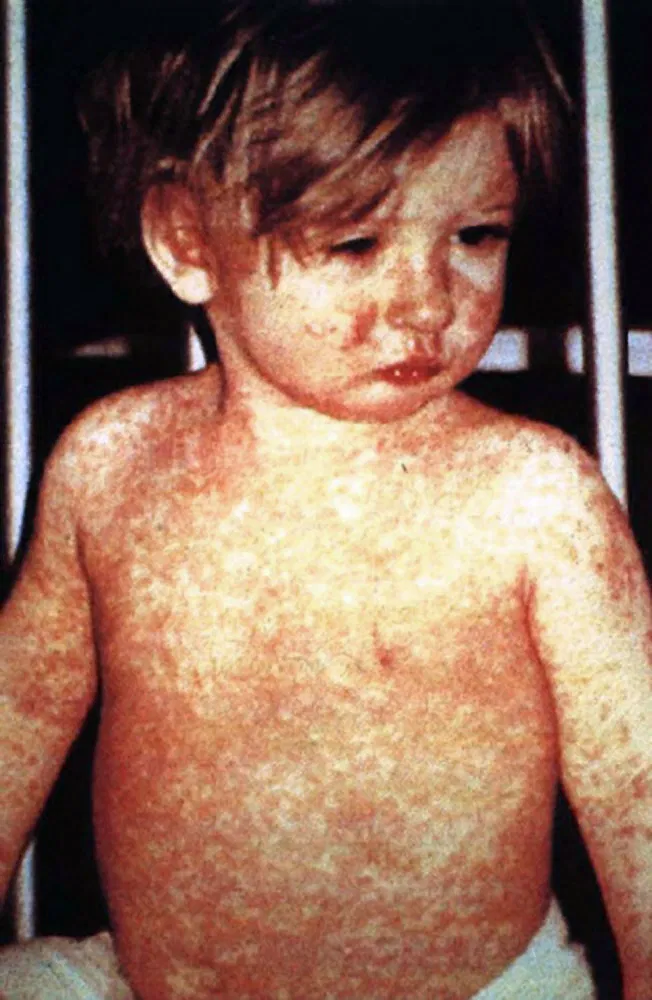
Measles is one of the most contagious viruses known to medicine, and recognizing its symptoms early can help slow an outbreak and prevent serious complications. The first signs of measles typically appear 7 to 14 days after exposure to the virus, and they look a lot like a bad cold or the flu: a high fever, a dry cough, a runny nose, and red, watery eyes. A few days later, tiny white spots called Koplik spots may appear inside the mouth, followed by the signature red rash that starts on the face and spreads down the body. This guide explains exactly what measles symptoms look like, how the illness progresses day by day, how it spreads, and why measles is back in the headlines in 2026 after the United States lost its elimination status.
The Telltale Signs: What Measles Symptoms Actually Look Like
Measles is caused by a virus in the paramyxovirus family, and its early symptoms are famously easy to confuse with other respiratory illnesses. Doctors often describe the opening phase of measles using the “three C’s”: cough, coryza (a runny nose), and conjunctivitis (red, inflamed, watery eyes). These develop alongside a fever that can climb to 104°F (40°C) or higher, plus tiredness and sometimes a barky cough, according to the CDC and Cleveland Clinic.
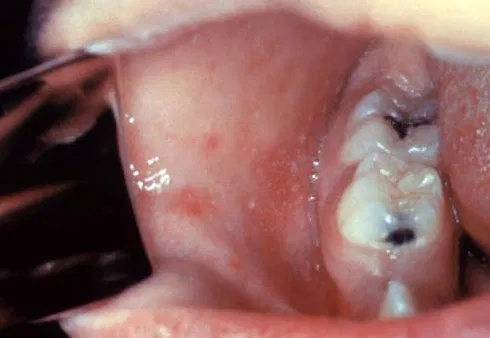
What sets measles apart from an ordinary cold, however, is a small but distinctive clue that appears inside the mouth. Two to three days before the skin rash breaks out, many people develop Koplik spots — tiny white spots with bluish-white centers that sit on a reddened background on the inner lining of the cheeks. Doctors have long compared them to “grains of salt on a reddish background.” Because they show up before the rash, Koplik spots are considered a definitive early warning sign of measles.
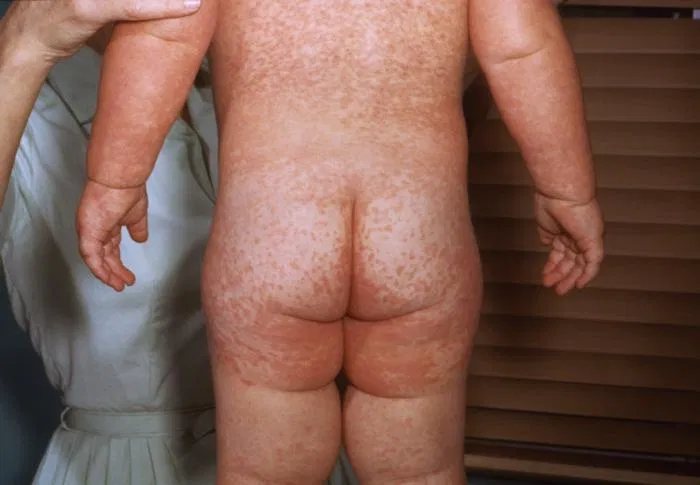
Then comes the rash itself. About three to five days after the first symptoms, flat red spots begin to appear at the hairline and on the face. Over the following days, the rash spreads downward to the neck, trunk, arms, legs, and feet. The individual spots may run together into larger patches, and the rash typically fades in the same order it appeared, clearing up over roughly a week.
A Day-by-Day Timeline: How Measles Progresses
Understanding the measles timeline helps explain why the virus spreads so efficiently, often before anyone realizes they are sick. Here is how a typical case unfolds after exposure, based on guidance from the CDC and other public health sources.
- Day 0: A person is exposed to the measles virus through the air or contaminated surfaces.
- Days 7–14: The incubation period ends and the first symptoms appear — fever, cough, runny nose, and red, watery eyes. Some cases take up to 21 days.
- Days 10–12: Koplik spots may appear inside the mouth, two to three days before the rash.
- Days 3–5 after first symptoms: The red, blotchy rash begins on the face and hairline.
- Over the next few days: The rash spreads downward to the trunk, arms, and legs, often reaching the feet.
- Roughly one week after it starts: The rash begins to fade in the order it appeared.
A crucial detail is that a person can spread measles for about four days before the rash appears and for four days after it shows up. Because the virus can also linger in the air for up to two hours after an infected person leaves a room, a single case can trigger a cluster of infections in places like schools, clinics, and waiting rooms.
Why Measles Is More Dangerous Than a Simple Rash
Measles is often dismissed as a childhood rash, but the disease carries real risks, especially for babies, pregnant women, and people with weakened immune systems. The CDC estimates that about 1 in 5 unvaccinated people in the U.S. who get measles is hospitalized. Common complications include ear infections and diarrhea, but the more serious ones can be life-threatening.
Pneumonia is the most common cause of measles-related death, affecting about 1 in 20 children who get the disease. Around 1 in 1,000 people develops encephalitis, a dangerous swelling of the brain that can cause seizures, deafness, or lasting brain damage. For every 1,000 children infected, roughly 1 to 3 will die from measles or its complications. A very rare but fatal complication called subacute sclerosing panencephalitis (SSPE) can also appear years after the initial infection. In pregnancy, measles raises the risk of premature birth and low birth weight.
There is no specific antiviral medicine that cures measles. Treatment is supportive, meaning it focuses on easing symptoms — rest, fluids, fever management, and, for many children, vitamin A supplementation, which the World Health Organization recommends because measles can deplete vitamin A levels and worsen outcomes. This is why prevention through vaccination matters so much.
Why Measles Is Making Headlines in 2026
Measles symptoms are back in the news for a serious reason: in November 2026, the United States officially lost its measles elimination status, a designation it had held for 26 years. Health authorities including the Pan American Health Organization (PAHO) and the CDC confirmed the change after the virus circulated continuously for more than a year. By late 2026, the U.S. had recorded more than 2,700 measles cases — the highest count in more than three decades — along with multiple deaths, including among infants and children.
Measles elimination does not mean zero cases. It means the disease is no longer spreading continuously within a country and any cases trace back to an outside source. Losing that status means the virus is once again transmitting locally, driven largely by pockets of unvaccinated people. To regain elimination status, the U.S. must stop continuous spread and keep it stopped for at least 12 months.
The Best Defense: How Vaccination Stops Measles
The single most effective way to avoid measles symptoms altogether is the measles, mumps, and rubella (MMR) vaccine. Two doses are about 97% effective at preventing measles, while a single dose is about 93% effective. In the U.S., children typically receive the first dose at 12 to 15 months of age and a second dose at 4 to 6 years.
Because measles is so contagious — up to 9 out of 10 unvaccinated people who come into close contact with an infected person will catch it — high vaccination coverage is essential. Public health officials urge anyone who is unsure of their vaccination status to check their records and, if needed, get vaccinated. For those who are exposed, a timely dose of MMR or immune globulin can sometimes reduce the severity of the illness if given soon after exposure.
Measles Symptoms at a Glance: Key Takeaways
- First signs appear 7–14 days after exposure: high fever, cough, runny nose, and red, watery eyes.
- Koplik spots — tiny white spots inside the cheeks — can appear 2–3 days before the rash and are an early warning sign.
- The red rash starts on the face and hairline, then spreads downward over several days.
- People can spread the virus from 4 days before the rash until 4 days after it appears, and the virus can linger in the air for up to 2 hours.
- About 1 in 5 unvaccinated people who get measles is hospitalized; pneumonia, encephalitis, and death are possible complications.
- Two doses of the MMR vaccine are 97% effective and remain the best protection.