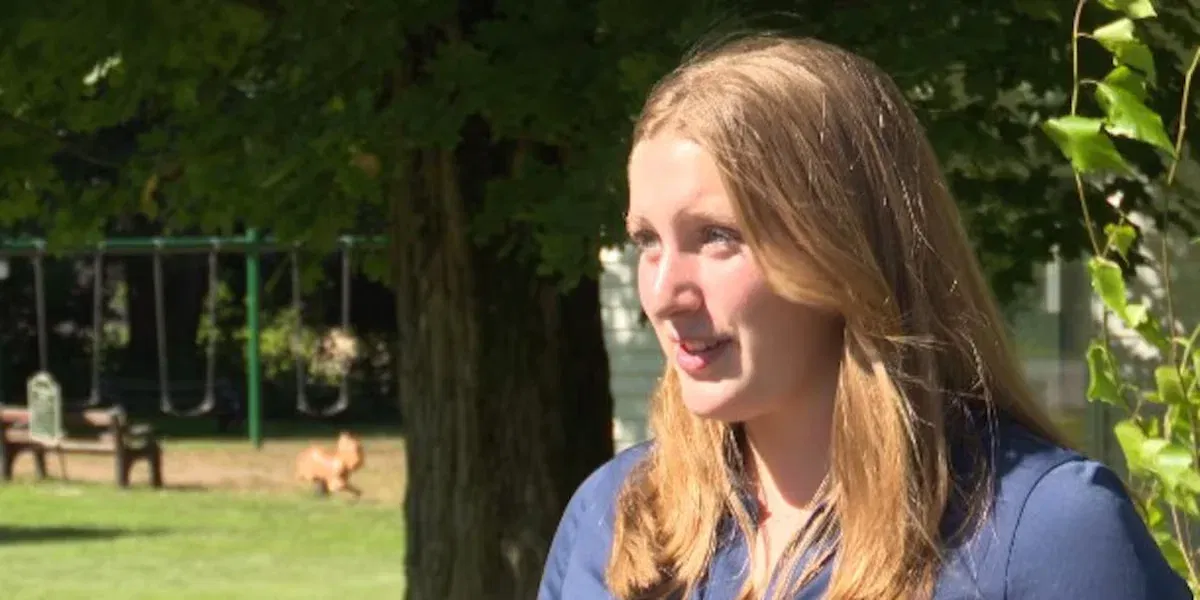
Julie Kaputa never expected her senior year at Beaver River Central School to begin with a trip to the office — let alone an in-school suspension over a cup of coffee. On Sept. 3, the first day of classes in this small Lewis County, New York district, the honors student walked into her first-period classroom with coffee in hand and quickly discovered that a newly added "outside food and drink" rule had turned her morning pick-me-up into a disciplinary offense. Her refusal to throw the drink away set off a story that has since gone viral — and reopened a much larger conversation about caffeine, teen health, and how much coffee is actually safe for a growing body.
How a Morning Coffee Turned Into an In-School Suspension
The confrontation unfolded within minutes of the opening bell. Kaputa, a senior at the school about 75 minutes north of Utica, said her teacher gave her three choices the moment she spotted the cup.
"I walked in, I had my coffee with me. I got to my first period class and my teacher said, 'I'm either going to need you to dump that out or consume it on the spot or go down to the office,'" Kaputa told WWNY.
Kaputa chose the office. There, she received an in-school suspension for violating the school's outside food and drink rule — a policy that was quietly added to this year's student code of conduct. The rule, according to Superintendent Todd Green, was intended to promote a safe and distraction-free learning environment.
But as Kaputa and her mother, MaryAnne, reviewed the handbook, something didn't add up. New York's open meetings law generally requires school districts to hold a properly announced public hearing before adopting certain policy changes. When the family searched for evidence that such a hearing had actually taken place, they found nothing.
Timeline: From a First-Period Coffee to a Sept. 14 Public Hearing
Sept. 3 — Kaputa brings a coffee to her first-period class on the first day of her senior year. After refusing to dump or finish it, she is sent to the office and given an in-school suspension for violating the new outside food and drink rule.
Early September — Kaputa and her mother review the code of conduct and question whether the new rule was ever properly introduced. "She said it. She said, 'It says there's supposed to be a public hearing. When was that? We never knew about it. Did they announce it?' And I said, 'I don't know, look.' And we couldn't find one," MaryAnne Kaputa said.
Sept. 10 — WWNY reports the story, quoting both Kaputa and Superintendent Green. Green acknowledges that the district's August board meeting was treated as a public hearing but agrees, after speaking with Kaputa, that it was not properly announced.
Sept. 14 — A new public hearing is scheduled so the district can revisit the outside food and drink policy the right way.
The Bigger Picture: What the Suspension Says About Teen Caffeine
Beneath the headlines about school rules and open-meeting law is a question parents, pediatricians, and students are asking all over again: is coffee even healthy for teenagers?
Pediatric experts largely agree that kids and teens don't need caffeine at all. "Caffeine is a stimulant, meaning its purpose is to make you feel more alert and energized," says Dr. Andrew Carlson, Director of Primary Care at Connecticut Children's. "The effects of caffeine can last from 4-6 hours."

Because adolescents have smaller bodies and still-developing brains, they are more sensitive to caffeine than adults. While up to 400 mg a day is generally considered safe for healthy adults, pediatricians suggest teens keep intake far lower — roughly 100 mg or less, about the amount in a single 8-ounce cup of coffee. Consuming too much can interfere with sleep and mental health, and may contribute to upset stomach, headaches, mood swings, and even elevated blood pressure.
New 2025 beverage guidelines from Healthy Eating Research go further, recommending that teenagers especially avoid caffeine and lean on water and other healthier drink choices instead. The American Academy of Pediatrics has long held a similar position: children and adolescents simply don't need caffeine.
That doesn't mean a single cup of coffee is a crisis. Dr. Carlson notes that balance is more realistic than a strict ban — an occasional cola or iced tea is generally fine. But he offers three practical guardrails for parents: keep daily caffeine at 100 mg or below, stop all caffeine by early afternoon so it doesn't disrupt sleep, and watch for signs of dependency, such as needing caffeine just to wake up.
Energy drinks, meanwhile, should be avoided altogether. "Some brands have dangerously high levels of caffeine," Dr. Carlson says, and many also pack in large amounts of sugar, artificial sweeteners, and added taurine.
Where Things Stand Now: A District Review and a Reset
For her part, Kaputa has said she isn't angry at the district. Her suspension won't appear on her permanent record, and she says her goal was never to fight the coffee rule itself — only to make sure the process around it was transparent.
"There was no public hearing to discuss it. Transparency in government is a big thing that I care about a lot, and it just kind of struck me as odd that there wasn't a public hearing," Kaputa said.
Superintendent Green, for his part, has praised her willingness to speak up. "It's good to see students standing up for what they believe in. We really appreciate that. That often doesn't happen," Green said. "We know there's open meeting laws. We try to follow that. If things get pointed out that we need to do and change or fix, we'll do that."
What Happens Next: A Rewritten Rule and a Healthier Morning Routine
The district's new public hearing on Sept. 14 gives Beaver River Central School a chance to formally consider — and properly announce — the outside food and drink policy. Whatever the board decides, the episode has already become a teaching moment on two fronts: how local government should operate, and how young people should think about their daily caffeine habit.
For families watching the story unfold, the health takeaway is simple. A morning coffee can be a comforting ritual, but for teens, less is more — and water, fruit-infused seltzer, or a small splash of juice are the smarter default. If a cup of coffee is part of your routine, keep it to one 8-ounce serving, skip the afternoon refill, and remember that a good night's sleep will always beat a second shot of espresso.
The Bottom Line: Key Takeaways
- Julie Kaputa, a senior at Beaver River Central School in New York, received an in-school suspension on Sept. 3 for bringing coffee to class and refusing to throw it away.
- The rule banning outside food and drinks was newly added to the district's code of conduct, but a required public hearing wasn't properly announced.
- Superintendent Todd Green acknowledged the procedural error and scheduled a new public hearing for Sept. 14.
- Pediatric experts recommend teens keep caffeine at 100 mg or less per day — roughly one 8-ounce cup of coffee — and avoid energy drinks entirely.