
When temperatures climb and humidity makes the air feel thick and heavy, you may hear the National Weather Service issue a heat advisory. But what exactly does that mean, and how should you respond? A heat advisory is one of several tools the NWS uses to alert the public about dangerous heat conditions, and understanding the distinction between a heat advisory, heat watch, and heat warning could save your life. Heat is the number one weather-related killer in the United States, responsible for more than 1,000 deaths each year, yet many people underestimate its dangers.
Breaking Down the Heat Advisory: What It Means and When It's Issued
A heat advisory is issued by the National Weather Service when dangerous heat conditions are expected within the next 12 hours but are not anticipated to reach the more severe warning criteria. The exact temperature and heat index thresholds vary by region because the NWS takes local climate into account. For example, residents of Florida are much more accustomed to 90°F weather than those in Alaska, so advisory thresholds are adjusted accordingly.
In many areas, a heat advisory is issued when the heat index—the "feels like" temperature that combines air temperature and relative humidity—is forecast to reach between 95°F and 104°F for two or more consecutive hours. According to the NWS, "A Heat Advisory is issued for dangerous heat conditions that are not expected to reach warning criteria." The key message is to take precautionary action: consider postponing outdoor activities, stay hydrated, and find cool spaces. The NWS emphasizes that a heat advisory means "be careful and take action."
The Three Levels of Heat Alerts: Advisory, Watch, and Warning
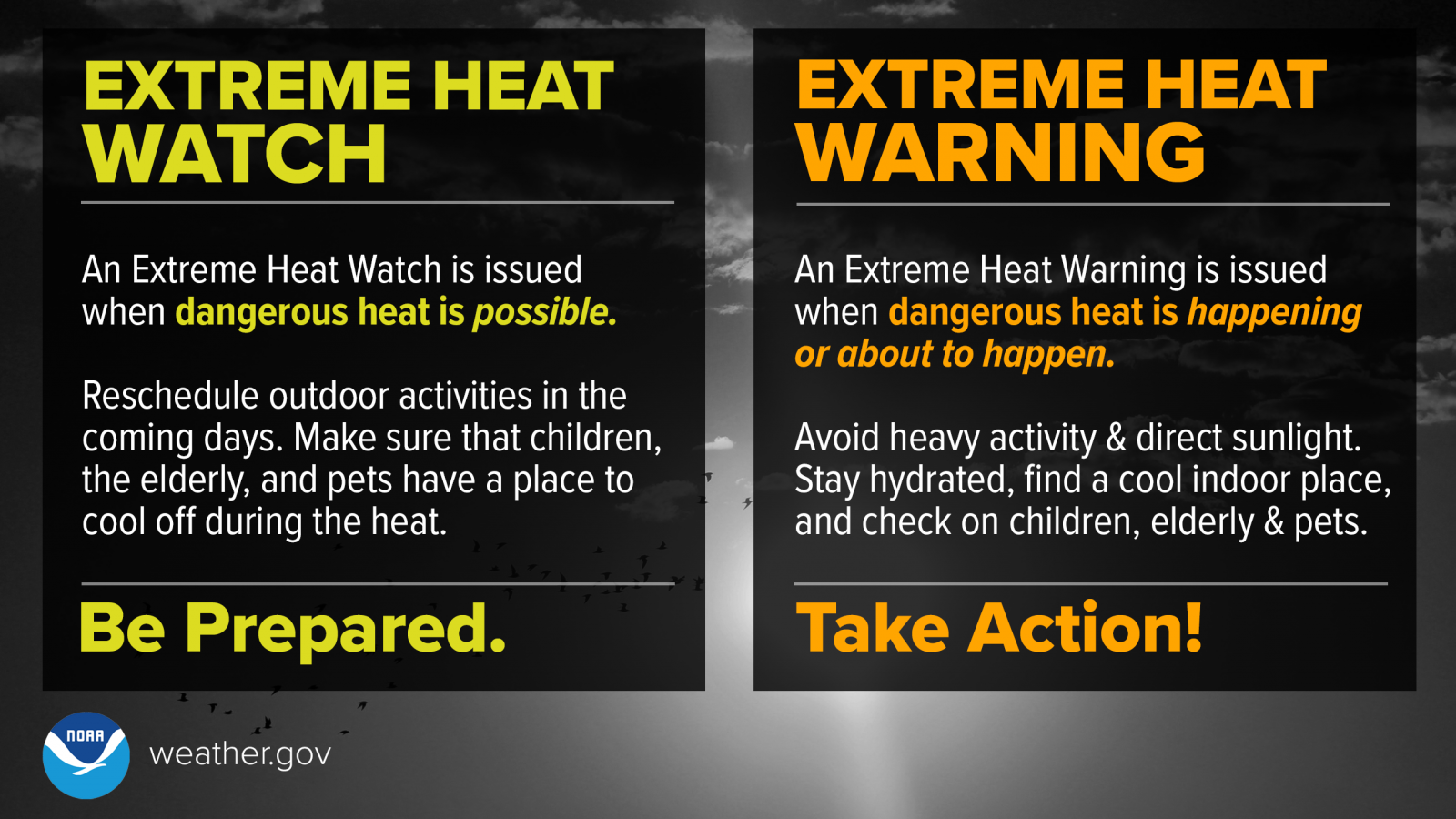
The NWS recently updated its heat alert terminology as part of its Hazard Simplification Project. In March 2025, the agency retired the terms "Excessive Heat Watch" and "Excessive Heat Warning," replacing them with "Extreme Heat Watch" and "Extreme Heat Warning" to better convey the seriousness of the threat. Here is how the three levels break down:
- Heat Advisory — Take Action! Issued when dangerous heat conditions are expected within 12 hours. The heat index is typically between 95°F and 104°F depending on local criteria. The NWS advises rescheduling outdoor activities, drinking plenty of water, and taking breaks in the shade or air conditioning.
- Extreme Heat Watch — Be Prepared! Issued when conditions are favorable for an extreme heat event but the timing and occurrence are still uncertain. This is the time to plan ahead—locate cooling shelters, check on vulnerable neighbors, and prepare to suspend outdoor activities if a warning is issued.
- Extreme Heat Warning — Take Action Now! The highest level of alert, issued when extremely dangerous heat is occurring or imminent. This means heat index values of 105°F or higher are expected. The NWS advises everyone to avoid outdoor activities, stay in air-conditioned spaces even overnight, and check on family and neighbors.
Fox Weather reported that the NWS changed the terminology because "the term 'extreme' conveys the danger of the threat better than the word 'excessive.'" The change aligns with similar updates made to cold weather alerts in 2024.
Timeline: How a Heat Advisory Develops and Progresses
Understanding the timeline of a heat event can help you prepare and respond appropriately. Here is how these alerts typically unfold:
- 2-3 days before: Weather models indicate a potential heat event. The NWS may issue a Hazardous Weather Outlook to raise awareness.
- 1-2 days before: Confidence in the forecast increases. An Extreme Heat Watch may be issued to give the public time to prepare.
- Within 12 hours: Dangerous heat conditions are imminent. A Heat Advisory or Extreme Heat Warning is issued depending on the severity.
- During the event: Alerts remain in effect. Cooling centers open, and public health warnings are broadcast. The NWS and local authorities provide continuous updates.
- After the event: Once temperatures drop below dangerous thresholds, alerts are canceled. However, heat-related health issues can persist, so continued hydration and monitoring of vulnerable individuals is advised.
In New York City, for instance, the longest heat wave on record lasted 12 days from August 24 to September 4, 1953. Climate projections suggest that by the 2050s, New York could see up to 69 days per summer with temperatures of 90°F or above, up from an average of 15 days currently.
Why Heat Is So Dangerous: The Science Behind the Threat
Heat doesn't just make you uncomfortable—it puts tremendous stress on the body. When the air is hot and humid, sweat does not evaporate as efficiently, impairing the body's primary cooling mechanism. This can lead to a cascade of heat-related illnesses, from cramps to exhaustion to potentially fatal heat stroke.
The heat index is a critical tool for understanding this danger. Developed by the NWS, the heat index combines air temperature and relative humidity to calculate how hot it actually feels. For example, when the air temperature is 95°F and the relative humidity is 60%, the heat index—or "real feel"—can be as high as 114°F. This explains why a heat advisory can be issued even when the actual temperature seems moderate.
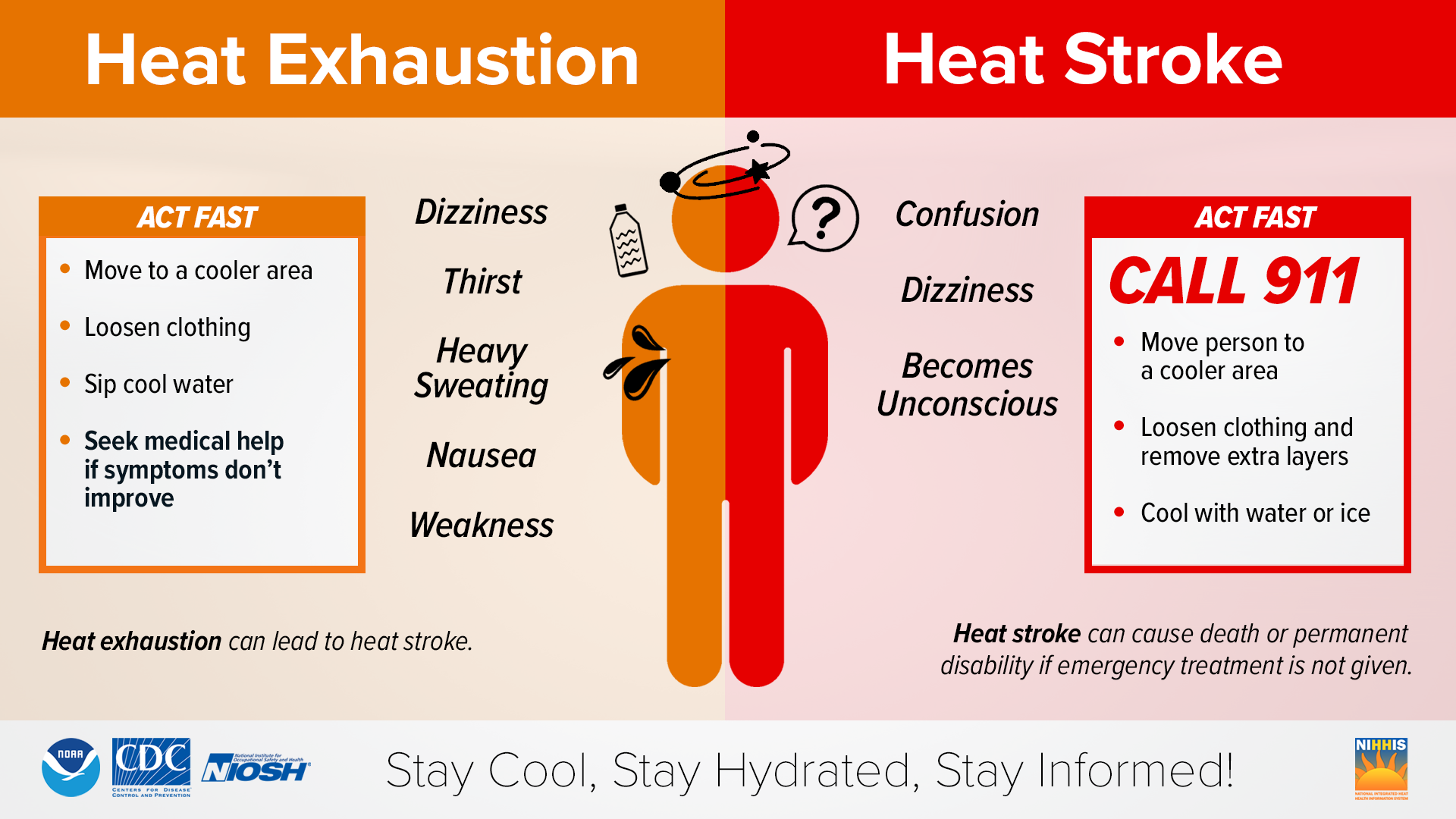
According to the CDC, symptoms of heat-related illness include muscle cramping, heavy sweating, cold or clammy skin, dizziness, nausea, and headache. Heat stroke, a medical emergency, is characterized by a body temperature above 103°F, hot red skin, rapid pulse, confusion, and loss of consciousness. If you suspect heat stroke, call 911 immediately and begin cooling the person with cool cloths or a bath.
Who Is Most at Risk During a Heat Advisory
While extreme heat affects everyone, certain populations are particularly vulnerable. According to the NWS and CDC, these groups require extra attention during a heat advisory:
- Young children and infants — Their bodies are less able to adapt to heat, and they rely on adults to keep them cool and hydrated.
- Older adults — Especially those with pre-existing conditions, taking certain medications, living alone, or with limited mobility.
- People with chronic medical conditions — Heart disease, diabetes, respiratory issues, and other conditions can be exacerbated by heat.
- Pregnant women — Extreme heat has been linked to adverse birth outcomes including low birth weight and preterm birth.
- Outdoor workers and athletes — Those who must be outside during peak heat hours face elevated risk.
- Pets — Animals can suffer heat stroke too. Never leave pets in parked cars, and ensure they have shade and water.
The NWS reports that 31 children died in hot cars in 2025 alone. "It is NEVER safe to leave a child, disabled person or pet locked in a car, even in the winter," the agency warns, noting that a car's interior can heat up by 20°F in just 10 minutes.
Where Things Stand Now: The Current State of Heat Alerts
As of the 2025 summer season, the NWS has fully implemented the new heat alert terminology across all local forecast offices. The Hazard Simplification Project continues to refine how weather alerts are communicated to the public, with a focus on clear, actionable language. Local NWS offices collaborate with emergency managers, public health departments, and media partners to ensure consistent messaging.
Many cities have also expanded their cooling center networks and heat emergency plans. The CDC recommends dialing 2-1-1 or visiting local health department websites to find cooling centers nearby. The Ready.gov website advises that during a heat advisory, you should "consider postponing or rescheduling outdoor activities, especially during the heat of the day" and "stay in a cool place, especially during the heat of the day and evening."
What Happens Next: Preparing for a Hotter Future
With climate projections indicating more frequent and intense heat waves, understanding heat advisories will only become more important. The NWS is working on further improvements to the alert system, including more localized and impact-based forecasts. The CDC's HeatRisk tool, now available online, provides a 7-day heat forecast that shows when temperatures may pose health risks, allowing individuals to plan ahead.
Experts advise everyone to create a personal Heat Action Plan: identify cool locations in your community, stock up on water and electrolyte-rich drinks, check that fans and air conditioners are working, and establish a plan to check on vulnerable family members and neighbors. As the NWS puts it, "heat can be very taxing on the body and can lead to heat related illnesses or make existing health conditions worse." Preparation remains the best defense.
Key Takeaways to Remember
- A Heat Advisory means dangerous heat is expected within 12 hours — take precautions, not chances.
- Heat index matters more than air temperature; high humidity can make it feel 10-20°F hotter.
- Heat is the #1 weather-related killer in the U.S., causing over 1,000 deaths annually.
- Never leave children, vulnerable adults, or pets in parked vehicles — even for a minute.
- Stay hydrated, seek air conditioning, check on neighbors, and know the symptoms of heat illness.
- The NWS updated heat alert terminology in 2025: Heat Advisory, Extreme Heat Watch, and Extreme Heat Warning.