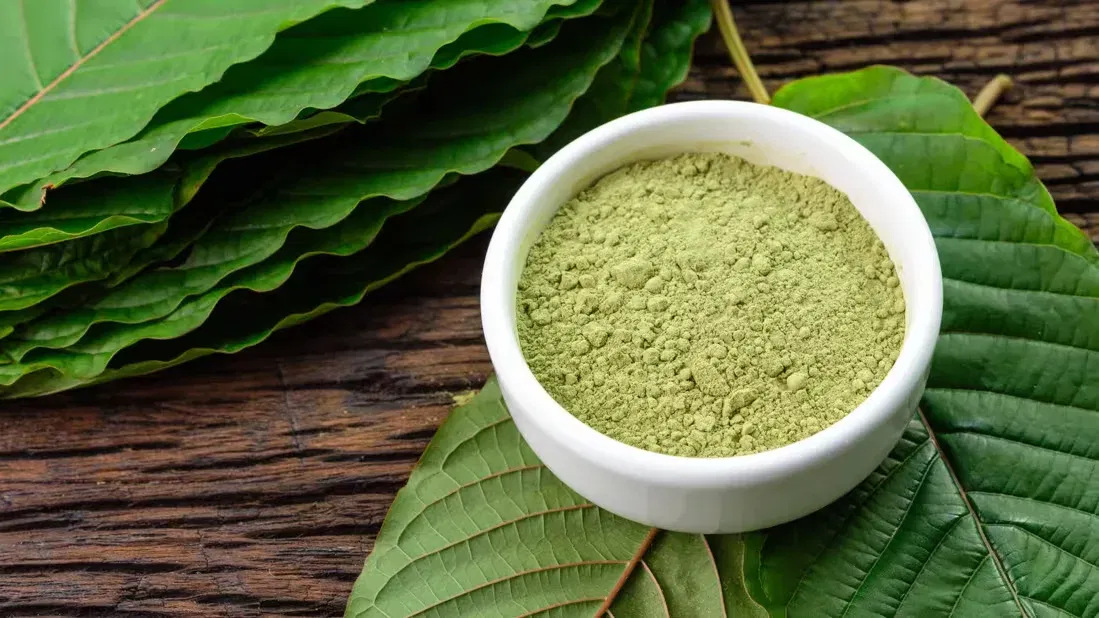
Kratom is an herbal substance made from the leaves of a tropical tree native to Southeast Asia, and it has drawn growing attention for producing both opioid- and stimulant-like effects. Derived from the Mitragyna speciosa tree, kratom has been used for centuries in traditional medicine, yet in recent years it has surged in popularity across the United States as a self-treatment for pain, fatigue, mental health struggles, and even opioid withdrawal. But what exactly is kratom, how does it affect the body, and is it safe? Here is what researchers and health agencies know — and what remains unclear.
What Is Kratom, Exactly?
"Kratom" refers to both the Mitragyna speciosa tree and the products made from its leaves, which are typically sold as herbal supplements. Native to Southeast Asia, the tree's leaves contain many chemical compounds known as bioactive alkaloids. The two most studied are mitragynine and 7-hydroxymitragynine (7-OH). According to the National Institute on Drug Abuse (NIDA), anthropologists report that kratom has been used in Southeast Asia for hundreds of years as a multi-purpose remedy in traditional medicine, as well as to increase alertness and energy while working and during social gatherings.
How Does Kratom Work in the Body?
Scientists are still learning exactly how kratom and its compounds affect the body. Mitragynine is the most abundant active compound in kratom leaves, and when digested it breaks down into 7-hydroxymitragynine. Both compounds activate mu-opioid receptors — the same molecular structures on nerve cells targeted by opioids such as heroin and oxycodone — but the resulting effects only partially resemble those of classic opioids.
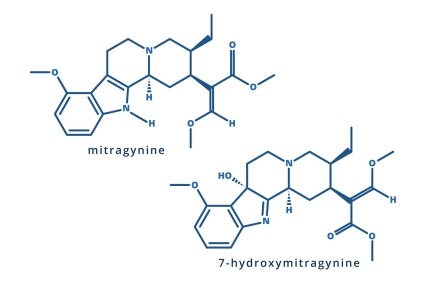
Importantly, kratom leaves and mitragynine do not appear to cause the dangerous slowdown in breathing (respiratory depression) that characterizes a life-threatening opioid overdose. Although 7-OH can depress breathing in laboratory models, the body converts mitragynine to 7-OH slowly enough to limit this effect. Mitragynine may also bind to adrenergic, serotonin, and dopamine receptors, which researchers believe explains some of the stimulating, mood-lifting effects people report.
Kratom Effects: What Low and High Doses Do
One of kratom's defining features is its dose-dependent effects. At low doses, people report stimulant-like effects: increased energy, alertness, talkativeness, and a faster heart rate. At higher doses, the effects shift toward those of opioids and sedatives — relaxation, pain relief, drowsiness, and confusion. The Drug Enforcement Administration (DEA) describes the same pattern: low doses bring alertness and physical energy, while high doses bring sedation. However, studies have not yet firmly established that these effects always depend on the amount consumed; factors such as product potency, how it is taken, and a person's underlying health also matter.
How People Use Kratom — and Why
People typically consume kratom by swallowing the raw plant matter in capsules or powder form, mixing the powder into food or drinks, brewing the leaves as a tea, or taking a liquid extract. Some also chew the leaves or, less commonly, smoke them. The leaves may be sold under street names including thang, kakuam, thom, ketum, and biak.
An estimated 1.7 million Americans aged 12 or older reported using kratom in 2021, according to NIDA — a figure that has grown over the past two decades. Researchers find people commonly turn to kratom to manage pain, ease symptoms of anxiety and depression, fight fatigue (kratom is related to the coffee plant and can deliver a caffeine-like energy boost), and — notably — to help stop or reduce opioid use and manage withdrawal symptoms and cravings. Most people report multiple reasons for using it.
Is Kratom Safe? Side Effects and Risks
The short answer from federal health agencies is to exercise caution. The FDA has not approved kratom for any medical use and warns consumers against using it, citing risks of liver toxicity, seizures, and substance use disorder.
Milder side effects can include nausea, constipation, dizziness, drowsiness, dry mouth, itching, sweating, frequent urination, and weight loss. More serious reactions, seen in case reports, include liver damage, heart problems such as high blood pressure and abnormal rhythms, hallucinations, delusions, tremors, and slowed breathing.
Several specific safety concerns stand out:
- Contamination: Kratom products have been found to contain heavy metals and harmful bacteria such as Salmonella.
- Drug interactions: Many kratom users also take other drugs, and combining kratom with other substances has been linked to severe effects, including liver problems and death.
- Pregnancy risks: Opioid-like withdrawal has been documented in newborns whose mothers regularly used kratom during pregnancy.
On deaths, the risk appears low relative to opioids. A 2019 report found 11 U.S. deaths associated with kratom exposure between 2011 and 2017, including just two linked to kratom alone — a period in which more than 200,000 people died of opioid-related overdoses.
Is Kratom Addictive?
Research suggests people may experience mild to moderate withdrawal symptoms when they stop regular kratom use, though the full picture is still emerging. Some experts are concerned about kratom's addictive potential because mitragynine and 7-hydroxymitragynine partially activate the same brain receptors as known addictive drugs. However, the way kratom compounds activate these receptors may reduce addiction risk relative to opioids. Surveys suggest only a minority of kratom users report withdrawal symptoms, and an even smaller share report symptoms resembling substance use disorder. There are currently no approved medical treatments for kratom-related withdrawal or dependence.
Kratom's Legal Status in the U.S.
Kratom occupies a murky legal space. It is legal and widely available online and in stores across much of the United States, but the DEA lists it as a "drug of concern" — though it is not on the federal controlled substances schedule. The DEA moved to criminalize kratom in 2016 but withdrew the plan after public backlash.
At the state level, rules vary widely: as of August 2026, 10 states ban kratom while roughly two dozen regulate it in some form, and some individual cities and counties have their own bans. Internationally, kratom is illegal or restricted in more than a dozen countries. In 2021, the World Health Organization's expert committee found insufficient evidence of adverse effects to warrant international control, though kratom remains under surveillance.
The Bottom Line
Kratom is a complex substance that sits somewhere between a traditional herbal remedy and a drug of concern. Here is what to remember:
- It comes from a Southeast Asian tree and contains the compounds mitragynine and 7-hydroxymitragynine.
- Low doses act as a stimulant; higher doses act more like a sedative or opioid.
- People use it for pain, fatigue, mental health, and opioid withdrawal, but no medical use is FDA-approved.
- Side effects range from mild (nausea, drowsiness) to serious (liver damage, seizures, addiction).
- It is legal in many U.S. areas but banned or restricted in several states and more than a dozen countries.
Because kratom products are loosely regulated and can be contaminated, health experts generally advise against self-treating with them and recommend talking to a healthcare provider about safer, evidence-based options.