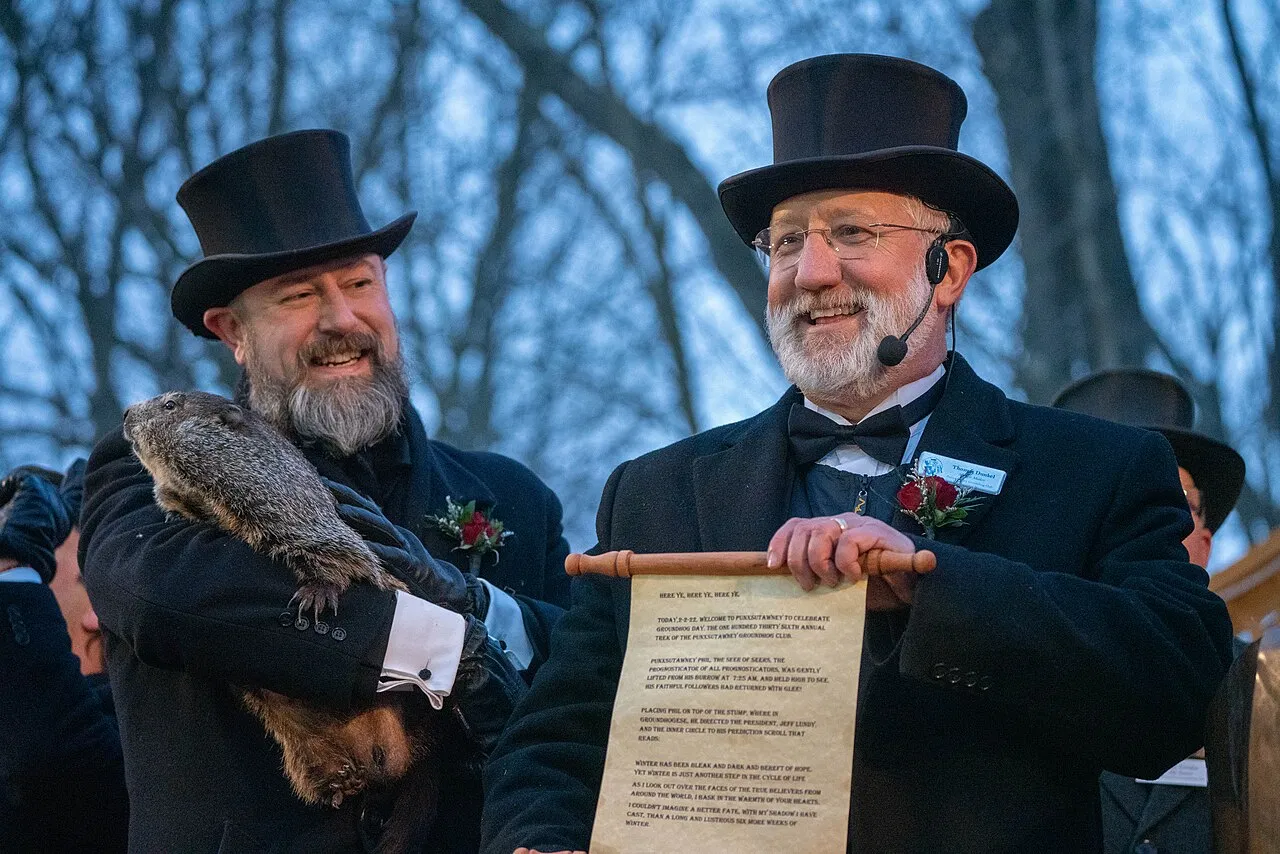
Punxsutawney Phil saw his shadow on February 2, 2026, predicting six more weeks of winter across North America. The famous groundhog's annual prediction drew thousands to Gobbler's Knob in Pennsylvania, where the 140th Groundhog Day ceremony unfolded under cloudy skies. While Phil forecasted extended winter, his Canadian counterpart Wiarton Willie predicted an early spring, highlighting the whimsical nature of this beloved tradition that blends folklore, meteorology, and community celebration.
How Groundhog Day Works: The Shadow That Predicts Spring
Groundhog Day operates on a simple premise rooted in centuries-old weather lore. According to tradition, if a groundhog emerges from its burrow on February 2 and sees its shadow due to clear weather, it will retreat underground, signaling six more weeks of winter. If the day is cloudy and no shadow appears, the groundhog remains outside, predicting an early spring. This tradition stems from European weather proverbs brought to North America by Pennsylvania German settlers in the 18th and 19th centuries.
The modern celebration centers around Punxsutawney Phil, a groundhog who resides in Punxsutawney, Pennsylvania. Phil's handlers claim he communicates his prediction in "Groundhogese" to the Groundhog Club's president, who then announces the forecast to the waiting crowd. While the ceremony appears lighthearted, it follows a precise ritual that begins before dawn and includes music, speeches, and the dramatic emergence of Phil from his simulated burrow.
From Ancient Tradition to Modern Celebration: The History of Groundhog Day
Groundhog Day traces its origins to the Christian holiday of Candlemas, celebrated on February 2, which itself incorporated earlier pagan traditions marking the midpoint between winter solstice and spring equinox. German settlers in Pennsylvania adapted European weather lore involving badgers or hedgehogs to the native groundhog, creating a uniquely American tradition. The first official Groundhog Day celebration occurred in Punxsutawney in 1887, organized by a group called the Punxsutawney Groundhog Club.
Over time, the celebration grew from a local curiosity to a nationally recognized event, boosted by newspaper coverage, radio broadcasts, and eventually television and internet streaming. The 1993 film "Groundhog Day" starring Bill Murray further cemented the tradition in popular culture, introducing the concept of reliving the same day repeatedly—a metaphor that has since entered common parlance.
The Science Behind the Shadow: How Accurate Are Groundhog Predictions?
Despite their cultural significance, groundhog predictions show no scientific reliability for forecasting weather. According to the National Oceanic and Atmospheric Administration (NOAA), groundhogs' accuracy hovers around 50%—no better than random chance. A comprehensive study analyzing decades of predictions found that Punxsutawney Phil's forecasts were correct only about 36% of the time from 1969 onward.
Meteorologists explain that weather patterns depend on complex atmospheric systems, not rodent behavior. The six-week period following February 2 typically shows natural variability regardless of shadow sightings. However, some researchers note that the tradition's timing aligns with genuine seasonal transitions, as February marks the beginning of meteorological spring in many regions, creating the illusion of predictive power.
Inside the Ceremony: What Happens at Gobbler's Knob
The Groundhog Day ceremony at Gobbler's Knob follows a meticulously planned schedule that begins in the early morning hours. Thousands of spectators brave freezing temperatures, often arriving as early as 3 a.m. to secure spots near the stage. The event features musical performances, speeches by local dignitaries, and the reading of previous years' predictions.
At approximately 7:25 a.m., the Inner Circle—members of the Punxsutawney Groundhog Club dressed in formal wear and top hats—gather around Phil's burrow. The president places his ear near Phil, allegedly translating the groundhog's message before announcing the prediction to cheers or groans from the crowd. The ceremony concludes with Phil being returned to his climate-controlled habitat until the following year.
Beyond Punxsutawney: Other Groundhogs Making Predictions
While Punxsutawney Phil remains the most famous weather-predicting groundhog, numerous other communities have established their own traditions. In Canada, Wiarton Willie has predicted weather since 1956, while Ontario's Shubenacadie Sam claims to be the first groundhog to make a prediction each year due to Atlantic Time Zone advantages. In the United States, Staten Island Chuck in New York, General Beauregard Lee in Georgia, and Buckeye Chuck in Ohio offer competing forecasts.
These regional variations sometimes produce conflicting predictions, as seen in 2026 when Wiarton Willie forecasted an early spring while Punxsutawney Phil predicted extended winter. Such discrepancies highlight the ceremonial nature of Groundhog Day rather than any consistent meteorological insight.
What's Next for Groundhog Day: The Future of the Tradition
As climate change alters seasonal patterns and skepticism about the tradition's accuracy grows, Groundhog Day faces questions about its future relevance. However, organizers emphasize that the celebration serves purposes beyond weather prediction: it fosters community spirit, promotes tourism, and preserves cultural heritage. The Punxsutawney Groundhog Club reports increasing attendance each year, with 2026 drawing an estimated 30,000 visitors despite freezing temperatures.
Modern adaptations include livestreaming for remote viewers, educational programs about groundhog ecology, and discussions about animal welfare. Some communities have introduced mechanical or animatronic groundhogs to address ethical concerns, though Punxsutawney maintains that Phil receives excellent care and lives well beyond the typical groundhog lifespan.
The Bottom Line: Separating Fact from Folklore
Groundhog Day endures as a beloved cultural tradition that combines history, humor, and community celebration. While its predictive value remains scientifically unfounded, the ceremony offers a lighthearted break from winter and an opportunity to reflect on humanity's enduring fascination with weather forecasting. Whether Phil sees his shadow or not, Groundhog Day reminds us that spring always arrives eventually—even if it takes six more weeks than we'd prefer.