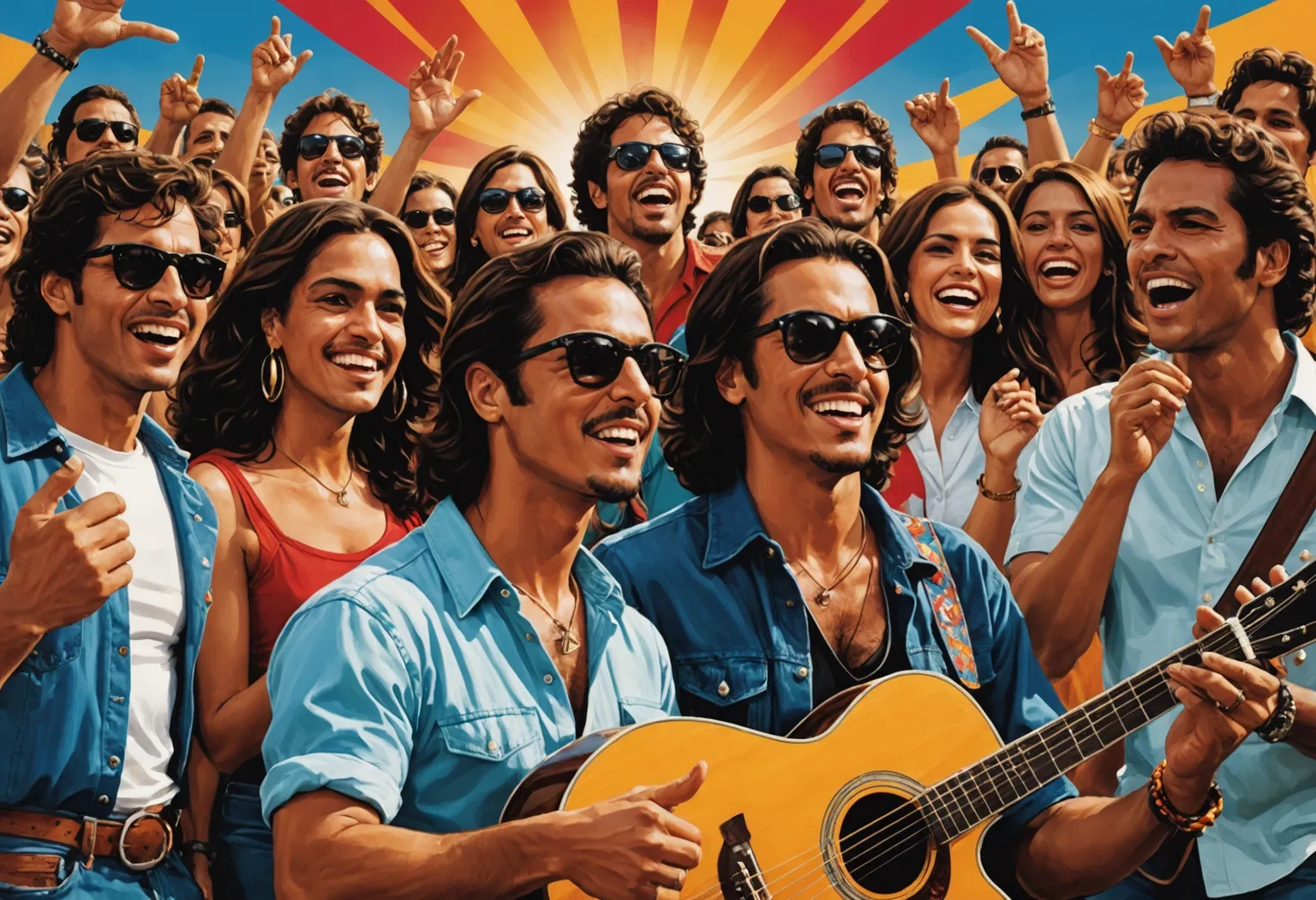
Latin pop is the catchy, radio-friendly fusion of mainstream pop songwriting with the rhythms, instruments, and Spanish- and Portuguese-language traditions of Latin America, Spain, and the global Latin diaspora. If you have ever found yourself singing along to Ricky Martin’s “Livin’ la Vida Loca,” Shakira’s “Hips Don’t Lie,” or Luis Fonsi’s “Despacito,” you have experienced the genre’s crossover power firsthand. What sets Latin pop apart is its ability to wrap the melodic hooks and verse-chorus structure of Anglo-American pop around the grooves of salsa, merengue, cumbia, bachata, and, more recently, reggaeton. In this guide, we break down what Latin pop is, where it came from, how it evolved, and the artists who turned a regional sound into a global phenomenon.
What Is Latin Pop? Defining the Genre
At its core, Latin pop is pop music sung primarily in Spanish or Portuguese — or a Spanglish mix of Spanish and English — that draws on Latin American musical styles. Rather than one rigid sound, it is an umbrella term covering everything from romantic ballads and dance-pop to tropical-influenced hits and modern reggaeton-adjacent pop. The common thread is a blend of catchy pop melodies with the distinctive rhythmic and instrumental flavors of Latin music.
Music reference sites and streaming platforms such as AllMusic and Spotify generally use the term to describe commercial pop produced by Latin artists for Spanish- and Portuguese-speaking audiences, which later crossed over to mainstream English-language charts. The genre emerged from older traditions including the bolero, a slow and romantic Cuban style; bossa nova from Brazil; and the Latin ballad, or balada romántica, which still shapes Spanish-language pop today.
A Brief History: From Bolero to the Latin Explosion
Latin pop’s roots reach back to the middle of the 20th century. In the 1950s and ’60s, bossa nova — pioneered by Brazilian artists João Gilberto and Antônio Carlos Jobim — introduced Latin rhythms to global audiences through standards like “The Girl from Ipanema.” Around the same period, the romantic bolero tradition flourished, giving rise to the balada romántica that would define Spanish-language pop for decades.
During the 1970s and ’80s, singers such as Julio Iglesias, José José, and Roberto Carlos built enormous careers on these romantic ballads. At the same time, Gloria Estefan and Miami Sound Machine scored crossover dance hits like “Conga” and “Rhythm Is Gonna Get You,” and Estefan is widely credited with opening the door for Latin acts in the mainstream U.S. market.
The genre’s commercial turning point came in the late 1990s, a period the music industry still calls the “Latin Explosion.” Ricky Martin’s electrifying performance at the 1999 Grammy Awards, followed by the worldwide chart-topping success of “Livin’ la Vida Loca,” is often cited as the moment Latin pop went fully global. Enrique Iglesias, Marc Anthony, Jennifer Lopez, and a young Shakira rode the same wave, bringing Spanish-language and bilingual hits into English-speaking pop culture.
Behind much of this growth is the concept of “crossover”: Latin artists recording in English, or mixing languages, to reach wider audiences while still drawing on their cultural roots. The strategy proved wildly successful in the 1990s and 2000s, and the streaming era has effectively reversed it — many Latin stars now stay in Spanish and still reach global audiences.
Timeline: The Milestones That Built Latin Pop
- 1950s–60s: Bossa nova and bolero carry Latin rhythms to international audiences.
- 1985: Gloria Estefan and Miami Sound Machine’s “Conga” becomes a global crossover hit.
- 1995: The death of Tejano star Selena sparks wider mainstream interest in Latin pop.
- 1999: Ricky Martin’s “Livin’ la Vida Loca” tops charts worldwide, the peak of the “Latin Explosion.”
- 2001–2006: Shakira’s “Whenever, Wherever” and “Hips Don’t Lie” cement Latin pop’s mainstream foothold.
- 2017: Luis Fonsi and Daddy Yankee’s “Despacito” becomes one of the most-streamed songs in history.
- 2020s: Latin pop merges with reggaeton, trap, and urban sounds, led by Karol G, Rosalía, and others.
What Makes Latin Pop Sound the Way It Does
Several musical ingredients give Latin pop its signature sound. First, the language itself: most Latin pop is sung in Spanish or Portuguese, whose syllable patterns and open vowel sounds differ noticeably from English. Second, the rhythm section leans on Latin percussion — congas, bongos, timbales, and cowbell — along with hand claps and syncopated beats borrowed from salsa, merengue, cumbia, and, in the modern era, reggaeton’s dembow pattern. Third, the melodies are typically strong and hook-driven, following the standard pop structure of verses and choruses. Finally, traditional instruments such as acoustic guitar, brass, and accordion are frequently layered over contemporary pop production, including synthesizers and programmed drums.
Thematically, Latin pop leans heavily on love, heartbreak, celebration, and identity — a legacy of the romantic ballad tradition. That emotional directness is part of why the music connects even with listeners who do not speak the language.
Latin Pop vs. Reggaeton: What’s the Difference?
The two genres are often confused because they now overlap heavily, but they have distinct roots. Reggaeton grew out of Puerto Rican and Panamanian dancehall and is built around a specific rhythmic pattern called dembow, delivered with a more urban, hip-hop-influenced flow. Latin pop, by contrast, is a broader and more melodic category that predates reggaeton and absorbs many different rhythms. A useful way to think of it: reggaeton is defined by its beat, while Latin pop is defined by its pop song structure and melody. Modern hits frequently blend the two, which is why the lines can blur.
The Artists Who Shaped Latin Pop
A handful of artists defined each era. Gloria Estefan, Julio Iglesias, and Selena laid the groundwork; Selena’s death in 1995 helped spark broader mainstream interest in Tejano and Latin pop. The late-’90s “Latin Explosion” was powered by Ricky Martin, Enrique Iglesias, Shakira, Marc Anthony, and Jennifer Lopez. In the 2000s, Shakira’s “Laundry Service” album proved a Latin artist could sustain a global pop career across English and Spanish. More recently, Camila Cabello, Rosalía, Karol G, Becky G, Sebastián Yatra, and Manuel Turizo have carried the genre forward, often fusing it with reggaeton, trap, and flamenco.
Where Latin Pop Stands Today
Streaming has supercharged the genre’s global reach. Platforms such as Spotify and YouTube have made it easier than ever for Spanish-language songs to top worldwide charts without traditional English-language radio play — a shift that accelerated with “Despacito” and continues with hits from Bad Bunny, Karol G, and Peso Pluma. Latin pop is now one of the most commercially powerful genres in the world, and its influence can be heard across mainstream pop, from bilingual hooks in major U.S. releases to the global rise of reggaeton-inflected club music.
The Bottom Line: Key Takeaways
- Latin pop fuses pop songwriting with Latin American rhythms and Spanish- or Portuguese-language vocals.
- Its roots include the bolero, bossa nova, and the romantic Latin ballad.
- The late-1990s “Latin Explosion,” led by Ricky Martin and Shakira, brought the genre into the global mainstream.
- Latin pop differs from reggaeton, which is defined by its dembow beat, though the two now frequently blend.
- Streaming has made Latin pop one of the most commercially dominant genres in the world today.