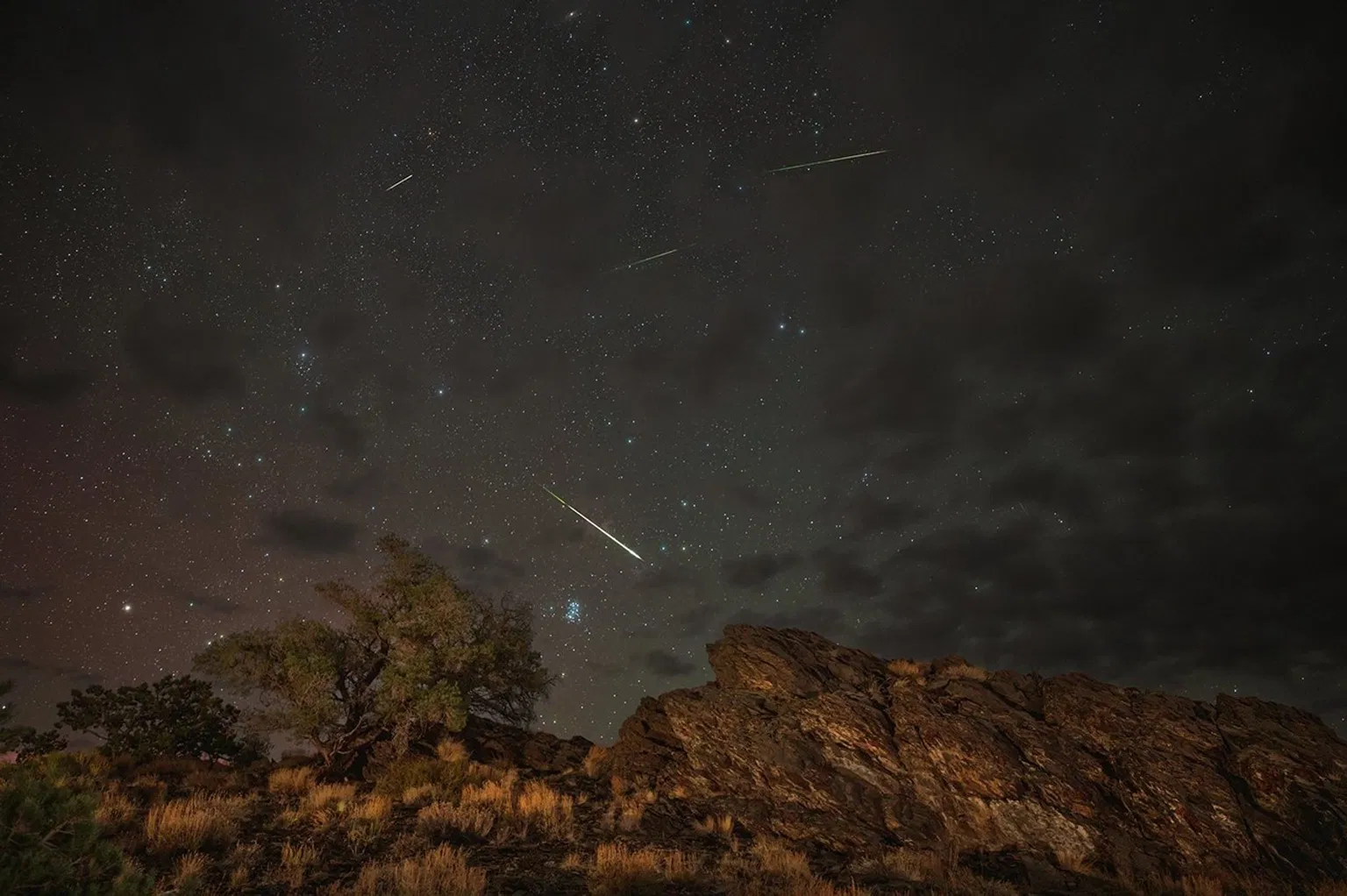
The Perseid meteor shower — one of the most dependable and dazzling celestial events of the year — reaches its peak on the night of August 12, 2026, offering skywatchers in the Northern Hemisphere a chance to see dozens of bright shooting stars every hour. But what exactly is a meteor shower, and why does this one return every August like clockwork? This guide explains the science behind the Perseids, why August 12 is the night to mark on your calendar, and how to watch the show using nothing more than your own eyes and a dark patch of sky.
What Is a Meteor Shower? How Comet Dust Turns Into Shooting Stars
A meteor shower happens when Earth plows through a trail of debris left behind by a comet. As a comet loops around the Sun, it sheds a stream of dust and small particles along its orbit. Each year, when our planet passes through one of these debris streams, the particles slam into the atmosphere at enormous speed and burn up, producing the fiery, colorful streaks that we call meteors — or, more casually, shooting stars.
The Perseids come from comet 109P/Swift-Tuttle, a giant among comets whose icy nucleus measures about 16 miles (26 kilometers) across. That is nearly twice the size of the object scientists believe caused the extinction of the dinosaurs. Swift-Tuttle takes 133 years to complete a single orbit around the Sun. Astronomers Lewis Swift and Horace Tuttle discovered the comet in 1862, and in 1865 the Italian astronomer Giovanni Schiaparelli worked out that it was the source of the Perseid meteors.
Swift-Tuttle's history is a saga in its own right. After its 1862 discovery, scientists first predicted the comet would return around 1982 — but it failed to appear. Revised calculations suggested a 130-year orbit, and skywatchers kept patient watch. In September 1992, Japanese comet hunter Tsuruhiko Kiuchi finally spotted the comet returning in the evening sky near the Big Dipper, confirming the revised prediction and refreshing the debris stream that feeds the Perseids to this day.
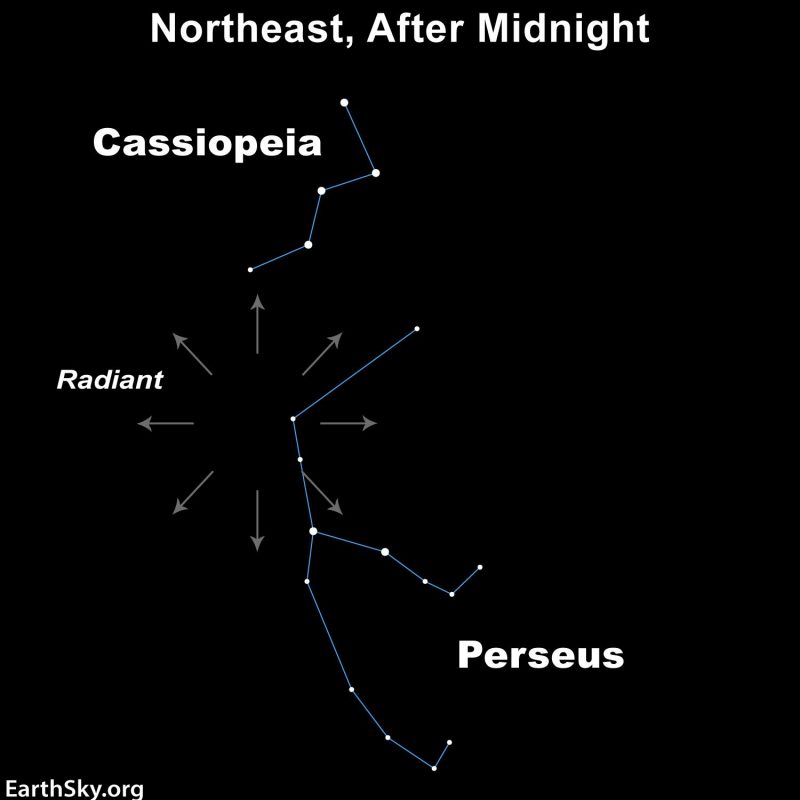
Despite the nickname, meteors are not stars. The particles behind the Perseids are often no larger than a grain of sand or a small pebble. They hit the upper atmosphere at about 37 miles (59 kilometers) per second and disintegrate roughly 60 miles (100 kilometers) above the ground. The streaks appear to fan out from the constellation Perseus, which gives the shower its name — but that constellation is simply a convenient direction-finder, not the actual source of the meteors.
Why August 12? How the Perseids Peak Each Year
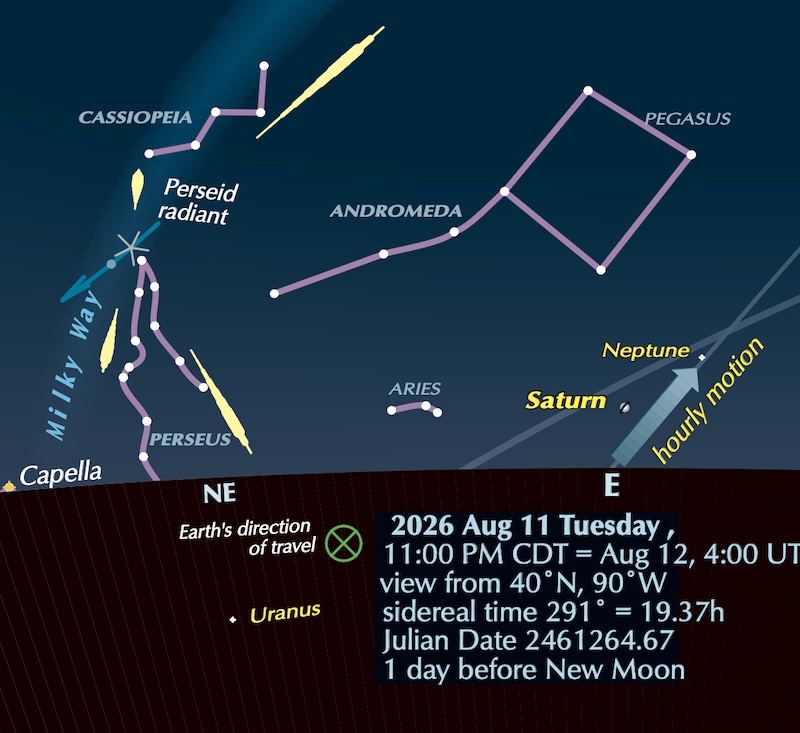
The Perseid meteor shower is active from roughly mid-July through late August, but the show intensifies sharply as Earth reaches the densest part of the debris stream in mid-August. In 2026, the peak is predicted for 14:53 UTC on August 13, which makes the pre-dawn hours of August 12 and 13 the prime viewing window. The mornings of August 11 and 14 can also deliver strong displays, though meteor numbers tend to climb gradually toward the peak and then fall off rapidly afterward.
Timing within the night matters just as much as the date. The radiant — the point in Perseus from which the meteors appear to originate — rises in the late evening and reaches its highest point just before dawn, as seen from the Northern Hemisphere. That is why the hours after midnight, and especially the final hours before sunrise, produce the most meteors. Heading out in the early evening, before the radiant has even risen, is a common mistake that leads to disappointing meteor counts.
How to Watch the Perseid Meteor Shower: A Simple Step-by-Step Guide
You don't need a telescope, binoculars, or any special gear to enjoy the Perseids — just dark skies and a little patience. Here's how to get the most out of the peak:
- Find dark skies. Distance from city lights is the single biggest factor in how many meteors you'll see. Even a short drive away from urban glow can make a huge difference.
- Time it right. Go out after midnight and, if you can, stay through the hours just before dawn, when the radiant is highest.
- Let your eyes adjust. Give your eyes 20 to 30 minutes to adapt to the dark, and avoid checking your phone — a single glance at a bright screen can reset your night vision.
- Look up, not at the radiant. Meteors can streak anywhere across the sky, so take in the widest view possible. A reclining chair or a blanket on the ground is ideal.
- Stay comfortable and patient. Bring warm clothing, a blanket, and a hot drink. Meteor watching rewards those who linger for an hour or more.
Under a truly dark, moonless sky, observers frequently report 90 or more Perseids per hour at the peak, and NASA describes the shower as one of the most plentiful of the year, with roughly 50 to 100 meteors visible per hour under ideal conditions. That steady, rich display is a big part of what makes the Perseids so beloved.
Why the Perseids Are the Year's Most Beloved Meteor Shower
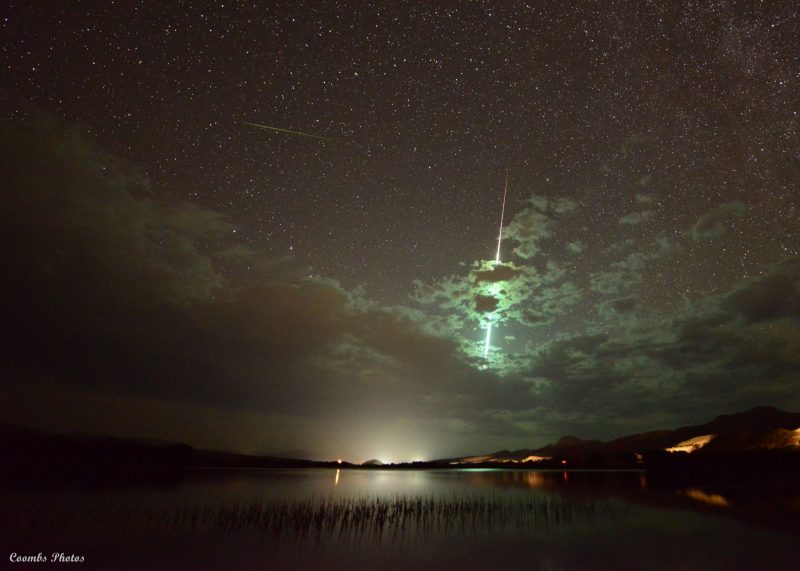
The Perseids stand out for several reasons. Their meteors are fast, bright, and often colorful, and many leave behind lingering trains — glowing trails of ionized gas that can remain visible for a second or more after the meteor itself has vanished. The shower is also famous for its fireballs, which are extra-bright meteors with apparent magnitudes greater than -3. These fireballs come from larger-than-average particles of cometary material and can briefly light up the entire sky.
Comfort plays a role, too. Unlike winter meteor showers that demand braving freezing temperatures, the Perseids peak during warm August nights, making them far more pleasant to watch. That combination of reliable numbers, bright meteors, and mild weather is why NASA calls the Perseids the best meteor shower of the year.
The shower even carries a mythological echo. In ancient Greek lore, Perseus was the son of the god Zeus and the mortal Danaë, and the Perseid shower was said to commemorate the moment Zeus visited Danaë in a shower of gold — a fitting story for the streaks of light that rain across the August sky.
What Makes the 2026 Peak Special: A Moonless Sky and a Solar Eclipse
This year's Perseids arrive with an extra advantage. The new moon falls on August 12, 2026, at 17:37 UTC, meaning the peak mornings will be gloriously dark and free of moonlight — ideal conditions for spotting even the faintest meteors. As a bonus, a total solar eclipse occurs the same day, sweeping across parts of the Arctic, Greenland, Iceland, and Spain. Observers lucky enough to stand in the path of totality might even catch a Perseid streaking through the briefly darkened sky during the eclipse.
There is one important caveat: the Perseids are primarily a Northern Hemisphere event. For observers living farther south than about 30 degrees south latitude, the radiant barely rises above the horizon, and the shower is much less impressive. Those viewers are better off watching the Delta Aquariid meteors, which favor southern skies. And although a few shower meteors can reach the ground as meteorites, Perseid meteors almost never do — the comet debris is made of fragile ices that burn up completely high in the atmosphere.
Key Takeaways: The Perseid Meteor Shower at a Glance
- The Perseid meteor shower peaks on the nights of August 12 and 13, 2026, with the best viewing after midnight through dawn.
- The meteors are debris from comet 109P/Swift-Tuttle burning up about 60 miles (100 kilometers) above Earth.
- Under dark, moonless skies, expect roughly 50 to 100 meteors per hour — and the 2026 new moon guarantees dark skies.
- No equipment is needed: find dark skies, let your eyes adjust, and look up with a wide view.
- The Perseids are best seen from the Northern Hemisphere, with meteors appearing to radiate from the constellation Perseus.