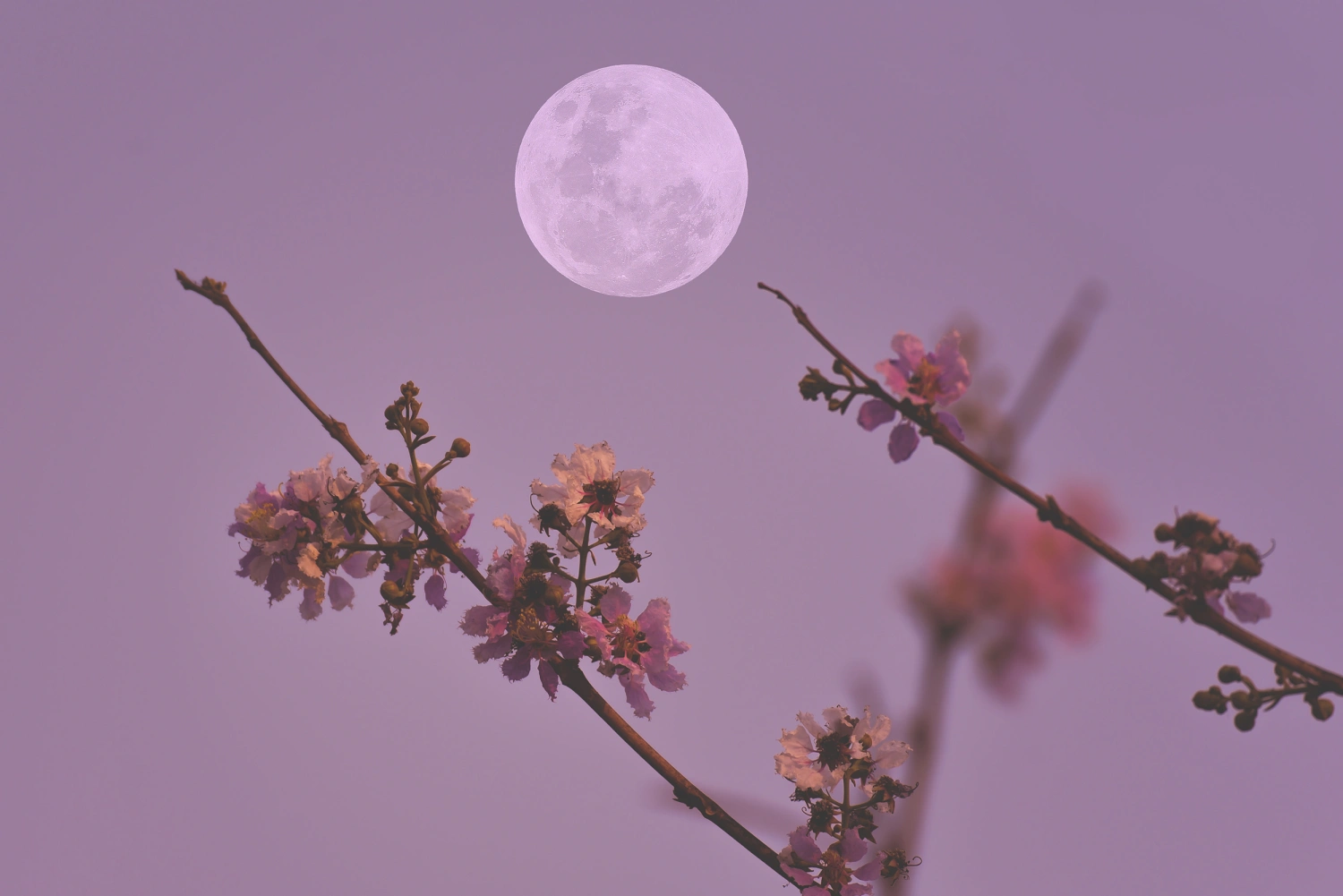
May 2026 is shaping up to be a skywatcher's dream. Not only does the month kick off with the beautiful Flower Moon on May 1, but it also treats us to a rare second full moon — a Blue Moon — on May 31. And here's the twist: both are micromoons, meaning they'll appear slightly smaller than your average full moon. Here's everything you need to know about the full moons of May 2026, from their names and meanings to the best times to look up.
When to See the Flower Moon in May 2026
The first full moon of May — known as the Flower Moon — reaches peak illumination at 1:23 p.m. EDT (17:23 UTC) on Friday, May 1, 2026. This timing coincides beautifully with May Day, the traditional spring celebration that marks the midpoint between the spring equinox and summer solstice. While peak fullness occurs during daylight hours for much of North America, worry not: the moon will still appear 99% illuminated on the evenings of May 1 and May 2. Your best viewing window is right after moonrise on those nights, when the moon will appear large and golden near the horizon — an effect known as the "moon illusion."
Why Is It Called the Flower Moon?
The name "Flower Moon" has deep roots in North American Indigenous tradition. According to The Old Farmer's Almanac, the term has been attributed to Algonquin peoples, as confirmed by Christina Ruddy of The Algonquin Way Cultural Centre in Pikwakanagan, Ontario. The name reflects the simple reality that May is when flowers spring forth across North America in abundance. Jonathan Carver's 1798 publication Travels Through the Interior Parts of North America also referenced a "Month of Flowers" as a likely Dakota name for May. Henry David Thoreau later helped popularize these Native American moon names in his writings.
Various Indigenous tribes have their own evocative names for May's full moon, including:
- Budding Moon and Leaf Budding Moon (Cree) — celebrating the awakening of flora
- Planting Moon (Dakota, Lakota) — marking the time to start seeds
- Frog Moon (Cree) — signaling warmer weather and amphibian activity
- Egg Laying Moon (Cree) — noting birds' nesting season
- Moon of Shedding Ponies (Oglala) — referencing animals shedding their winter coats
The Rare Double Full Moon: What Makes May 2026 Special
What truly sets May 2026 apart is that it contains two full moons. When a second full moon occurs within a single calendar month, it's called a Blue Moon — a phenomenon that happens roughly once every two to three years, giving rise to the phrase "once in a blue moon." Astronomer Catherine Pilachowski explains that the term "blue moon" stems from a 16th-century idiom for something rare, and despite its name, the moon doesn't actually appear blue.
The Blue Moon reaches peak fullness at 4:45 a.m. EDT on Sunday, May 31, 2026. The best viewing time is late on May 30 and the early hours of May 31. The last blue moon was a blue supermoon in August 2024.
What Is a Micromoon? Why Both May Full Moons Are Smaller
Here's a cosmic detail that makes May 2026 even more interesting: both full moons are micromoons. A micromoon is the opposite of a supermoon. It occurs when a full moon happens near apogee — the point in the moon's elliptical orbit when it is farthest from Earth. On May 31, the moon will be approximately 252,360 miles from Earth, compared to its average distance of 238,855 miles. According to Pilachowski, this means the moon will appear about 6% to 7% smaller than an average full moon and 12% to 14% smaller than a supermoon.
However, this size difference is too subtle for the naked eye to detect. What often makes the moon appear dramatically larger is the "moon illusion" — an optical effect that occurs when the moon is near the horizon, making it seem huge compared to foreground objects.
How Full Moons Work: The Science Behind Lunar Phases
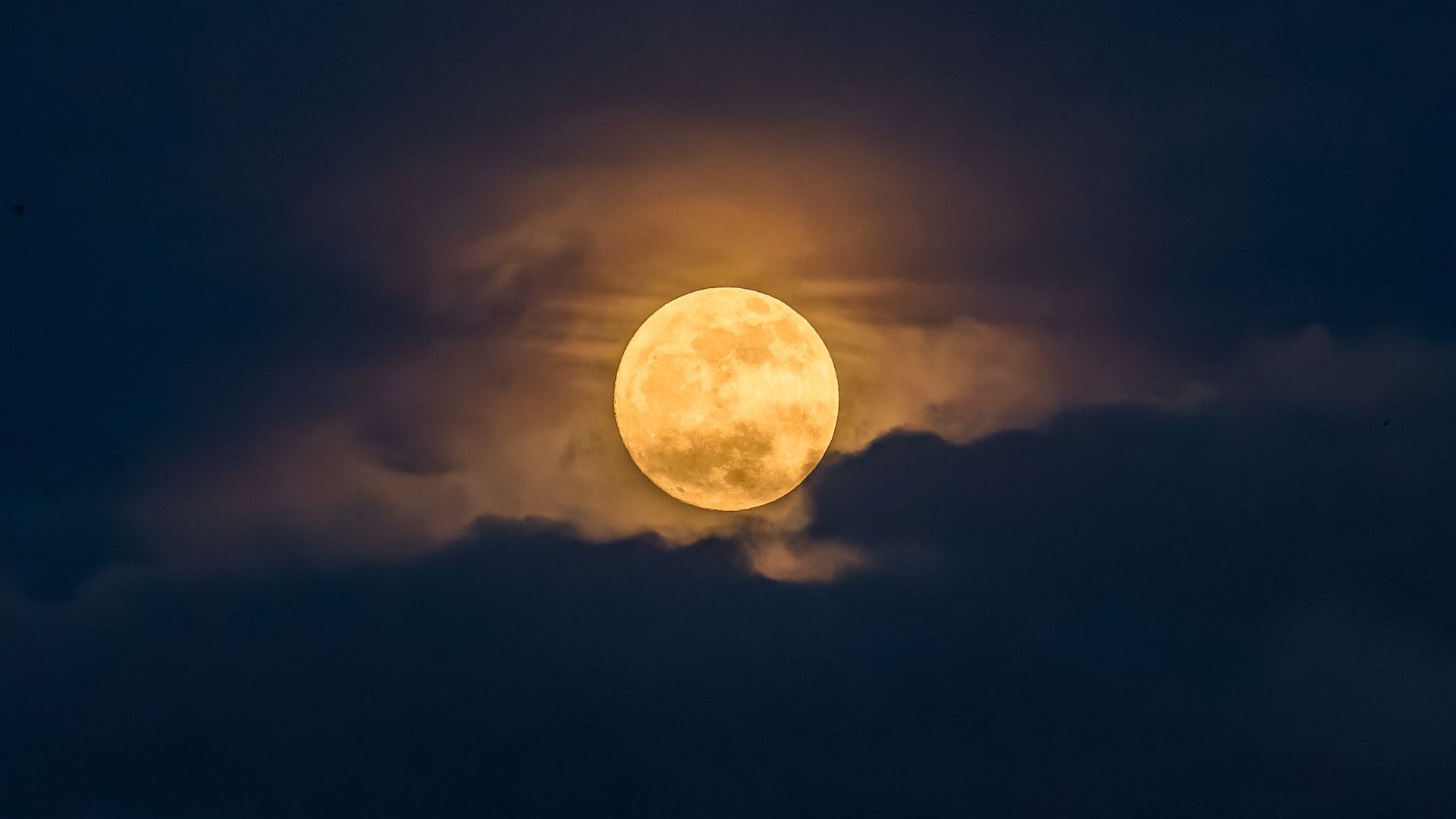
A full moon occurs when the Earth is positioned directly between the Sun and the Moon, allowing the Sun's rays to fully illuminate the lunar face that we see from Earth. This alignment happens because the Moon orbits Earth in a slightly elliptical path, and as it completes its 29.5-day lunar cycle, the angle between the Earth, Moon, and Sun changes, creating the familiar phases from new moon to full moon and back again. The moon doesn't produce its own light — it merely reflects sunlight, and a full moon is simply when we see 100% of its sunlit half.
Where Things Stand: The Flower Moon Has Risen
As of May 1-2, 2026, the Flower Moon has already made its appearance, lighting up skies around the world. Photographers captured stunning images of the full moon rising behind landmarks, through blooming trees, and over city skylines. For those who missed it, the Blue Micromoon on May 30-31 offers a second chance to witness a full moon this month. With the Flower Moon coinciding with May Day and the Blue Moon arriving at month's end, May 2026 provides an unusually rich two-bookend lunar experience.
What's Next: The Full Moon Calendar for 2026
After May's double feature, the next full moon will be June's Strawberry Moon, followed by the Buck Moon in July. For the remainder of 2026, skywatchers can look forward to a regular monthly cadence of full moons, though none will feature the rare double-moon phenomenon seen in May. The next blue moon won't occur until 2028. If you want to track future micromoons and supermoons, the lunar calendar provides dates for when the moon is at perigee (closest) and apogee (farthest) throughout the year.
Key Takeaways
- Flower Moon: May 1, 2026, at 1:23 p.m. EDT — named for spring flowers by Algonquin peoples
- Blue Micromoon: May 31, 2026, at 4:45 a.m. EDT — the second full moon in one month
- Both full moons are micromoons, appearing slightly smaller than average due to their distance from Earth
- The Flower Moon is best viewed on the nights of May 1 and 2 after moonrise
- The Blue Moon is best viewed late on May 30 and early May 31