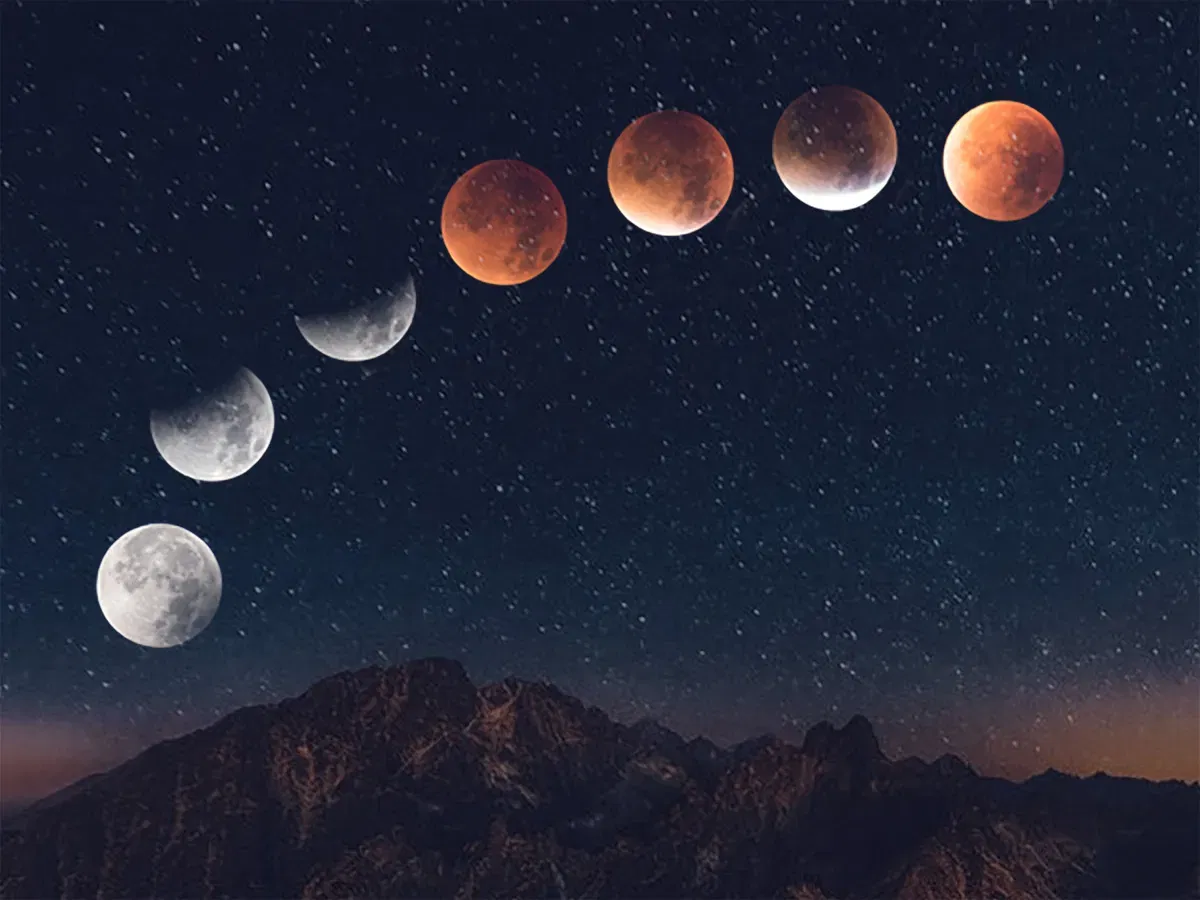
A lunar eclipse happens whenever the Moon slips into Earth's shadow — an alignment that dims the full Moon and, in the most dramatic cases, paints it an eerie shade of orange or red. It is one of the most approachable events in astronomy: unlike a solar eclipse, you need no special glasses, and you can watch from anywhere on the night side of Earth. The next chance to see one is the partial lunar eclipse of August 27–28, 2026, which will be visible across the Americas, Europe, Africa, and the eastern Pacific. Here is how lunar eclipses work, why the Moon turns red, and exactly when and where to look for the August 2026 eclipse.
How a Lunar Eclipse Works: Earth Casts a Shadow on the Moon
A lunar eclipse can only occur at full Moon, when Earth sits between the Sun and the Moon. When the alignment is precise enough, our planet blocks the sunlight that normally illuminates the lunar surface, and its shadow falls across the Moon. As NASA describes it, "during a lunar eclipse, Earth's shadow obscures the Moon."
The reason we don't get an eclipse every single month comes down to the Moon's tilted orbit. The Moon's path around Earth is tilted by about five degrees relative to Earth's orbit around the Sun, so most months the full Moon passes slightly above or below Earth's shadow. An eclipse happens only when the full Moon lines up near one of the two points where those orbital planes cross, called nodes. That narrow window is an "eclipse season," and it arrives roughly twice a year — which is why, anywhere from four to seven times annually, the Earth, Moon, and Sun line up to create what NASA calls a "cosmic-scale shadow show."
Earth actually casts two shadows. The inner, darker cone is the umbra, where the Sun is completely blocked out. The outer, fainter region is the penumbra, where only part of the sunlight is cut off. Which shadow the Moon crosses — and how deeply — determines what kind of eclipse we see and how dark the Moon becomes.
Every eclipse is timed through a series of "contact" moments. For the August 2026 eclipse (all times in UTC), the faint penumbral phase begins at 1:23, the partial phase starts at 2:33, greatest eclipse arrives at 4:12, the partial phase ends at 5:52, and the penumbral phase finally wraps up at 7:02. All told, the partial stage lasts nearly 199 minutes, while the full penumbral event stretches for more than 338 minutes — roughly five and a half hours of slow celestial motion.
Why the Moon Turns Red: The "Blood Moon" Explained
The same effect that makes the daytime sky blue and sunsets red is what turns the Moon copper-colored during a total lunar eclipse. Sunlight looks white, but it actually contains every color of the rainbow. Blue and violet light scatter easily as they pass through Earth's atmosphere, while red and orange light travel through more directly.
During an eclipse, the only sunlight that reaches the Moon has been bent and filtered through a thick slice of Earth's atmosphere. The shorter blue wavelengths scatter away, leaving the long red wavelengths to spill onto the lunar surface. NASA puts it memorably: it's as if "all the world's sunrises and sunsets" are projected onto the Moon at once.
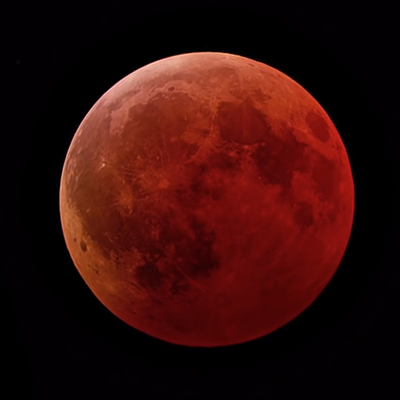
How dark or red a given eclipse looks varies from one event to the next. The more dust or clouds in Earth's atmosphere, the redder the Moon appears — a large volcanic eruption shortly before an eclipse can noticeably deepen the color. Astronomers rate this darkness on the Danjon scale, from L=0 (a very dark, almost invisible Moon) to L=4 (a bright, coppery-red Moon).
Lunar eclipses are also surprisingly common. The 21st century will feature 228 of them — an average of about 2.28 per year, with at least two every single year. Over a 5,000-year span, roughly 36% are penumbral, 35% are partial, and 29% are total. Because eclipses follow predictable cycles — the saros cycle repeats every 18 years and 11 days — astronomers can forecast them centuries in advance. From the Moon's perspective, the same event would look like a solar eclipse, with Earth's atmosphere glowing as a red ring around a darkened Earth.
The August 2026 Partial Lunar Eclipse: When and Where to Watch
The eclipse grabbing headlines this month is a partial lunar eclipse on the night of August 27–28, 2026. It belongs to Saros cycle 138 and reaches its greatest point at 4:12:55 UTC, when Earth's dark inner shadow covers about 93% of the Moon's diameter — an umbral magnitude of 0.93. The Moon will skim the edge of the umbra, so the lower portion of the disk darkens noticeably while the rest stays bright.
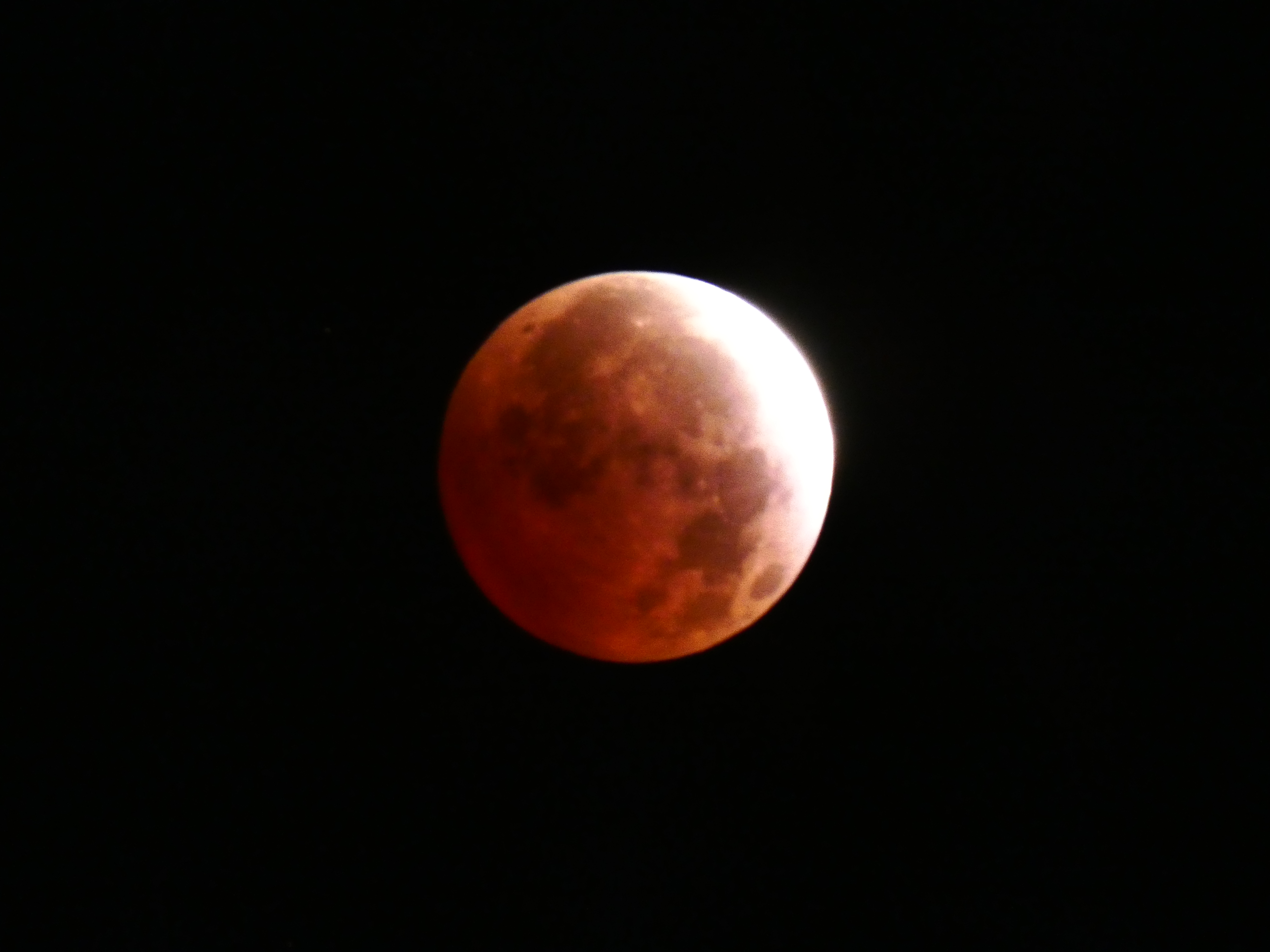
According to NASA, the eclipse is visible across the eastern Pacific, the Americas, Europe, and Africa. For the best view, simply get away from bright city lights and look toward the Moon around the time of greatest eclipse. No telescope is required, though binoculars will reveal the shadow's curved edge more clearly.
What Comes Next: More Eclipses on the Way
This August event caps a busy 2026 eclipse season that also brought a total solar eclipse on August 12. Looking ahead, the next lunar eclipse is a penumbral one on February 20, 2027, visible from the Americas, Europe, Africa, Asia, and western Australia. Because eclipses arrive in seasons roughly every six months, skywatchers can expect another stretch of alignments soon after — and the current Saros 138 series will keep producing lunar eclipses for decades, with its next installment due on September 7, 2044.
The Bottom Line: Lunar Eclipse Essentials
- A lunar eclipse happens when the Moon passes through Earth's shadow, and it can only occur at full Moon.
- Earth casts two shadows — the dark umbra and the fainter penumbra — which create partial and total eclipses.
- The "blood moon" red color comes from sunlight filtered through Earth's atmosphere, the same effect that colors sunsets.
- Lunar eclipses are safe to view without eye protection and are visible from anywhere on Earth's night side.
- The partial lunar eclipse of August 27–28, 2026 peaks at 4:12 UTC and is visible across the Americas, Europe, Africa, and the eastern Pacific.