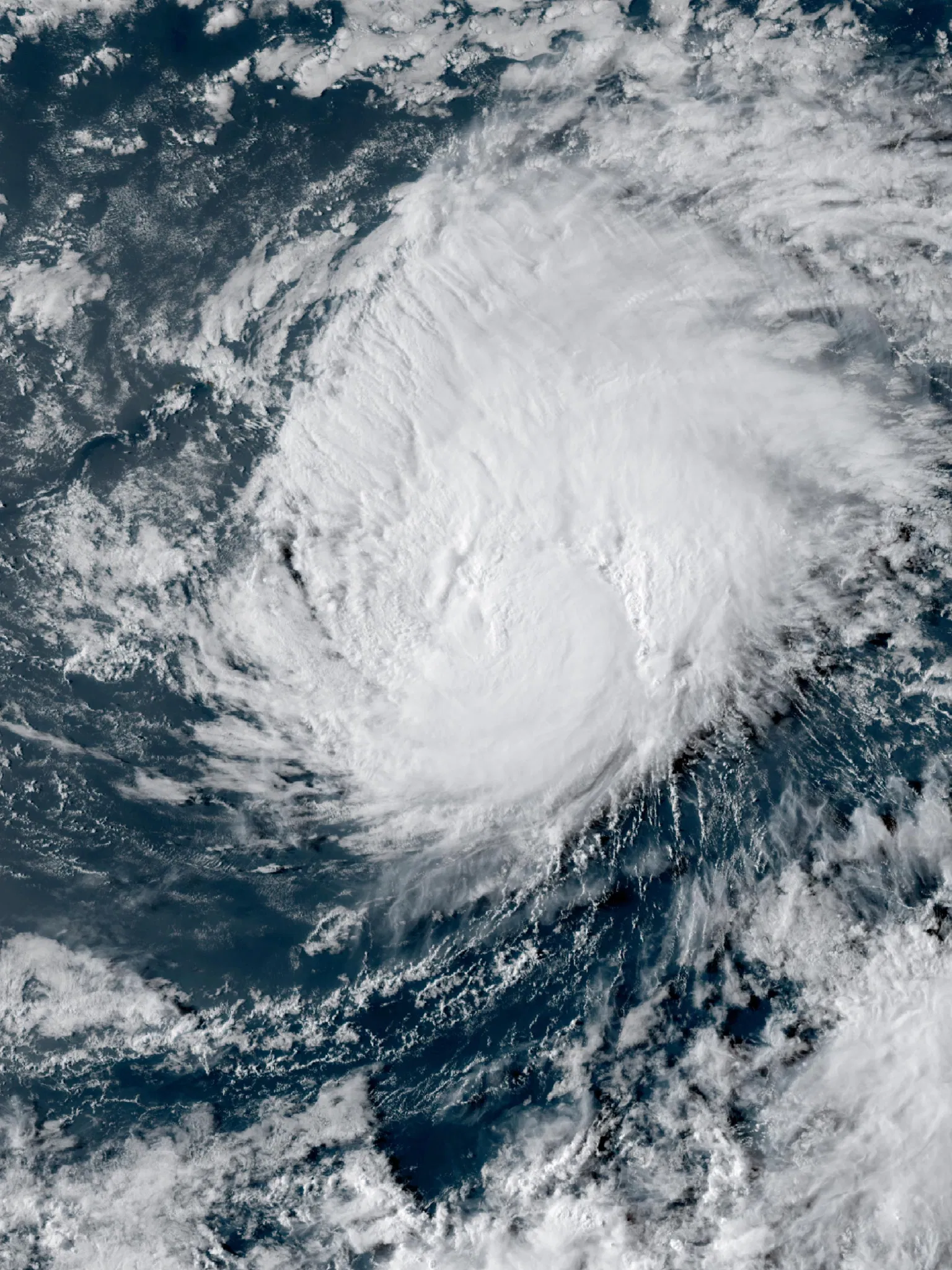
Hurricane Lala became the first hurricane to directly affect Hawaii's Big Island in more than 150 years, and the event has millions of people asking a simple question: how do Hawaii hurricanes form, and why do they hit the islands so rarely? Lala strengthened into a Category 1 hurricane on August 15, 2026, triggering a statewide emergency declaration and flooding roads across the islands before weakening back into a tropical storm. To understand what made this storm historic, it helps to look at the science of hurricane formation, the conditions that normally protect Hawaii, and the state's long history with these powerful storms.
Hurricane Lala: Why This Storm Is Making History
Hurricane Lala is the ninth named storm and third hurricane of the 2026 Pacific hurricane season. It formed on August 12 from a tropical wave in the central Eastern Pacific and gradually organized over the following days. By August 15, Lala had strengthened into a hurricane as it closed in on the Big Island, reaching peak intensity just south of the island with maximum sustained winds around 80 mph (70 knots) and a minimum central pressure of 985 millibars, according to the Central Pacific Hurricane Center.
What makes Lala historically significant is its location. It became the first hurricane to directly affect the Big Island of Hawaii since an unnamed hurricane struck in 1871, a gap of more than a century and a half. Lala's eyewall grazed the southern portion of the island on the morning of August 16, and interaction with Hawaii's mountainous terrain caused the storm to weaken back into a tropical storm later that day.
The Recipe for a Hurricane: How These Storms Form
Hurricanes are, at their core, giant heat engines. According to NOAA, a handful of ingredients must come together to build one. First, there needs to be a pre-existing weather disturbance, often a tropical wave, a low-pressure area moving through the moisture-rich tropics. Second, the storm needs warm ocean water: temperatures of at least 26.5 degrees Celsius (about 80 degrees Fahrenheit) over a depth of 50 meters. Third, thunderstorm activity is required to convert that ocean heat into storm fuel. Fourth, wind shear, a sharp difference in wind speed or direction with altitude, must be low, because strong shear can tear a developing storm apart.
As the system moves across the warm ocean, warm, moist air rises, creating low pressure at the surface. More air rushes in, rises, and cools, forming clouds and thunderstorms. High in the clouds, water vapor condenses into droplets, releasing even more heat and further powering the storm. When sustained winds within the system reach 74 mph, it is officially classified as a hurricane and sorted into the Saffir-Simpson scale from Category 1 to 5. During a single hurricane, NOAA estimates the winds can churn out roughly half as much energy as the electrical generating capacity of the entire world, and the storm's cloud and rain formation can release about 400 times that amount.
Why Hawaii Usually Escapes Hurricanes
Despite sitting in the hurricane-prone central Pacific, Hawaii is remarkably good at avoiding direct hits. The central Pacific typically produces only about four or five tropical cyclones each year, and very few of them ever make landfall on the islands, though as many as 15 have appeared in a single season, such as in 2015. Geologists and meteorologists point to several factors for this protection.
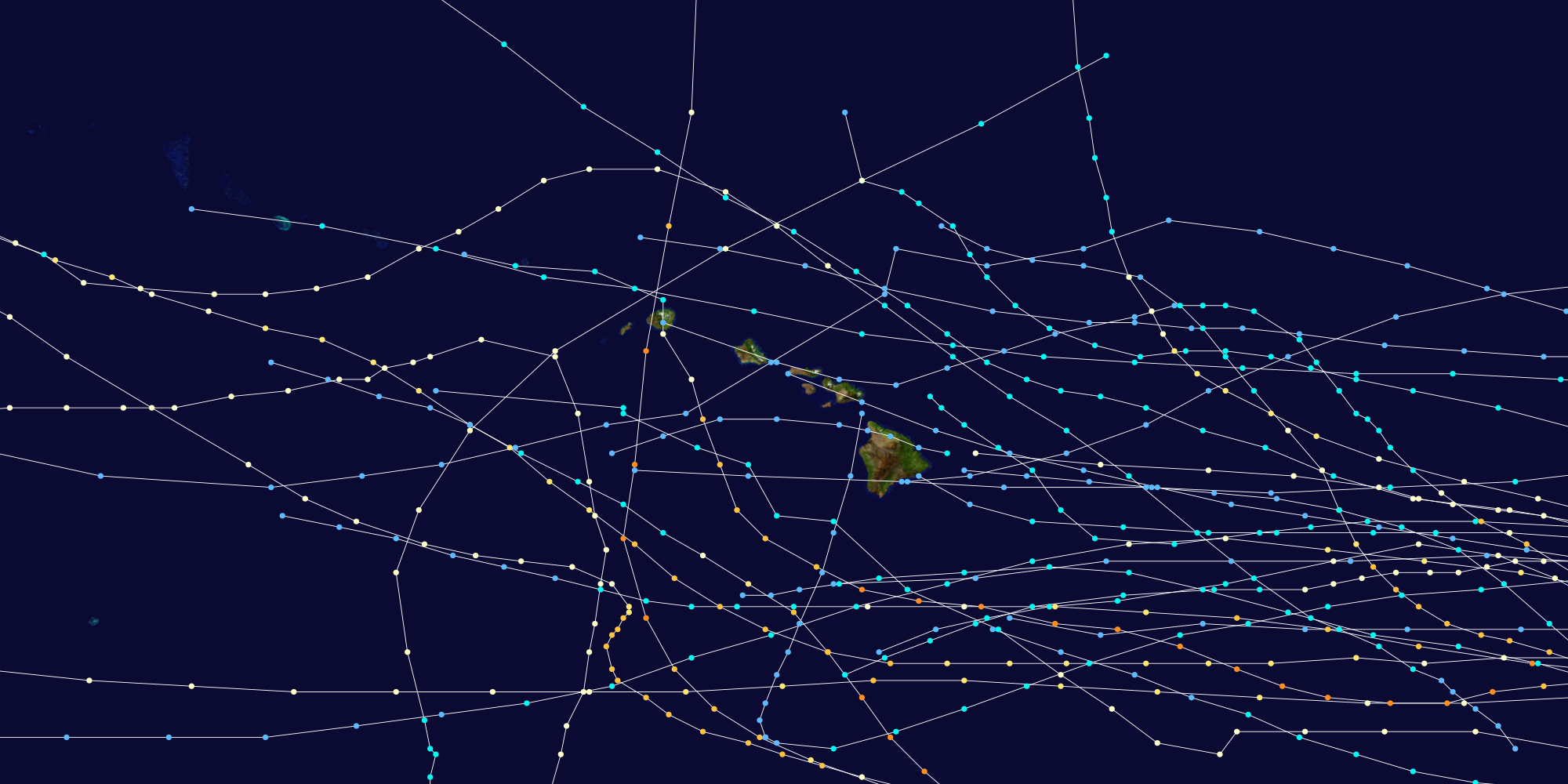
One key factor is cooler water. Hurricanes feed on warm water of at least 26.5 degrees Celsius, and the waters directly around and north of Hawaii are often cooler than those farther south, weakening approaching storms. Another is wind shear: the same upper-level winds that steer storms also tend to disrupt their structure near the islands. A subtropical ridge of high pressure in the Pacific usually steers storms to the south of the state or causes them to weaken before arrival. Hawaii's towering volcanic peaks may also play a role by disrupting the low-level circulation of approaching storms, something clearly observed with Lala, which lost hurricane strength after interacting with the Big Island's terrain. Even so, wintertime extratropical storms known as Kona storms remain common, a reminder that the islands are not completely immune to damaging winds and rain.
Hawaii's Hurricane History: From Iniki to Lala
The most powerful hurricane ever to strike Hawaii in recorded history is Hurricane Iniki, which made landfall on the island of Kauai on September 11, 1992. Iniki was a Category 4 storm with maximum sustained winds of 145 mph and gusts up to 173 mph. It reached a minimum pressure of 938 millibars, the lowest ever observed in the central Pacific at the time.
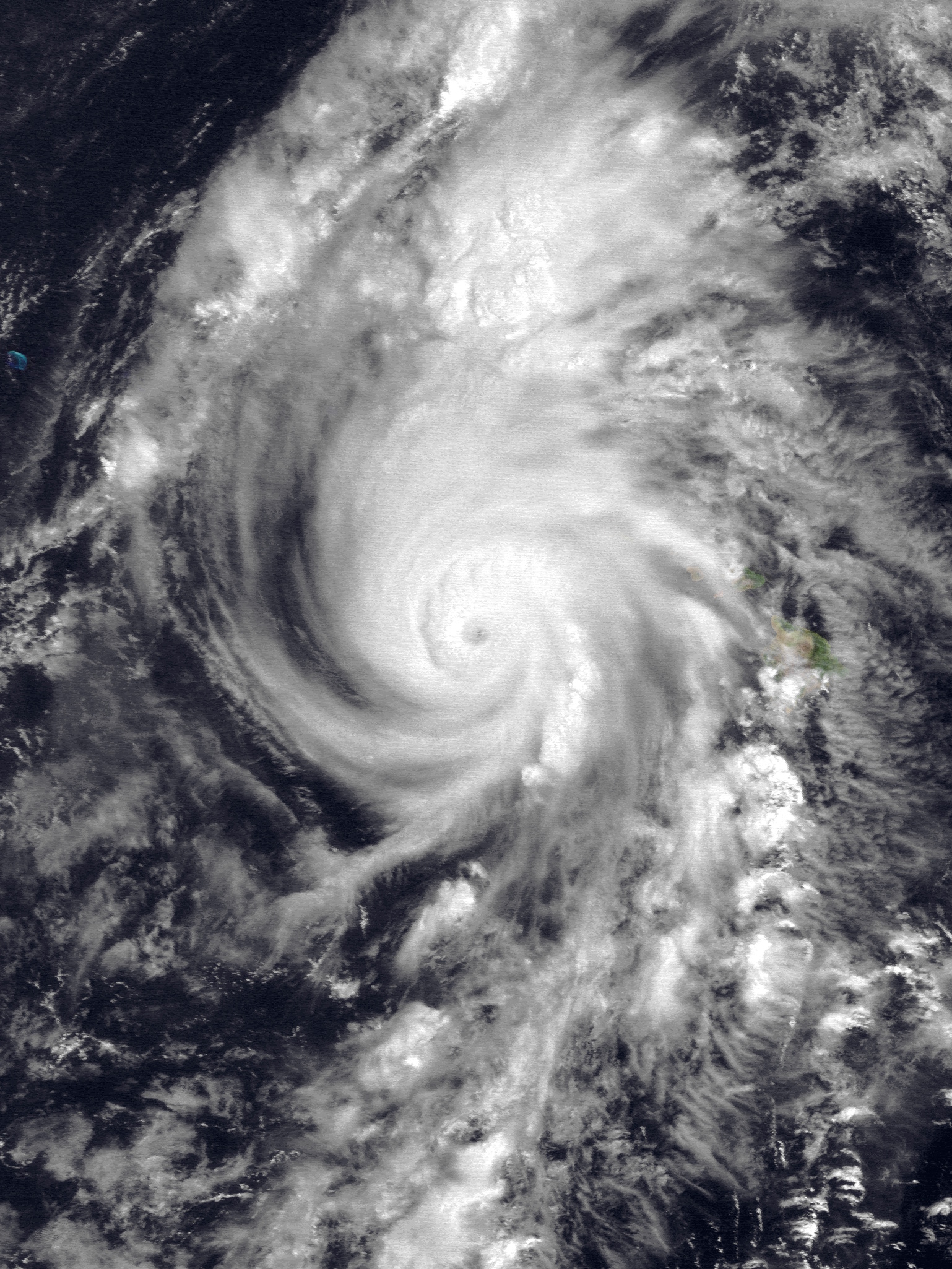
Iniki caused around $3.1 billion in damage (in 1992 dollars) and seven deaths, making it the costliest natural disaster in Hawaii's history at the time and the third-costliest hurricane to hit the United States. It destroyed more than 1,400 homes on Kauai and severely damaged more than 5,000. Notably, Kauai is the one major Hawaiian island that has repeatedly proven vulnerable to direct hurricane strikes, a reminder that Hawaii's protection is not absolute. Before Lala, the last hurricane to directly affect the Big Island was an unnamed storm in 1871.
Hurricane Lala's Impacts Across the Islands
Although Lala weakened before making a direct landfall, its effects were felt across the entire state. A state of emergency was declared on August 13, and tropical storm and hurricane watches and warnings were issued for every major island. Hawaiian Airlines and Alaska Airlines canceled flights to and from Hilo International Airport, Kona International Airport was shut down in advance of the storm, and TheBus service in Honolulu was suspended. Shelters opened as residents braced for torrential rain.
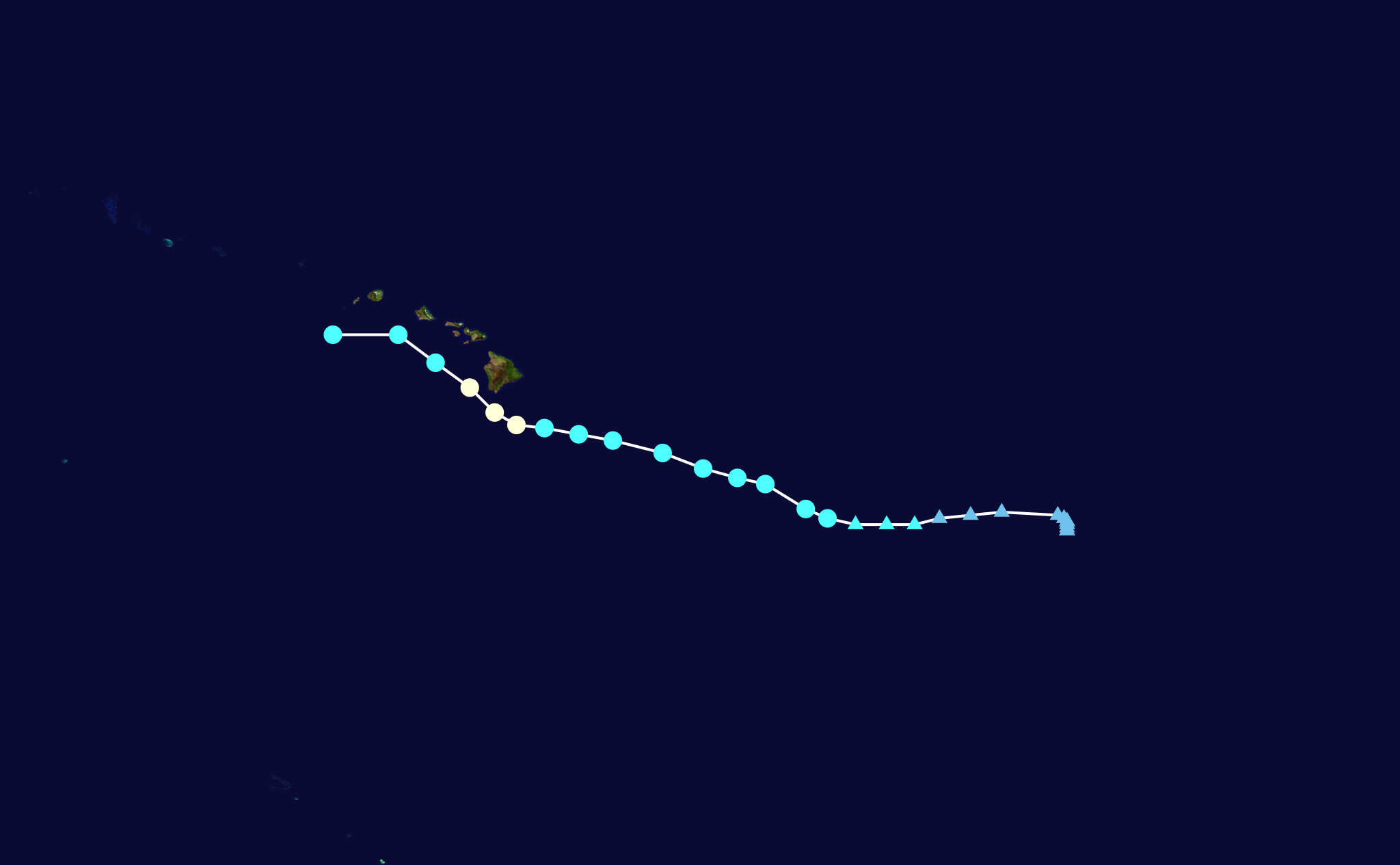
Lala dropped torrential rainfall that triggered flash flooding on multiple islands. On the Big Island, flash floods swept away two dwellings in Na'alehu and pushed several residences off their foundations in Wai'ohinu. Roughly 30 roadways were shut down because of flooding, including portions of the Hawaii Belt Road. At least one person died and two others were injured in a storm-related vehicle accident in Hawaiian Ocean View. A record wind gust of 140 mph was recorded on the summit of Mauna Kea, and snow fell on the peak during the storm, a rare sight in August.
On Oahu, lifeguards performed 59 water rescues as large swells rolled in, and rainfall rates reached two inches per hour. Manoa Stream set a record flow of 14 feet, and flooding obstructed Interstate H-1 in downtown Honolulu. Strong winds tore the roof off a home in Kalihi, and the Honolulu Police Department responded to 162 storm-related calls. On Kauai, a rain gauge at Kilohana recorded 10.25 inches of rain in 24 hours as the storm's outer bands passed overhead.
What Happens Next With Hurricane Lala
Lala was downgraded to a tropical storm on August 16 as it pulled away from the Big Island and began moving west, away from the main Hawaiian islands. Forecasters with the Central Pacific Hurricane Center and the National Hurricane Center continued to monitor the system as it tracked across the open Pacific. For residents, the immediate focus shifted to cleanup and recovery, clearing debris, restoring power, and repairing flooded roadways, while emergency managers watched for lingering rainfall and the possibility of additional flooding in already saturated areas. The storm's quick weakening after brushing the islands is a textbook example of how Hawaii's terrain and environment tend to sap the strength of approaching cyclones.
The Bottom Line: What to Remember
- Hurricane Lala was the first hurricane to directly affect Hawaii's Big Island since 1871.
- Hurricanes need warm water (26.5°C/80°F), a pre-existing disturbance, thunderstorms, and low wind shear to form.
- A storm becomes a hurricane when sustained winds reach 74 mph.
- Cooler water, wind shear, and a subtropical high-pressure ridge usually keep hurricanes away from Hawaii.
- Hurricane Iniki (1992) remains the most powerful hurricane to strike Hawaii, causing $3.1 billion in damage.
- Lala triggered flooding, road closures, and one indirect death, but weakened quickly after brushing the islands.