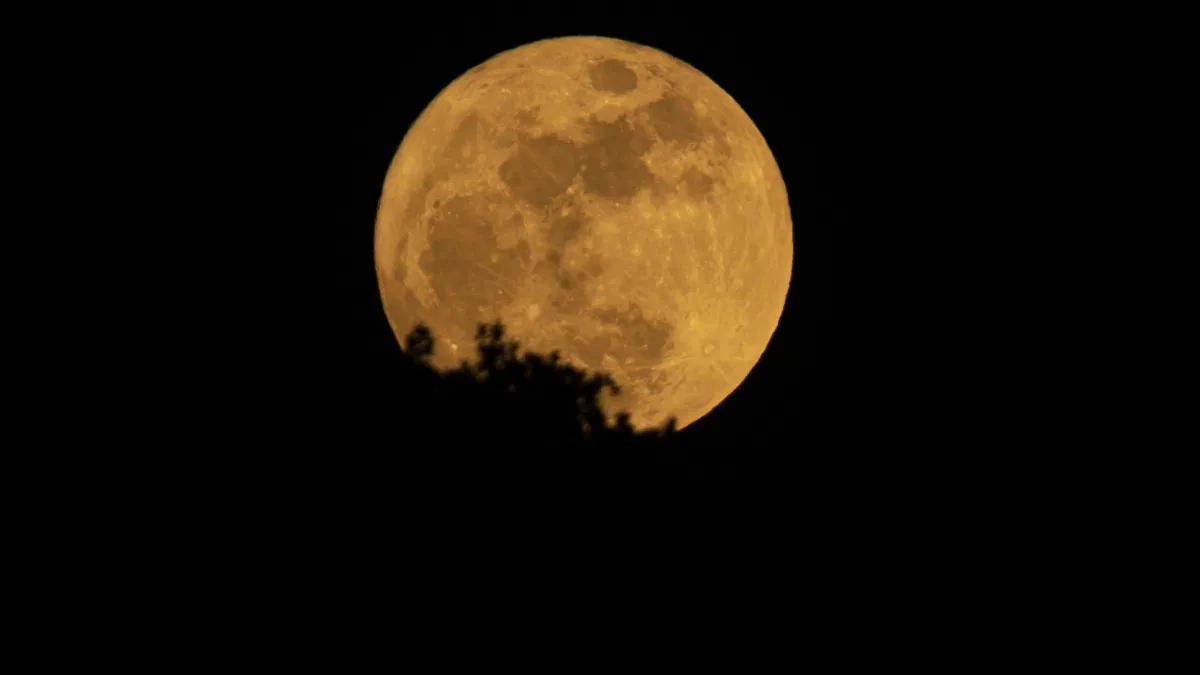
If you've heard the phrase "once in a blue moon" and wondered what it actually means, you're not alone. While a Blue Moon sounds like something magical or mythical, the truth is both simpler and more fascinating than you might expect. On May 31, 2026, skywatchers around the world will witness a Blue Moon — but despite the name, the moon won't actually turn blue. So what exactly is a Blue Moon, how often do they happen, and when can you see the next one?
The Two Types of Blue Moons: Monthly vs. Seasonal
There are actually two definitions of a Blue Moon, and which one you use depends on whether you're looking at your calendar or the astronomical seasons.
The monthly (calendrical) Blue Moon is the more commonly used definition today. It refers to the second full moon that occurs within a single calendar month. Since the lunar cycle — the time it takes the Moon to go through all its phases — lasts about 29.5 days, and most months have 30 or 31 days, occasionally the timing lines up so that a full moon falls at the very beginning of a month and another at the very end. This is what happens in May 2026, with full moons on May 1 and May 31.
The seasonal Blue Moon is the older, traditional definition. An astronomical season (spring, summer, fall, winter) typically has three full moons. But roughly every two to three years, a season contains four full moons instead of three. In that case, the third full moon of the season is called a Blue Moon. This definition predates the monthly one and is still used by some astronomers and almanacs.
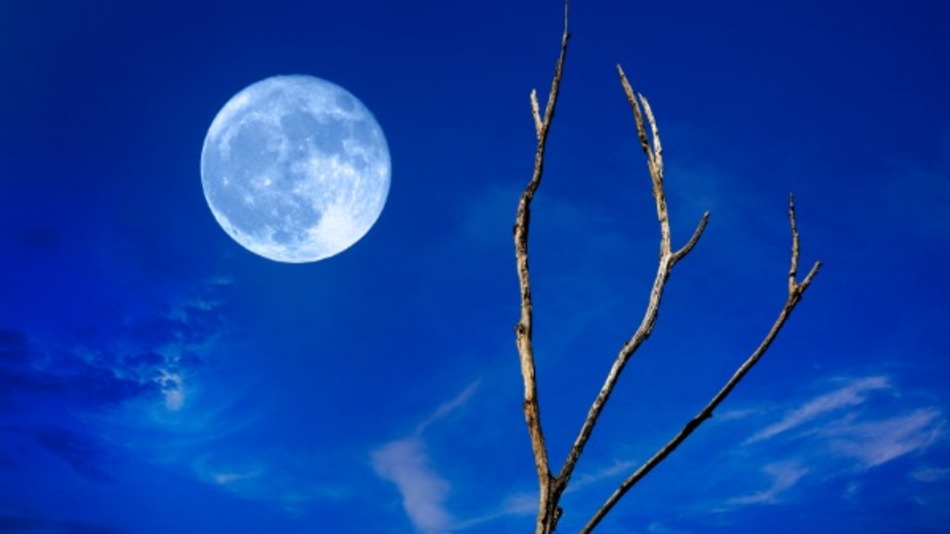
Interestingly, the monthly Blue Moon definition we're most familiar with today actually started as a mistake. It originated from a misinterpretation in a 1946 issue of Sky & Telescope magazine and was later popularized in the 1980s through radio shows and the game Trivial Pursuit. Despite its accidental origin, the definition stuck and became widely accepted.
How Often Does a Blue Moon Actually Occur?
Despite the saying "once in a blue moon" implying extreme rarity, Blue Moons are not all that uncommon. Monthly Blue Moons happen approximately every 30 months, or about two to three years. The last Blue Moon occurred on August 19, 2024, and the next one after May 31, 2026, will be a seasonal Blue Moon on May 20, 2027, followed by another monthly Blue Moon on December 31, 2028.
In 2018, an unusual event occurred: there were two Blue Moons in a single year, in January and March, with February having no full moon at all. This won't happen again until 2037, when we'll once again see two Blue Moons in one year.
The May 2026 Blue Moon: Also the Smallest Full Moon of the Year
The May 31, 2026 Blue Moon has an extra special feature: it's also a micromoon — the smallest full moon of the year. This happens because the moon reaches its fullest point very close to apogee, the farthest point in its elliptical orbit around Earth. At approximately 252,360 miles (406,134 km) away, it will be about 7% dimmer than an average full moon and 25-30% dimmer than a supermoon.
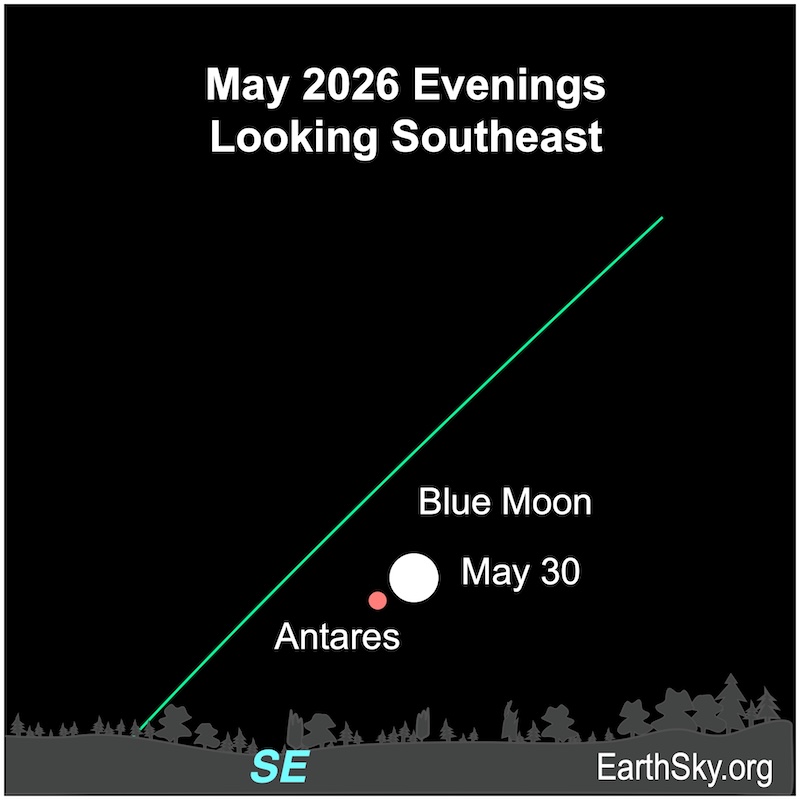
The Blue Moon peaks at 4:45 a.m. ET on May 31, 2026 (8:45 UTC). For viewers in the Americas, Europe, and Africa, the moon will appear fullest during the night of May 30. For those in Australia, New Zealand, and Asia, the fullest view comes on the night of May 31. It will also appear near the bright red star Antares, the Heart of the Scorpion in the constellation Scorpius.
Does a Blue Moon Ever Actually Look Blue?
Despite the name, Blue Moons almost never appear blue in color. The moon retains its usual grayish-white color during a Blue Moon. However, there are exceptionally rare circumstances where the moon can genuinely take on a blue hue. This happens when Earth's atmosphere contains dust or smoke particles slightly wider than 900 nanometers — particles that are very efficient at scattering red light.
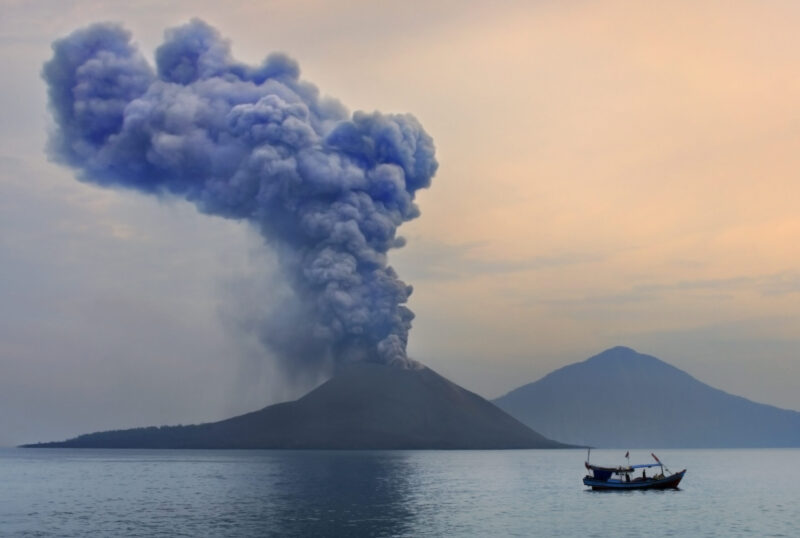
True blue-colored moons have been reported after major volcanic eruptions. The most famous examples include the 1883 eruption of Krakatoa in Indonesia, which caused blue moons worldwide for nearly two years, and the 1980 eruption of Mount St. Helens in Washington state.
Where Does the Name 'Blue Moon' Come From?
The exact origin of the term "Blue Moon" is uncertain. One theory suggests it may come from the Old English word 'belewe', meaning "to betray." This could refer to the moon "betraying" the usual expectation of having just one full moon per month, or it might relate to the moon's role in determining the date of Lent in the calendar year.
Another theory traces the phrase to Maine Farmers' Almanac editions from the 1930s, which used the term to indicate the extra full moon in a season. Whatever its true origin, the phrase "once in a blue moon" has been part of the English language for centuries, capturing the imagination of generations.
Upcoming Blue Moons You Can See
Mark your calendars! Here are the next Blue Moons based on both definitions:
- May 31, 2026 — Monthly Blue Moon (2nd full moon in May) — also a micromoon
- May 20, 2027 — Seasonal Blue Moon (3rd full moon in spring)
- December 31, 2028 — Monthly Blue Moon (2nd full moon in December)
- September 30, 2031 — Monthly Blue Moon
- July 31, 2034 — Monthly Blue Moon
- January 31, 2037 — Monthly Blue Moon (part of a double Blue Moon year)
The Bottom Line: Key Points to Remember
- A Blue Moon is not about color — it refers to the timing of an extra full moon
- Two types exist: monthly (2nd full moon in a month) and seasonal (3rd full moon in a season with 4)
- Blue Moons occur roughly every 2-3 years — not as rare as the saying suggests
- The next Blue Moon is May 31, 2026, peaking at 4:45 a.m. ET — and it's also the smallest full moon of the year
- On extremely rare occasions (after major volcanic eruptions), the moon can genuinely appear blue due to atmospheric particles