
College football rankings decide who gets to play for the national championship, and with more than 130 Football Bowl Subdivision teams competing for a single title, those rankings carry enormous weight. Every autumn, three separate systems shape the national conversation: the Associated Press (AP) Top 25, the Coaches Poll, and the College Football Playoff (CFP) rankings released by a 13-member selection committee. Only one of them actually fills the playoff bracket, but together they explain who is rising, who is falling, and which teams control their own destiny. Here is how each ranking works and how they fit together to crown a champion.
Three ranking systems decide college football's champion
The AP Top 25 is the oldest and most famous poll. Each week, 62 sportswriters and broadcasters from across the country submit their own ranking of the top 25 teams, and those ballots are combined into a single national list. A team earns 25 points for a first-place vote, 24 for a second-place vote, and so on down to one point for 25th. The AP releases its football poll on Sundays at 2 p.m. Eastern time, and every voter's ballot is made public. The poll has run continuously since 1936.
The Coaches Poll operates the same way but is voted on by 62 head coaches from Football Bowl Subdivision programs. Officially known as the US LBM Coaches Poll since 2023, it dates back to 1950 and was once a component of the Bowl Championship Series (BCS) formula that selected title-game participants from 1998 to 2013.
Neither the AP poll nor the Coaches Poll, however, directly sets the playoff field. That job belongs to the CFP rankings, which a 13-member selection committee releases weekly beginning around mid-season. The committee's list — not the media or coaches' ballots — is the one that determines who makes the 12-team College Football Playoff.
From 1936 polls to a 12-team playoff: how the rankings evolved
College football has spent nearly a century arguing over how to rank its best teams. The AP poll arrived in 1936 after a dispute over the 1935 national champion convinced AP sports editor Alan J. Gould to poll sports editors rather than pick teams himself. The Coaches Poll followed in 1950 under United Press International.
For decades, those polls alone decided a mythical national champion, often producing split titles. The BCS arrived in 1998 and blended human polls with computer rankings to match up the top two teams. Then, in 2014, the College Football Playoff replaced the BCS with a four-team bracket selected by a human committee. The playoff expanded to 12 teams starting with the 2024 season and is set to stay in that format through at least the 2027 season.
Inside the 13-member CFP selection committee
The most consequential rankings in the sport are produced by a 13-member committee of athletic directors, former coaches, and other football figures who generally serve three-year terms. The 2025–26 committee, for example, includes retired Nevada athletic director and coach Chris Ault, Nebraska athletic director Troy Dannen, and former Michigan State and Cincinnati head coach Mark Dantonio.
The committee meets weekly once its rankings begin in November, debating and voting on teams from scratch each week rather than simply nudging the previous week's list. When comparing teams, members weigh strength of schedule, head-to-head results, conference championships won, results against common opponents, and overall record. Committee members with ties to a school recuse themselves from discussions about that team.
The goal is to avoid the computer-driven controversies of the BCS era. Because the NCAA does not award an official FBS national championship, the CFP committee effectively acts as the sport's final authority on who deserves a title shot.
How rankings turn into a 12-team bracket
Once the committee's final rankings are set, the bracket takes shape automatically. The five highest-ranked conference champions receive guaranteed bids, and the remaining seven spots go to the highest-ranked teams left on the board. In 2024, the four highest-ranked conference champions earned first-round byes; starting with the 2025 season, those byes shifted to the four highest-ranked teams overall.
The first round pits seed No. 5 against No. 12, No. 6 against No. 11, No. 7 against No. 10, and No. 8 against No. 9, with the better seed hosting at its home stadium. The quarterfinals and semifinals are played at the New Year's Six bowls — the Rose, Sugar, Orange, Cotton, Peach, and Fiesta — before the championship game at a neutral site. Alabama holds the playoff records with nine appearances, 10 wins, and three titles, while the SEC leads all conferences with six championships.

Indiana's title run and Oregon's playoff path
The 2025 season showed how dramatically rankings can reshape a program's history. Indiana, which entered the year with the most all-time losses of any FBS program, rose to No. 1 in the AP poll, Coaches Poll, and CFP rankings and finished a perfect 16–0. Led by head coach Curt Cignetti and Heisman Trophy-winning quarterback Fernando Mendoza, the Hoosiers beat Oregon 56–22 in the Peach Bowl semifinal and then edged Miami 27–21 on January 19, 2026, to capture the program's first national championship.
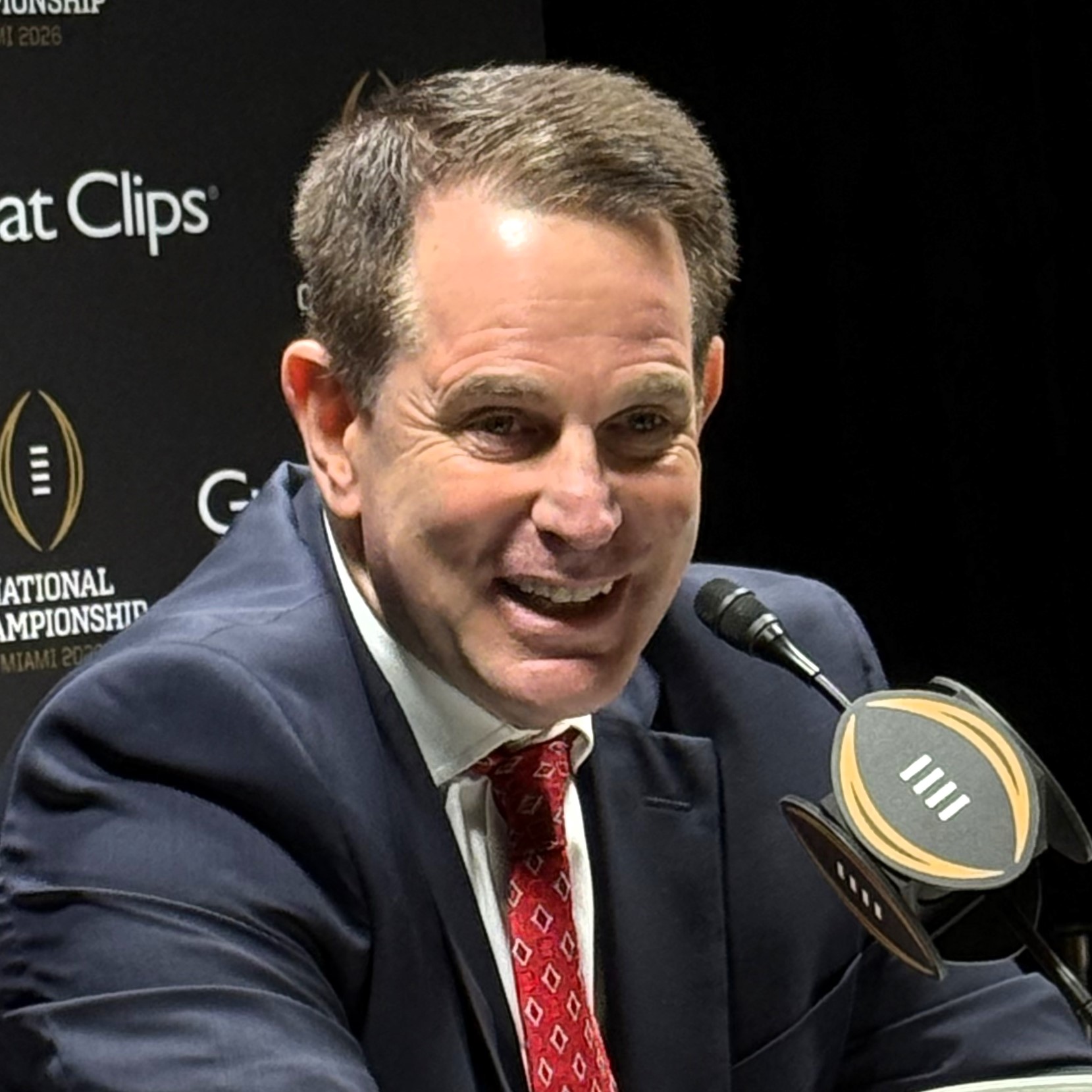
Oregon's season illustrated how the bracket rewards strong rankings. The Ducks finished No. 4 in both the AP and Coaches polls and earned the No. 5 seed in the playoff, beating James Madison in the first round and shutting out Texas Tech 23–0 in the Orange Bowl quarterfinal before falling to Indiana. It marked the third consecutive national championship for the Big Ten Conference.
What's next for college football rankings
The ranking rules are about to change again. Starting in 2026, the five conference-champion guarantees will be replaced by automatic bids for the champions of the Power Four conferences — the ACC, Big Ten, Big 12, and SEC — plus one spot for the highest-ranked Group of Six team. Independent Notre Dame is also guaranteed an at-large bid when it finishes in the top 12. After 2026, the playoff could expand further, with a 14-team format under discussion.
The bottom line: key takeaways
- The AP Top 25 (62 media voters) and Coaches Poll (62 head coaches) have ranked teams weekly for decades but do not fill the playoff bracket.
- The CFP rankings, set by a 13-member selection committee, are the only rankings that determine the 12-team College Football Playoff.
- Committee members weigh strength of schedule, head-to-head results, conference titles, and results against common opponents.
- The top conference champions earn guaranteed playoff spots, with the rest of the field filled by at-large bids.
- In 2025, top-ranked Indiana finished 16–0 to win its first national title, while No. 4 Oregon reached the semifinals as the No. 5 seed.