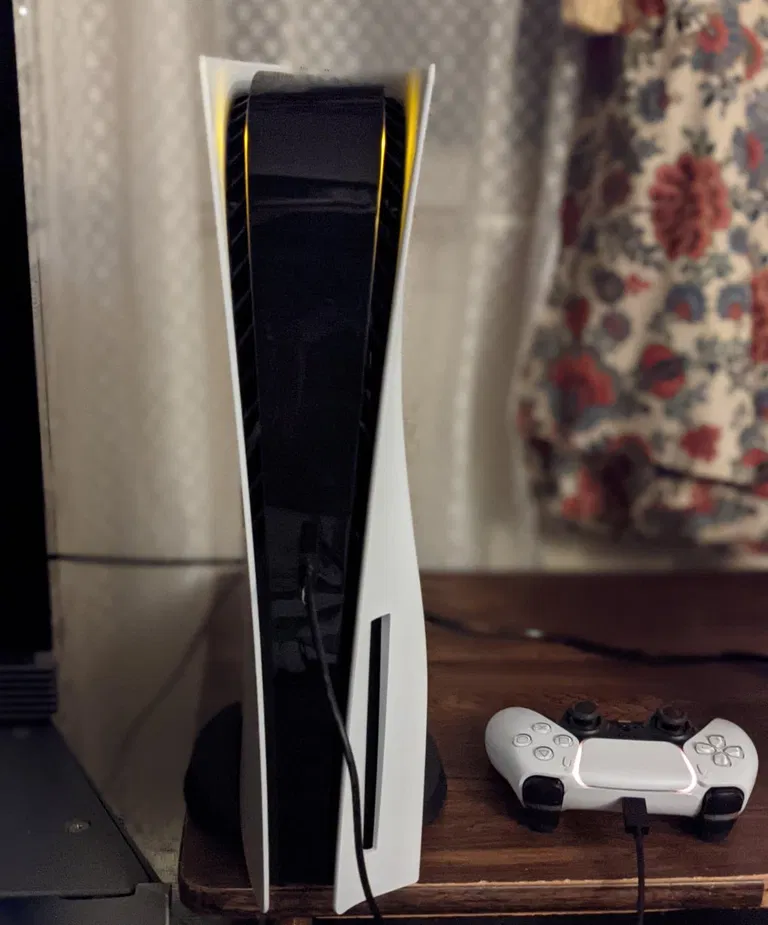
The PlayStation 5, better known as the PS5, is Sony's fifth-generation home video game console and the machine that defined a new era of high-speed, near-instant gaming. Released on November 12, 2020, it pairs a custom AMD processor with an ultra-fast solid-state drive (SSD) so games load in seconds rather than minutes. Whether you are deciding which model to buy, wondering how its internals actually work, or setting one up for the first time, this guide explains everything about the PS5 in plain language.
What Is the PlayStation 5?
The PS5 is a home console that plugs into your TV and runs video games, streaming apps, and Blu-ray movies (on the standard model). It is the successor to the PlayStation 4 and the fifth numbered entry in Sony's PlayStation line, which began in 1994. At launch it came in two versions: a standard PS5 with an Ultra HD Blu-ray disc drive for $499.99 and a PS5 Digital Edition without a disc drive for $399.99. Both share the same core hardware, so the choice mainly comes down to whether you want to buy physical discs or download games.
Sony designed the PS5 around one idea: removing the waiting that has always come with gaming. The console's custom SSD can read data at up to 5.5 GB per second in its raw form, which is roughly 100 times faster than the hard drives found in the PS4. That speed is why games such as Marvel's Spider-Man and Ratchet & Clank: Rift Apart can jump between entire worlds almost instantly.
Inside the PS5: The CPU, GPU and SSD That Power It
The heart of the PS5 is a single custom chip built by AMD that combines the processor (CPU) and graphics (GPU). The CPU is an eight-core AMD Zen 2 processor running at up to 3.5 GHz, and the GPU is based on AMD's RDNA 2 architecture with 36 compute units running at up to 2.23 GHz. That gives the console roughly 10.28 teraflops of graphics performance, plus dedicated hardware for ray tracing, a technique that simulates realistic lighting, reflections, and shadows.
Supporting the processor is 16 GB of GDDR6 memory shared between the CPU and GPU, which lets both work on the same data without copying it back and forth. The most talked-about component, however, is storage. Instead of a spinning hard drive, the PS5 uses a custom 825 GB SSD with a 12-channel controller. Raw throughput reaches 5.5 GB/s and can climb to around 9 GB/s with compression, which means large game worlds stream into memory fast enough that loading screens can nearly disappear. If 825 GB is not enough, the console includes an expansion slot for a standard M.2 NVMe SSD, and PlayStation-certified drives let you add terabytes of extra space.
Timeline: From the 2020 Launch to the PS5 Pro
The PS5's story began before its release. Sony first revealed the console's technical specifications in March 2020, then showed its striking white-and-black design that June. Full launch details came in September 2020, and the console arrived on November 12, 2020 in the United States, Japan, Canada, Mexico, Australia, New Zealand, and South Korea, followed by the rest of the world on November 19, 2020.
Since then, Sony has refreshed the hardware several times. Slimmer, lighter versions of both the standard and Digital Edition models replaced the originals in late 2023, with the Digital Edition gaining an optional detachable disc drive. The biggest upgrade arrived on November 7, 2024 with the PS5 Pro, a more powerful variant aimed at players who want higher frame rates and sharper visuals.
How the DualSense Controller and 3D Audio Work
The PS5's DualSense wireless controller introduced two features that changed how games feel. First, haptic feedback replaces the old rumble motors with precise voice-coil actuators that can produce a wide range of sensations, from the patter of rain to the kick of a weapon. Second, adaptive triggers add motorized resistance to the L2 and R2 buttons, so developers can make drawing a bowstring feel tight or make a trigger resist your pull. These systems receive instructions from the game in real time, which is why the same controller can feel completely different from one title to the next.
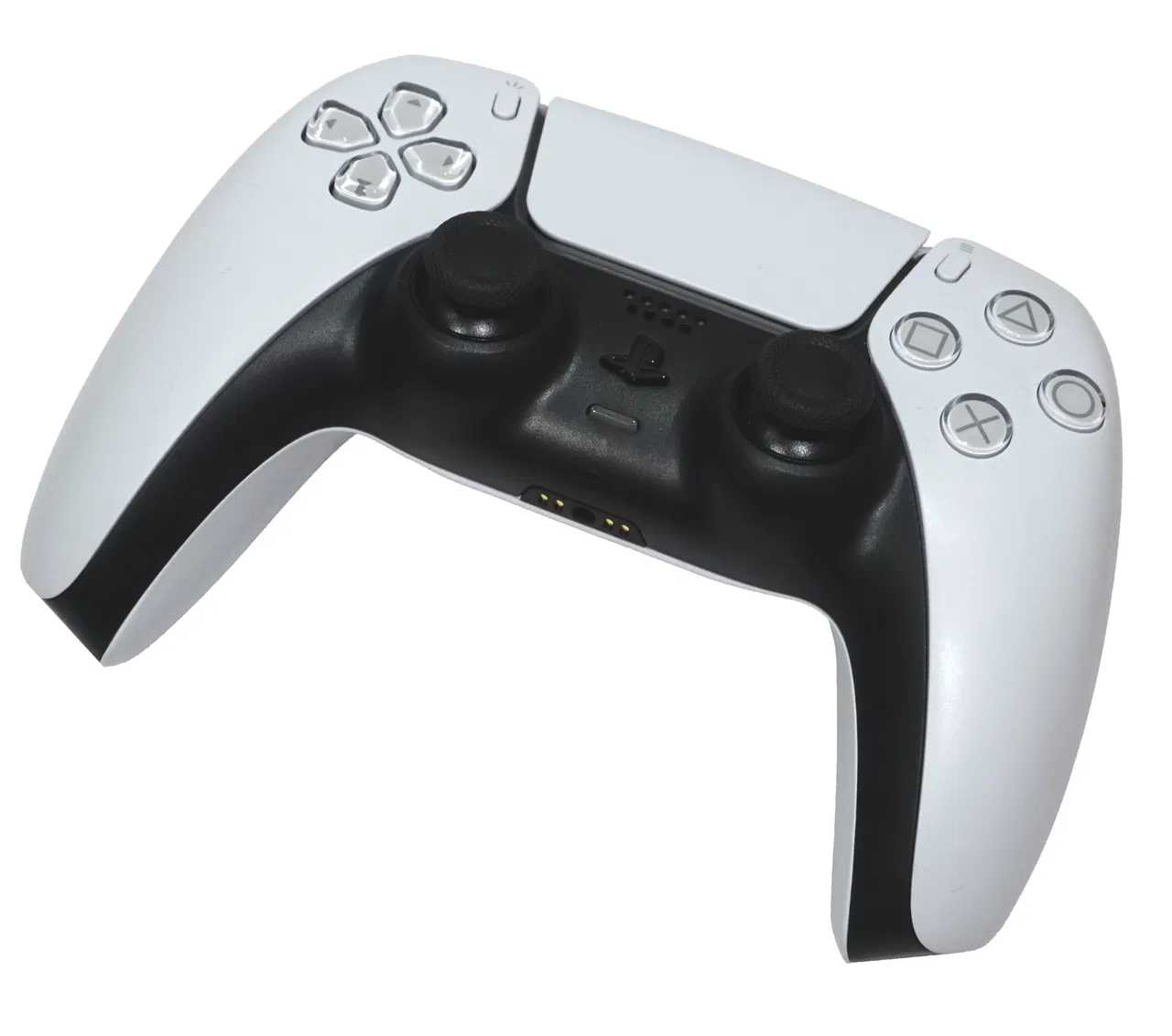
For sound, the PS5 uses a dedicated audio chip called the Tempest Engine. Instead of simple left-right stereo, it processes hundreds of individual sound sources and places them in a three-dimensional space around you. Through headphones or supported speakers, you can hear an enemy approaching from behind or rain falling above, which adds a layer of immersion that earlier consoles could not match.
Choosing Your PS5: Standard, Digital, Slim and Pro Models
Today there are effectively three choices. The standard PS5 includes a disc drive and plays physical PS4 and PS5 games plus 4K Blu-ray movies. The Digital Edition drops the drive, which lowers the price and means you buy everything from the PlayStation Store. The PS5 Pro keeps the same CPU family but boosts the graphics hardware to roughly 16.7 teraflops across 60 compute units and adds PlayStation Spectral Super Resolution (PSSR), an AI upscaler that sharpens images without the performance cost of rendering at native 4K. The Pro also ships with a 2 TB SSD, an extra 2 GB of DDR5 memory for the operating system, and Wi-Fi 7.
All models are backward compatible with the overwhelming majority of the more than 4,000 PS4 games, many of which run with faster frame rates and shorter load times thanks to the PS5's hardware. The console does not natively play PS1, PS2, or PS3 discs, but selected older titles are available through the PlayStation Plus subscription service.
How to Set Up and Use Your PS5
Setting up a PS5 takes only a few minutes. Place the console on a stable surface with room for airflow, connect the power cable, and plug the HDMI cable into your TV. Turn it on, pair the DualSense controller with the included USB cable, connect to Wi-Fi or Ethernet, and sign in to or create a PlayStation Network account. From there you can download system updates, insert a disc or buy a digital game, and start playing. You can also enable 3D audio in the sound settings, transfer your saved data from a PS4, and install a compatible M.2 SSD to expand storage.
Where the PS5 Stands Now and What Comes Next
More than six years after launch, the PS5 remains one of the fastest-selling consoles in history. Sony announced that the system surpassed 100 million units sold, making it the fourth PlayStation to reach that milestone after the original PlayStation, the PS2, and the PS4. The console has also become the main home for upcoming blockbusters such as Grand Theft Auto VI, which is widely expected to drive another wave of hardware sales.
Looking ahead, the PS5 Pro's AI upscaling and ray-tracing upgrades point to where console gaming is heading: higher frame rates, sharper images, and faster storage as the foundation. Sony continues to support the platform with system updates and new titles, so the PS5 is likely to remain relevant for years before a full next-generation successor arrives.
The Bottom Line: PS5 Essentials at a Glance
- The PS5 is Sony's fifth-generation console, launched on November 12, 2020 at $499.99 (disc) and $399.99 (Digital Edition).
- It runs on an eight-core AMD Zen 2 CPU, an RDNA 2 GPU with about 10.28 teraflops, 16 GB of GDDR6 memory, and a custom 825 GB SSD.
- Its SSD reads data at up to 5.5 GB/s, slashing load times and enabling near-instant world transitions.
- The DualSense controller adds haptic feedback and adaptive triggers, while the Tempest Engine delivers 3D audio.
- The PS5 Pro, released November 7, 2024, adds a 16.7-teraflop GPU, PSSR AI upscaling, a 2 TB SSD, and Wi-Fi 7.
- The console plays the vast majority of PS4 games and has sold more than 100 million units worldwide.