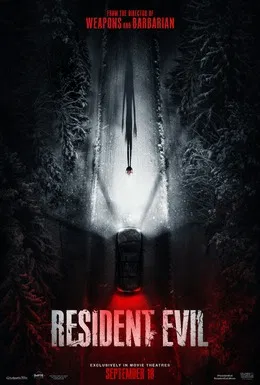
Resident Evil — known as Biohazard in Japan — is Capcom's long-running survival-horror video game and media franchise, and it is back in the spotlight in 2026 thanks to a critically praised movie reboot directed by Zach Cregger. At its heart, the series revolves around a single chilling idea: what happens when an experimental virus engineered by a pharmaceutical corporation escapes and transforms ordinary people into zombies and mutated monsters? The franchise has sold more than 213 million video game copies worldwide as of June 2026, making it Capcom's best-selling series, the best-selling horror game franchise, and one of the highest-grossing horror media franchises in entertainment history. Here is what Resident Evil actually is, how its fictional T-Virus works, and why the new 2026 film is making headlines.
What Is Resident Evil? Capcom's Survival-Horror Franchise Explained
Resident Evil debuted as a 1996 PlayStation game created by Shinji Mikami and Tokuro Fujiwara. It is widely credited with coining and defining the "survival horror" genre — the very first game to carry that label — and with helping return zombies to mainstream popular culture in the late 1990s. In each main entry, players control survivors who must push through environments overrun by zombies and other mutated creatures while carefully managing scarce ammunition, healing items, and environmental puzzles.
The series has shifted between three distinct play styles over three decades. The early games used fixed camera angles and "tank controls" to build dread — a deliberate choice by Mikami, who wanted players to hear a zombie before they could see it. Resident Evil 4 (2005) pivoted to more dynamic shooting action and popularized the now-ubiquitous "over-the-shoulder" third-person camera used across modern action-adventure games. Resident Evil 7: Biohazard (2017) and Resident Evil Village (2021) then returned the franchise to pure horror with a first-person perspective.

Capcom has also rebuilt four classic entries as modern remakes — Resident Evil (2002), Resident Evil 2 (2019), Resident Evil 3 (2020), and Resident Evil 4 (2023) — with a remake of Resident Evil – Code: Veronica scheduled for 2027. The ninth mainline installment, Resident Evil Requiem, launched in 2026; its director Koshi Nakanishi told PlayStation Blog that reimagining the zombies was "one of our main priorities" because their behavior and weaknesses had become too predictable for longtime players.
How the T-Virus Works: The Fictional Science Behind the Outbreak
In the series' lore, the zombie outbreaks are not supernatural — they are a man-made biological disaster. The T-Virus is the name given to a family of RNA virus strains descended from an ancient pathogen called the Progenitor virus. That detail matters because it means Resident Evil's zombies are a product of biological weaponry, genetic manipulation, and parasitic symbiosis rather than the magical or supernatural revenants common in older horror fiction.
The infection process is simple and brutal. When the T-Virus enters a host — usually through a bite, scratch, or direct exposure — it causes death or drastic mutation. The reanimated bodies develop severe skin necrosis and cannibalistic urges, shuffling toward victims with arms outstretched. A single zombie can absorb nearly an entire pistol magazine before falling, which is why the games teach players to aim for the head or conserve ammunition and run past instead.
Not every infected creature is a shambling walker. If a zombie is not finished off with a headshot or incineration in the 2002 remake, it can revive as a fast-moving "Crimson Head." Resident Evil 2 introduced the Licker, a creature with exposed brain tissue and a long, weapon-like tongue. Resident Evil 4 replaced traditional zombies with "Los Ganados," villagers infected by the Las Plagas parasite who retain enough intelligence to swing scythes and fire chainsaws. Resident Evil 7 moved away from viruses entirely, introducing the "Molded," creatures born from a fungus-like substance — a deliberate creative shift away from the T-Virus formula.
The Umbrella Corporation: The Company Behind the Bio-Weapons
Every major outbreak traces back to the Umbrella Corporation, a fictional American multinational pharmaceutical and biotechnology company. Publicly, Umbrella presented itself as a medical and consumer-products conglomerate with the slogan "Preserving the health of the people." Privately, it was a front for developing mutagenic viruses and bio-organic weapons, known in-universe as B.O.W.s.
Umbrella was founded in 1968 by Oswell E. Spencer, Edward Ashford, and James Marcus after the trio discovered the Progenitor virus. Marcus developed the T-Virus as the foundation of the company's weapons program, and researchers Albert Wesker and William Birkin later took over that work. Beyond the zombies created incidentally by leaks, Umbrella deliberately engineered "Tyrants" — humanoid B.O.W.s built for military use with exceptional strength, regeneration, and enough intelligence to follow orders. The project produced iconic enemies like Mr. X and Nemesis. Umbrella eventually collapsed in 2003 under government sanctions and litigation, but its red-and-white logo and shadow still loom over the franchise.
The Resident Evil 2026 Movie: A New Reboot That Gets It Right
The franchise's film history explains why the 2026 movie matters. The original six-film series starring Milla Jovovich, which began in 2002, grossed more than $1.2 billion but drew mostly negative reviews. A first reboot, Resident Evil: Welcome to Raccoon City (2021), was a critical and commercial disappointment, and a Netflix television series was cancelled after a single season in 2022.
The 2026 Resident Evil — the eighth film overall and the franchise's second reboot — takes a different approach. Directed and co-written by Zach Cregger with Shay Hatten, it follows Bryan (Austin Abrams), a medical courier whose routine delivery to Raccoon General Hospital spirals into a fight for survival during a viral outbreak. Produced by Columbia Pictures and PlayStation Productions, it premiered in Los Angeles on September 15 and opened in U.S. theaters on September 18, 2026. Made for $75 million, it has grossed more than $108 million and became the highest-rated film based on a video game on both Rotten Tomatoes and Metacritic — a first for the series.
From 1996 to 2026: How the Franchise Evolved
A quick look at three decades of releases shows how the series scaled up:
- 1996 — Resident Evil launches on PlayStation and defines survival horror.
- 1998 — Resident Evil 2 expands the Raccoon City story.
- 2002 — The first Milla Jovovich film debuts, spawning five sequels.
- 2005 — Resident Evil 4 popularizes the over-the-shoulder camera.
- 2017–2021 — RE7 and Village return the series to first-person horror.
- 2019–2023 — Capcom releases remakes of RE2, RE3, and RE4.
- 2026 — Resident Evil Requiem (game) and the Cregger movie reboot both arrive.
- 2027 — A remake of Code: Veronica is expected.
The Bottom Line: Resident Evil Facts to Remember
- Resident Evil (Biohazard in Japan) is Capcom's survival-horror franchise, launched in 1996.
- Its fictional T-Virus, descended from the Progenitor virus, turns humans into zombies and mutants.
- The Umbrella Corporation is the fictional pharma giant that engineered the virus as a bio-weapon.
- The 2026 Zach Cregger movie is the franchise's second reboot and its best-reviewed film adaptation to date.
- The franchise has sold more than 213 million game copies, and its films have grossed over $1.2 billion.