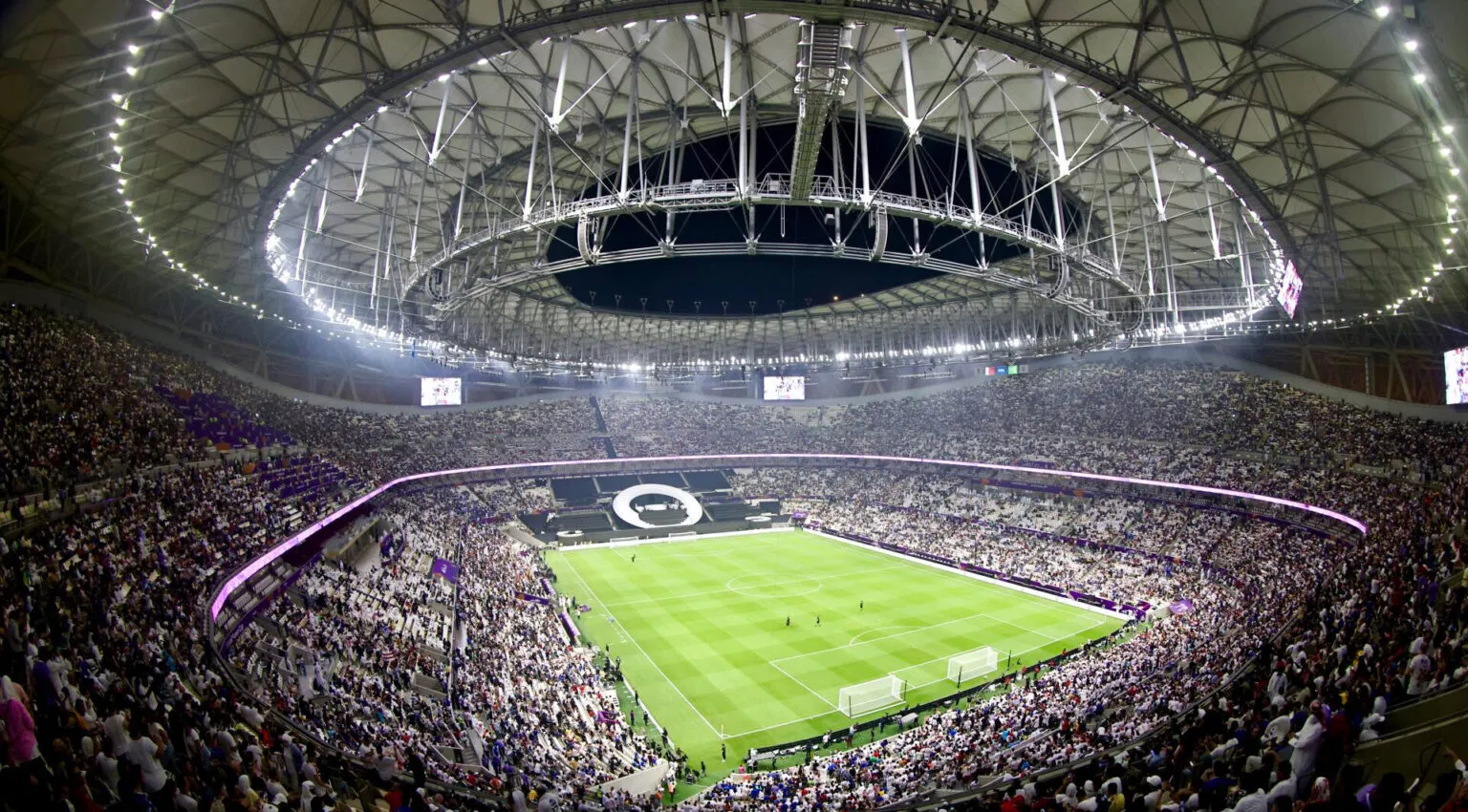
The FIFA World Cup is the most-watched sporting event on the planet, drawing billions of viewers every four years as nations battle for football's ultimate prize. With the 2026 tournament set to be the biggest in history—expanding to 48 teams across three host countries—there's never been a better time to understand how this global spectacle actually works.
The New Format: How 48 Teams Will Compete in 2026
The 2026 FIFA World Cup marks a historic shift in the tournament's structure. For the first time since 1998, when the tournament expanded from 24 to 32 teams, the field is growing again—this time to 48 nations. The 48 qualified teams are divided into 12 groups of four teams each. Every team plays three group-stage matches, one against each opponent in its group. The top two teams from each group automatically advance to the knockout stage, joined by the eight best third-placed teams from across all groups. This means 32 teams will move on to the newly introduced Round of 32, setting the stage for a single-elimination knockout bracket that culminates in the final.
Timeline: The Road to the World Cup Final
The 2026 World Cup will be the longest edition in history, spanning 39 days from June 11 to July 19. The tournament kicks off on Thursday, June 11, 2026, with the opening match. The group stage runs from June 11 through June 27, during which all 48 teams play their three group matches. The knockout stage begins immediately after, with the Round of 32 taking place from June 28 to July 3, followed by the Round of 16 from July 4 to 7. The quarterfinals are scheduled for July 9 to 11, the semifinals for July 14 and 15, the third-place match on July 18, and the grand final on Sunday, July 19, 2026, at MetLife Stadium in East Rutherford, New Jersey.
The Group Stage: How Teams Qualify for the Knockout Rounds
During the group stage, each team plays three matches, earning three points for a win, one point for a draw, and zero points for a loss. After all three matches are played, the teams are ranked based on points. If two or more teams are tied on points, FIFA uses a series of tiebreakers: goal difference (the difference between goals scored and goals conceded), total goals scored, head-to-head results between tied teams, and finally, disciplinary records (fewer yellow and red cards). If teams are still tied after all that, a drawing of lots determines who advances. The top two teams from each of the 12 groups qualify automatically. They are joined by the eight third-placed teams with the best records, creating a Round of 32 that keeps the tournament wide open.
The Knockout Stage: Single Elimination and Extra Time
Once the knockout stage begins, every match is a do-or-die affair. If the score is tied after 90 minutes of regular play, the match goes into 30 minutes of extra time, split into two 15-minute halves. If the score remains tied after extra time, a penalty shootout determines the winner. The knockout bracket starts with the Round of 32, then progresses through the Round of 16, quarterfinals, and semifinals. The winners of the two semifinals face off in the final, while the two losing semifinalists compete in the third-place match. This single-elimination format creates high-stakes drama, as one mistake can send even the strongest team home.
A Brief History of the World Cup
The first FIFA World Cup was held in 1930 in Uruguay, organized by FIFA president Jules Rimet. Thirteen teams participated—seven from South America, four from Europe, and two from North America—and Uruguay defeated Argentina 4–2 in the final. The tournament was cancelled in 1942 and 1946 due to World War II but resumed in 1950 in Brazil. Over the decades, the tournament grew from 13 to 16 teams (1934–1978), then to 24 (1982–1994), then to 32 (1998–2022), and now to 48 starting in 2026. Brazil holds the record for most World Cup titles with five, followed by Germany and Italy with four each, Argentina with three, and Uruguay and France with two each. England and Spain have one title apiece.
Host Cities and Venues for 2026
The 2026 World Cup is a truly North American affair, co-hosted by the United States, Canada, and Mexico—the first time three nations have shared hosting duties. Sixteen host cities will stage matches across the three countries. The United States contributes 11 venues: Atlanta (Mercedes-Benz Stadium), Boston (Gillette Stadium), Dallas (AT&T Stadium), Houston (NRG Stadium), Kansas City (Arrowhead Stadium), Los Angeles (SoFi Stadium), Miami (Hard Rock Stadium), New York/New Jersey (MetLife Stadium), Philadelphia (Lincoln Financial Field), San Francisco (Levi's Stadium), and Seattle (Lumen Field). Canada features two venues: Toronto (BMO Field) and Vancouver (BC Place). Mexico contributes three iconic stadiums: Mexico City (Estadio Azteca), Guadalajara (Estadio Akron), and Monterrey (Estadio BBVA). Estadio Azteca will make history as the first stadium to host three separate World Cup tournaments, having previously hosted in 1970 and 1986.
The Qualifying Journey: How Teams Get to the World Cup
Qualifying for the World Cup is a years-long process involving over 200 national teams from six continental confederations. For 2026, the 48 spots are allocated as follows: AFC (Asia) gets 8 or 9 spots, CAF (Africa) gets 9 or 10, CONCACAF (North/Central America) gets 6 or 7 including the three co-hosts, CONMEBOL (South America) gets 6 or 7, OFC (Oceania) gets 1 guaranteed spot for the first time, and UEFA (Europe) gets 16 spots. The remaining two spots are decided by intercontinental playoffs. The qualification process typically runs for two to three years, with teams playing home-and-away matches within their confederations. For the 2026 tournament, several teams will make their World Cup debut, including Cape Verde, Curaçao, Jordan, and Uzbekistan, while traditional powerhouses like Italy failed to qualify for the third consecutive time.
Key Facts to Know About the 2026 World Cup
- 104 matches will be played, up from 64 in the 32-team format
- The tournament spans 39 days, the longest in World Cup history
- 16 host cities across three countries
- Four debutants: Cape Verde, Curaçao, Jordan, and Uzbekistan
- Argentina enter as defending champions after winning the 2022 final against France
- This is the first World Cup where all six confederations have at least one guaranteed spot
- The official match ball and branding were unveiled in 2023 at the Griffith Observatory in Los Angeles
- Three official mascots represent the host nations: Maple the Moose (Canada), Zayu the Jaguar (Mexico), and Clutch the Bald Eagle (United States)
Where Things Stand Now: Latest on the 2026 Tournament
As of mid-2026, all 48 teams have been confirmed through the qualification process and the group stage draw has been completed. Teams are finalizing their squads and setting up base camps across the three host nations. Ticket sales have been underway, with millions of fans expected to travel across North America for the month-long festival of football. The tournament kicks off on June 11 with the opening match, and the world will be watching as 48 teams begin their quest for the most coveted trophy in sports.
The Bottom Line: Key Takeaways About the World Cup
- The FIFA World Cup is a quadrennial international football tournament organized by FIFA, first held in 1930
- The 2026 edition features an expanded 48-team format with 12 groups of four, followed by a 32-team knockout stage
- The tournament runs 39 days from June 11 to July 19 across 16 cities in the US, Canada, and Mexico
- Brazil holds the record for most titles (5), with Argentina as the reigning champions
- The World Cup is the most-watched sporting event globally, with over 1.5 billion viewers for the 2022 final