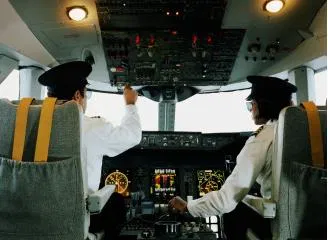
Becoming an aircraft pilot is more structured — and more achievable — than many people assume. Whether you dream of weekend flights for fun or a career in the cockpit of a commercial airliner, every pilot's journey rests on the same foundation: earning a Federal Aviation Administration (FAA) pilot certificate through a sequence of training milestones, written knowledge tests, and practical in-flight check rides.
The FAA, which regulates all civilian aviation in the United States, says the first step is simpler than it sounds. "Decide what you want to fly," the agency advises — airplanes, gyroplanes, helicopters, gliders, balloons, or airships. From there, the type of flying you plan to do determines which certificate you pursue, from a student pilot certificate all the way up to an airline transport pilot (ATP) certificate.
Choose Your Path: The Types of Pilot Certificates
The FAA issues pilot certificates in a clear progression, and the U.S. Bureau of Labor Statistics (BLS) says most aspiring professionals work through them in this order: student pilot, private pilot, instrument rating, commercial pilot, multi-engine rating, and finally airline transport pilot. Each step requires passing a ground-based knowledge test and a practical flying exam, commonly called a check ride.
Recreational and private pilot certificates are the entry point for most people. To earn either, you must be at least 17 years old — or 16 if you want to fly gliders or balloons — and pass both a written knowledge test and a practical flight test. These certificates let you fly for personal reasons but generally prohibit being paid to carry passengers or cargo.
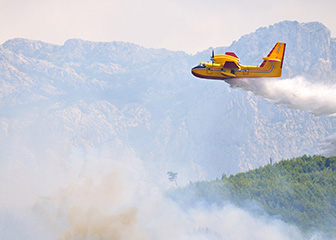
Commercial pilots take the next step, earning a certificate that allows them to be paid for flying. To qualify, applicants must meet age and flight-hour requirements, pass a medical exam confirming their vision is correctable to 20/20, and pass written and practical exams. If a commercial pilot wants to carry paying passengers more than 50 miles from their origin — or fly at night — they must also hold an instrument rating, which requires at least 40 hours of instrument flight experience and 50 hours of cross-country flight time as pilot in command.
Step by Step: From Student Pilot to Airline Captain
The road to a professional cockpit is best understood as a ladder, with each rung building flight time and skill. It begins with a student pilot certificate, which lets you take dual instruction with a certified flight instructor. From there, pilots add an instrument rating to fly in low visibility, then a commercial certificate to fly for hire.
Many commercial pilots then become flight instructors, a common strategy to build the extensive flight experience airlines require without paying out of pocket. Finally, pilots earn a multi-engine rating and, ultimately, an airline transport pilot certificate — the credential required for every captain and first officer on a scheduled commercial airliner. A commercial pilot certificate is a prerequisite for the ATP, and airline pilots usually maintain one or more aircraft-type ratings to fly specific aircraft.
Training, Medical Exams, and the Experience That Matters
Training happens through hundreds of FAA-certified civilian flight schools, which range from small fixed-base operators to state universities — some of which fold flight training into a two- or four-year aviation degree. While commercial pilots typically need flight training, airline pilots usually need a bachelor's degree, often in transportation, engineering, or business, plus experience as a commercial or military pilot.
Health is a central requirement. Pilots must pass periodic medical examinations, generally every year or every other year, to confirm no physical or mental conditions could impair their performance. They must also maintain proficiency by performing specific maneuvers a required number of times within set timeframes.
The job itself demands a specific set of qualities. The BLS highlights communication skills, since pilots must speak clearly with air traffic controllers; observational skills to monitor gauges and maintain situational awareness; problem-solving skills to respond to changing conditions; and quick reaction time to handle any impending danger. Federal law requires pilots to retire at age 65.
Pilot Pay and Demand: Where the Industry Stands Now
For those considering a career, the economics are compelling. The median annual wage for airline pilots, copilots, and flight engineers was $226,600 in May 2024, while commercial pilots earned a median of $122,670. Across all aircraft pilots and flight engineers, the median was $198,100 — far above the $49,500 median for all U.S. occupations. The highest-paid 10 percent of airline pilots earned more than $239,200.

Demand remains steady. Overall employment of airline and commercial pilots is projected to grow 4 percent from 2024 to 2034, about as fast as the average for all occupations, adding about 6,700 jobs. The BLS projects roughly 18,200 openings each year over the decade, many driven by retirements. AOPA, the world's largest aviation association, points to even longer-term demand: Boeing has projected a need for 790,000 pilots over a 20-year span.
What's Next for Aspiring Pilots
The most important first step is a discovery flight — a short introductory lesson at a local flight school that lets you sit in the pilot's seat and see whether flying is truly for you. From there, schedule a medical exam early to confirm you're eligible, then choose a flight school or instructor whose teaching style fits. Building hours as a flight instructor remains one of the fastest, most affordable routes to the airline cockpit, and military pilots can transition directly to civilian airlines.
Key Takeaways
- The FAA issues pilot certificates in a set order: student, private, instrument rating, commercial, multi-engine, and airline transport pilot (ATP).
- You must be at least 17 to earn a private pilot certificate and pass both a written knowledge test and a practical check ride.
- Airline pilots typically need a bachelor's degree plus commercial or military flying experience; commercial pilots mainly need flight training.
- Median pay in 2024 was $226,600 for airline pilots and $122,670 for commercial pilots, with about 18,200 projected job openings per year.