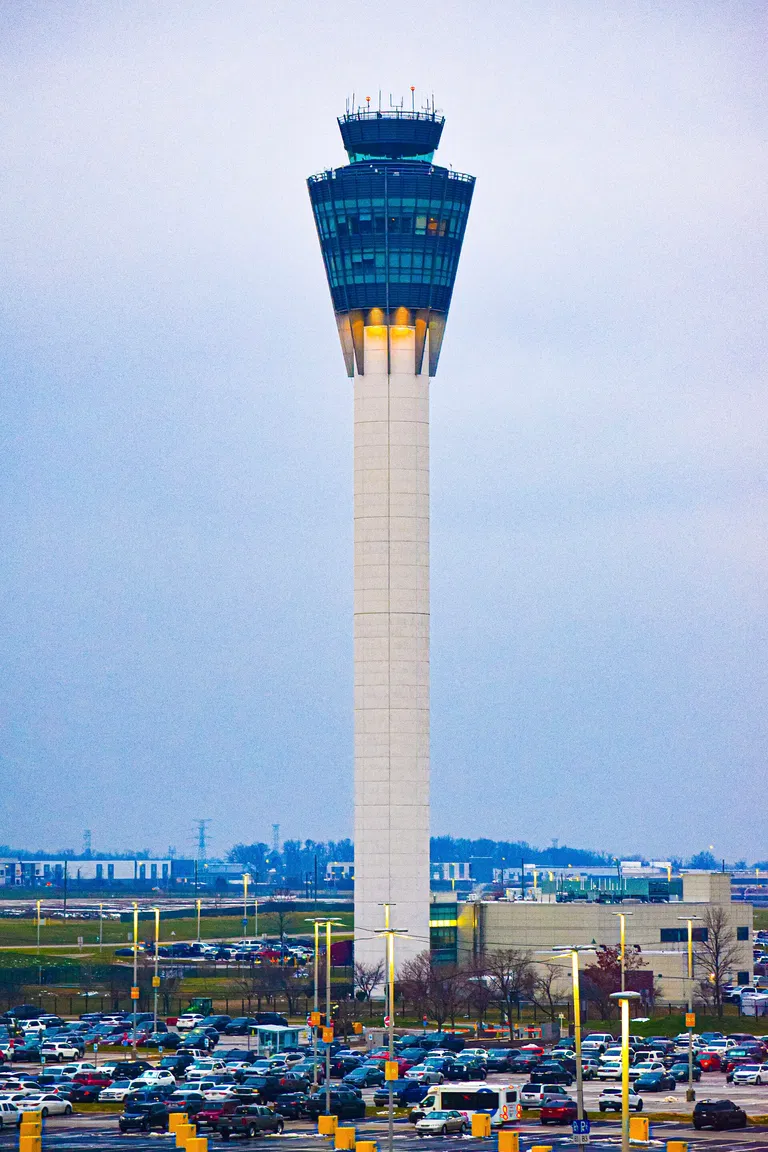
A ground stop is one of the most powerful tools the Federal Aviation Administration (FAA) has for keeping the nation's airspace safe — and on Friday, November 13, 2026, the agency used it at a scale rarely seen in American aviation history. A telecommunications failure knocked out critical air traffic control systems, prompting the FAA to halt departing flights across the entire country, strand travelers, and ultimately cancel roughly 10,000 flights. If you have ever wondered what a ground stop actually is, why the FAA issues one, or what it means for your next trip, here is a clear, step-by-step explanation.
What Is a Ground Stop?
In plain terms, a ground stop is an air traffic control procedure that requires aircraft meeting certain criteria to remain on the ground at their departure airport instead of taking off. The FAA classifies it as a "traffic management initiative" (TMI) — one of several tools used to prevent the National Airspace System from becoming dangerously overloaded.
The FAA issues a ground stop when air traffic control is unable to safely accommodate additional aircraft in a particular airport or piece of airspace. Rather than letting planes launch into a congested, compromised, or otherwise unsafe system, controllers hold them at their origin until conditions improve and flights can be released in an orderly way. The "criteria" that determine which flights are covered can be airport-specific, equipment-specific, or airspace-specific, depending on the exact event that caused the stop.
Ground Stop vs. Ground Delay Program: What's the Difference?
Travelers often hear "ground stop" and "ground delay" used interchangeably, but they are different tools. A ground delay program (GDP) does not stop departures. Instead, it assigns flights controlled departure times to "meter" the number of aircraft arriving at a congested airport. Planes still leave; they are simply spaced out over time.
A ground stop is far more drastic: it halts eligible departures outright until controllers can safely release them. Ground stops usually carry a stated end time, but they can be extended, lifted early, or converted into a ground delay program as conditions evolve. That is why a ground stop can feel chaotic to passengers — flights are not assigned a new runway slot, so nobody can say precisely when they will move.
Why Does the FAA Order a Ground Stop?
Ground stops are most frequently used for three broad reasons:
- Weather: thunderstorms, snow, fog, or low visibility that sharply reduce an airport's arrival or departure capacity.
- Equipment outages: failures in navigation, radar, or communications systems that controllers rely on to separate aircraft — the cause of the November 2026 disruption.
- Security events: incidents such as the September 11, 2001 attacks, when all U.S. airspace was closed.
The tool also comes in several sizes. A local ground stop affects a single facility or region. A tiered ground stop applies different restrictions depending on a flight's distance or scheduled time. A nationwide, or "blanket," ground stop applies across the whole country — the kind ordered on November 13, 2026 — and it is extraordinarily rare.
Timeline: How the November 13 Ground Stop Unfolded
The November 2026 disruption escalated quickly over the course of an afternoon:
- Around 3:30 p.m. ET: The FAA says it "experienced a technical problem" with the systems that route air traffic, later described as a telecommunications outage affecting multiple Air Route Traffic Control Centers.
- 3:54 p.m. ET: The FAA ordered a nationwide ground stop "due to extraordinary circumstances and for reasons of safety," halting virtually all U.S. departures.
- Late afternoon and evening: Airlines grounded planes and passengers crowded terminals as the outage stretched on for roughly four to five hours. About 10,000 flights were ultimately canceled.
- Friday night: The FAA lifted the ground stop, but officials warned that the ripple effects across airline schedules would take days to clear.
What Caused the Outage?
Early reporting and federal officials pointed to a routine upgrade that went badly wrong. A new piece of networking equipment installed as part of scheduled maintenance began flooding the rest of the network with traffic, overwhelming an aging air traffic control communications backbone. Some outlets described it as a copper-wire upgrade and a router switch that cascaded into a system-wide failure.
Department of Homeland Security officials publicly blamed an "outdated" air traffic control system, while the FAA said there was no evidence of a cyberattack. Microsoft separately confirmed that the outage was unrelated to its own service problems that same day, stating, "We have no indication that the FAA's nationwide ground stop is related to any Microsoft services."
This was only the third nationwide ground stop in U.S. history. The first followed the September 11, 2001 attacks. The second came on January 11, 2023, when a failure in the FAA's NOTAM system — which provides pilots with essential safety information — halted departures for about 90 minutes after a damaged database file. The 2026 episode is a stark reminder that a single point of failure in aging infrastructure can ripple across an entire national transportation system.
Where Things Stand Now
The ground stop has been lifted and departures have resumed, but the recovery has been gradual. The FAA said air travel would not return to normal schedules until late on Sunday, November 15, as airlines worked through a backlog of delayed and canceled flights and rebooked stranded passengers. U.S. Transportation Secretary Sean P. Duffy provided public updates on the restoration effort, and even after operations resume, it typically takes days for aircraft, crews, and schedules to return to normal after a shutdown of this magnitude.
What Travelers Should Know During a Ground Stop
If you are ever caught in a ground stop, experts recommend a few practical steps to protect your time and money:
- Check your airline's app first: it is usually the fastest source of rebooking and status updates.
- Do not cancel your own ticket: let the airline rebook or refund you, since self-canceling can forfeit your options.
- Ask for a refund if you no longer want to travel after a cancellation.
- Book a refundable hotel room early if you may be stranded, before rooms sell out.
- Save itemized receipts — and photograph them — for meals, hotels, and ground transportation.
One important nuance: because this event was treated as an extraordinary, government-ordered shutdown, airlines were generally not required to offer additional compensation beyond refunds and rebooking, in contrast with some weather or mechanical delays.
What's Next for the FAA's Air Traffic System
The outage has renewed pressure on Congress and the FAA to modernize the aging systems that underpin U.S. air traffic control. Lawmakers and aviation groups have long called for replacing decades-old infrastructure with more resilient, redundant technology. In the coming weeks and months, expect investigations into exactly what failed, along with a renewed push for funding and reforms designed to prevent another nationwide shutdown.
Key Takeaways
- A ground stop holds aircraft at their departure airport when air traffic control cannot safely handle more traffic.
- Ground stops are usually triggered by weather, equipment failures, or security events.
- The November 13, 2026 nationwide ground stop was only the third in U.S. history.
- It stemmed from a routine network upgrade that overloaded outdated ATC communications equipment.
- Flights have resumed, but full recovery took days and roughly 10,000 flights were canceled.